
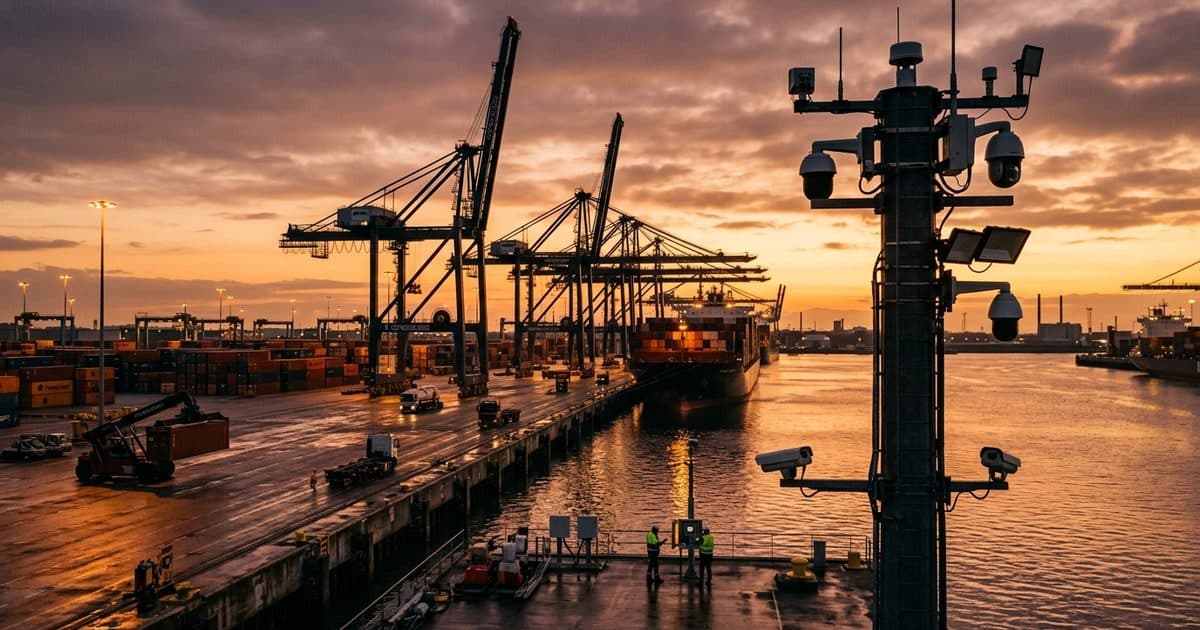
Fences stop cars. Not boats.Your perimeter ends at the water.
Marinas, boatyards, and small ports protect the land side with a gate and a fence — and leave the water side wide open. Intruders arrive by boat, tie up at an empty slip, and leave the same way, bypassing every camera aimed at the parking lot. Boats, outboards, and electronics disappear from slips and dry-stack racks, fuel docks get siphoned overnight, and cargo walks off the pier with no one on site to see it happen. VDS deploys solar-autonomous surveillance that watches the water approach as closely as the gate, reads every plate in the yard, and puts a live SOC operator on every alert — no dock attendant required.
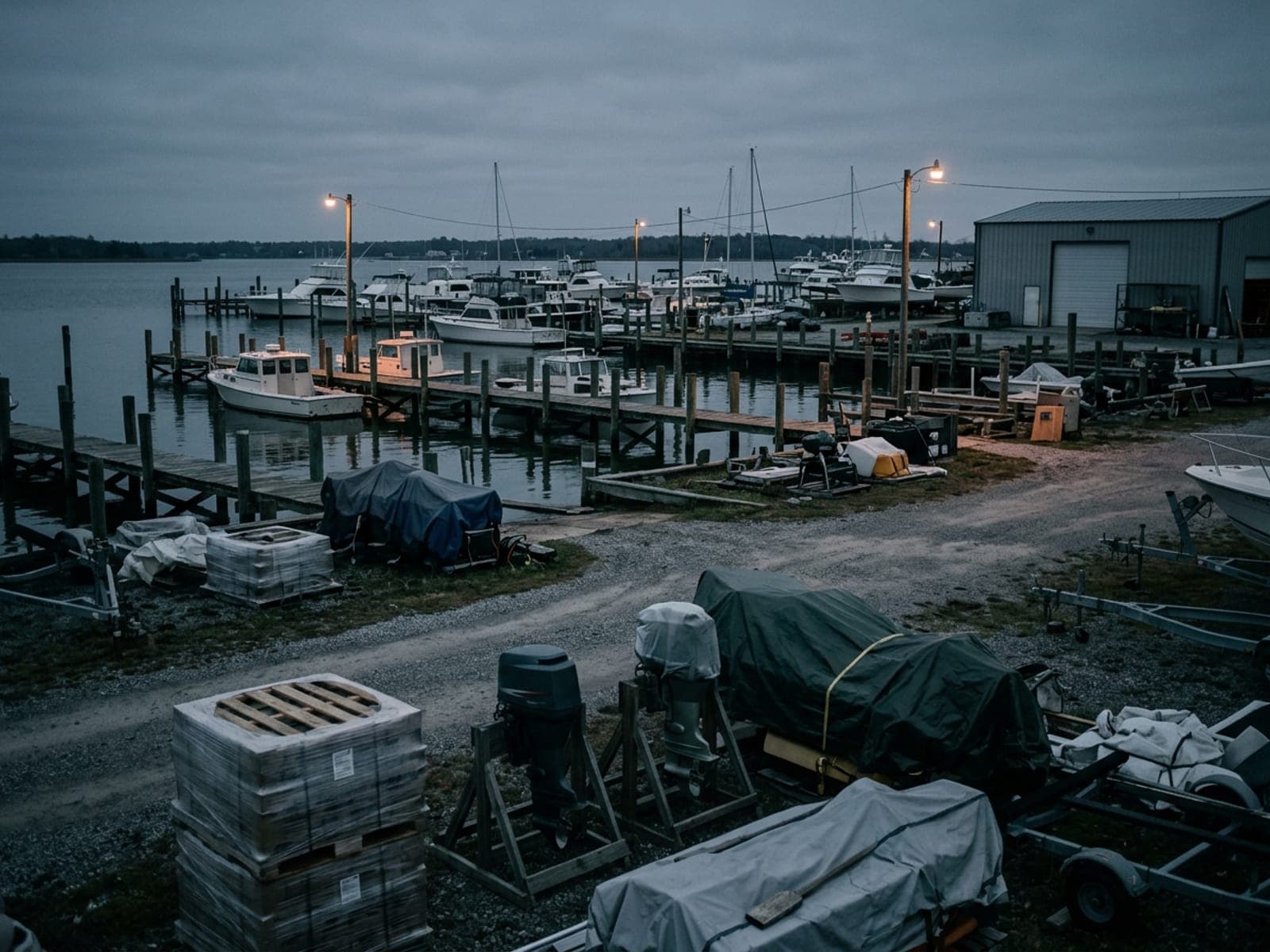
A marina or small port secures the landward half of its perimeter with familiar tools — a gate, a fence, a camera aimed at the parking lot — and the seaward half with nothing at all. That asymmetry is the defining exposure of a working waterfront. An intruder who arrives by water ties up at an empty slip, works a dock of outboards and electronics, and departs without ever crossing a fence line. Add an unattended fuel dock whose losses surface only at reconciliation, cargo staged in an open laydown yard, and slip-accident disputes with no footage to settle them, and the waterfront's quietest hours become its most expensive.
Land-side thinking is why conventional systems miss it. Fixed cameras face where the wiring was easy — the office, the gate — while the docks and the approach lanes off the water sit outside every field of view, and nobody is on a pier overnight to notice a hull sliding in. What changes results is treating the water as an entrance in its own right: continuous coverage of slips, gangways, and the approach itself, verified by a live operator who can act while a vessel is still made fast, rather than reconstructing its visit from a gap in the racks.
Solar-powered mobile surveillance answers the waterfront's infrastructure problem directly. Piers rarely offer power or data, salt air punishes ordinary hardware, and no operator wants an electrical run down a dock. A unit stages on the hard-standing, raises a mast high over the basin, reads plates and trailers at the yard gate, and can carry optional thermal imaging for dark-water approaches. Behind it sits the VDS SOC, watching around the clock and delivering live audio warnings and law-enforcement escalation — the response layer most marina security cameras never had.
The sections below map the losses operators actually take — vessel and motor theft, fuel-dock shrinkage, waterside entry, cargo and liability exposure — against the gate-LPR and waterside configuration VDS deploys, customer-reported results, and frequently asked questions about staging, marine conditions, and coverage of the slips.
Exposed sites.
High-value targets with no one watching.
Minimal staffing, sprawling ground, and valuable assets in the open — the conditions that turn a site into a soft target the moment everyone goes home.
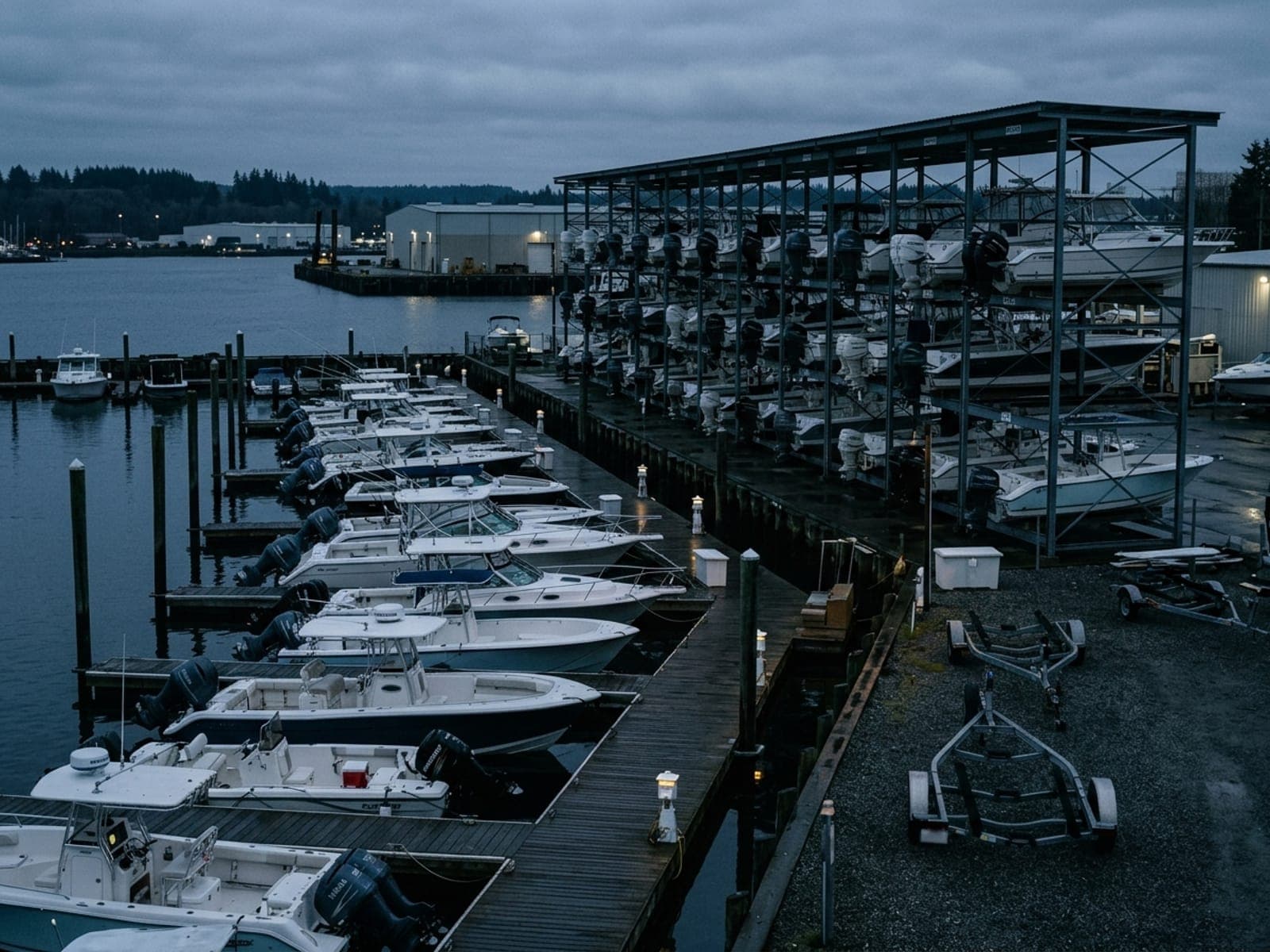
Boat, motor & electronics theft
Outboards, electronics, and entire vessels disappear from slips and dry-stack racks overnight — high-value, portable assets with almost nothing standing between them and a waiting trailer or a second boat.
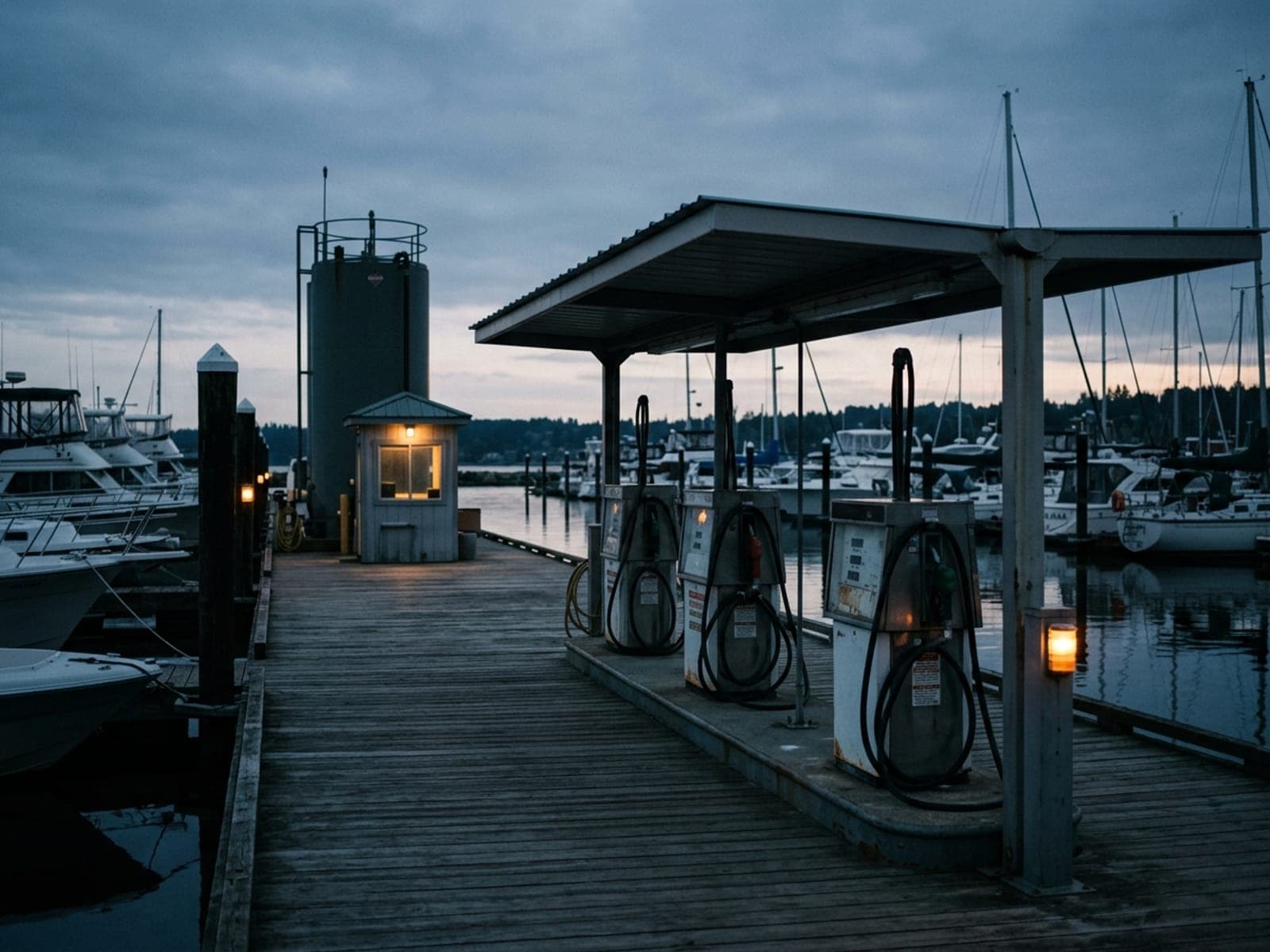
Fuel dock theft
Unattended fuel docks after hours are an easy target — siphoning and pump tampering that goes unnoticed until the next morning's reconciliation comes up short.
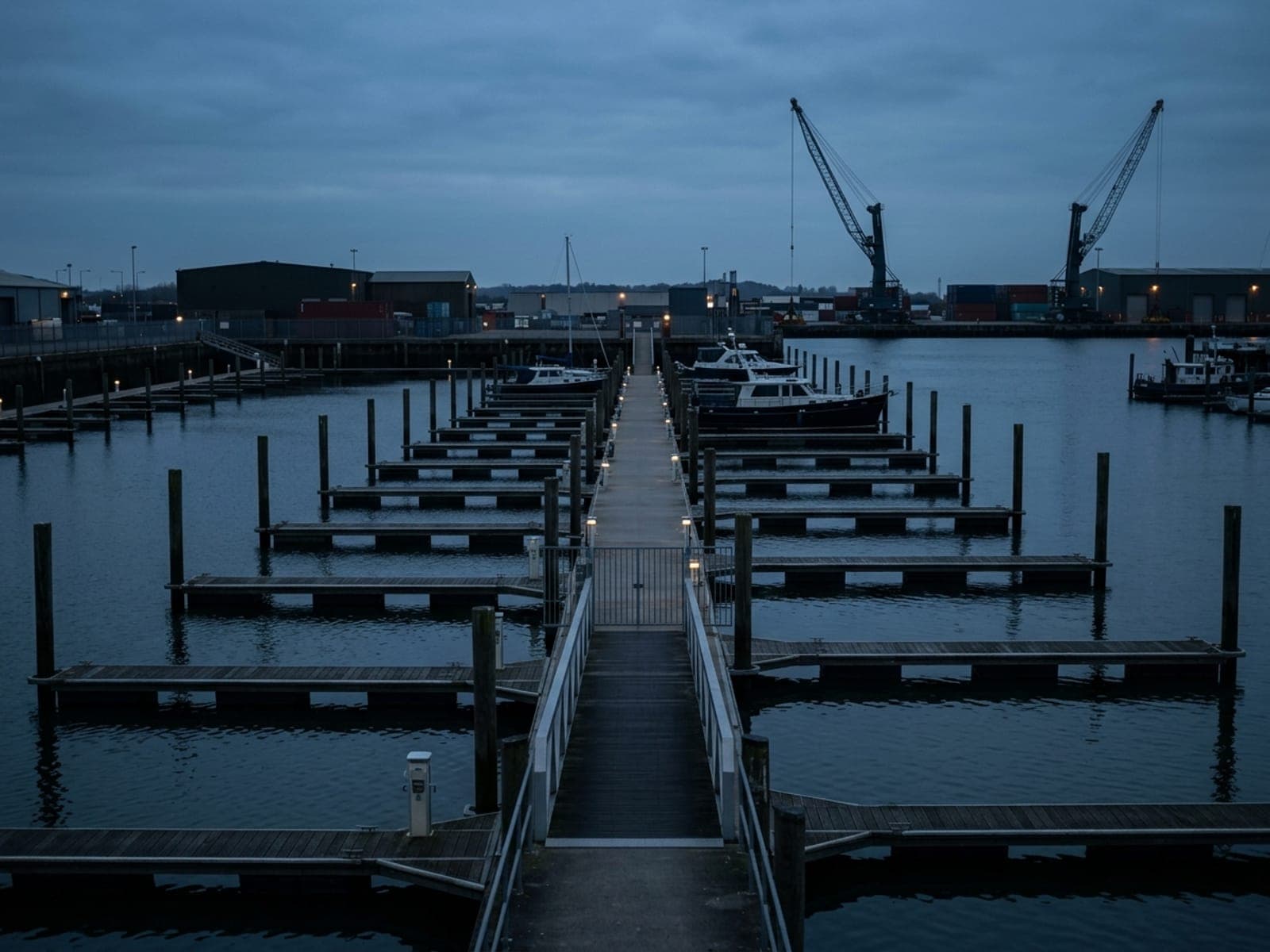
After-hours access by water
The signature marina risk: intruders arrive and leave by boat, tying up at an empty slip or gangway and bypassing the gate, the fence, and every land-side camera entirely — with no trace on the way out.
Cargo theft, vandalism & liability
Small ports and boatyards lose equipment and cargo off the laydown yard, take on vandalism and dock damage, and are left without footage to resolve storm-damage or slip-accident liability claims.
Drop the trailer.
The SOC takes it from here.
Solar-autonomous surveillance with AI analytics and live SOC operators. No power, no internet, no staffed post required.
Every plate.
Every trailer in the yard.
License plate recognition at the boatyard or marina gate logs every vehicle and trailer in and out, ties access to a time and a plate, and flags hotlisted vehicles — turning your one land-side chokepoint into an evidence-grade record.
- Automatic plate capture at the gate, day and night
- Entry/exit log tied to time and plate
- Hotlist alerts for flagged vehicles and trailers
- Evidence packages for law enforcement and claims
 STEP 01
The gate isn't the only way in.
We watch the water too.
The MSU stages on the hard-standing or parking apron and covers the water approach with thermal-capable PTZ, closing the one entry path fixed land-side cameras and fences were never built to see.
- Thermal + PTZ coverage of slips, gangways, and the water approach
- AI detection of vessels and people approaching by water
- Works in zero-light across open water and docks
- Closes the gap fencing and gate cameras can't cover
 STEP 02
No dock attendant.
A live operator instead.
Every alert routes to a live SOC operator who verifies it, issues a real-time audio warning through the on-unit speaker, and escalates to law enforcement — deterrence that works at 2am on a dock, not just during office hours.
- Live operator verification on every alert
- Real-time voice-down warnings through the speaker
- Escalation to law enforcement with footage
- Monthly incident and access reporting
 STEP 03
No power on the dock.
No problem.
Docks rarely have easy power or hardwired data, and salt air is brutal on standard gear. Solar power and 4G/5G cellular mean coverage goes wherever the slips are — with no trenching, no marine electrical work, and no corrosion-prone wiring run down the pier.
- Solar-autonomous — no dock power or hardwired data required
- 4G/5G cellular backhaul, no line run to the water
- Hardened against salt air and marine conditions
- Relocatable as slips, racks, and risk shift
 STEP 04
Every asset on site.
One platform.
The MSU adapts to your waterfront layout. Here are the scenarios marina and port operators deploy for most often.
Slips & docks
Rows of occupied and empty slips where a water-borne intruder can tie up, board a vessel, and leave without ever touching land.
Fuel dock
Unattended fueling positions where after-hours siphoning and pump tampering go unnoticed until the next reconciliation.
Dry-stack storage
Racked boat storage where theft of hulls, motors, and electronics can happen in a single unmonitored overnight window.
Boat ramps & launch areas
Public and private launch points that double as an easy after-hours entry and exit route for trailers and stolen vessels.
Gangways & access points
The transition points between land and water where LPR and access monitoring tie every entry to a time and identity.
Boatyard & cargo laydown
Equipment, parts, and cargo staged in the open at boatyards and small ports, exposed to theft with no one on site overnight.
Real operators.
Real numbers.
Every metric below comes from a real VDS marina and port customer. Names protected per agreement.
Customer-reported outcomes from VDS deployments. Results vary by site conditions, monitoring configuration, and response protocols. How we measure →
We kept losing outboards and nobody ever came in through the gate. Once the trailer was covering the water side, that stopped being a mystery — and it stopped happening.
 MSU-A · FLAGSHIPLPR + THERMAL · MARINE & PORT
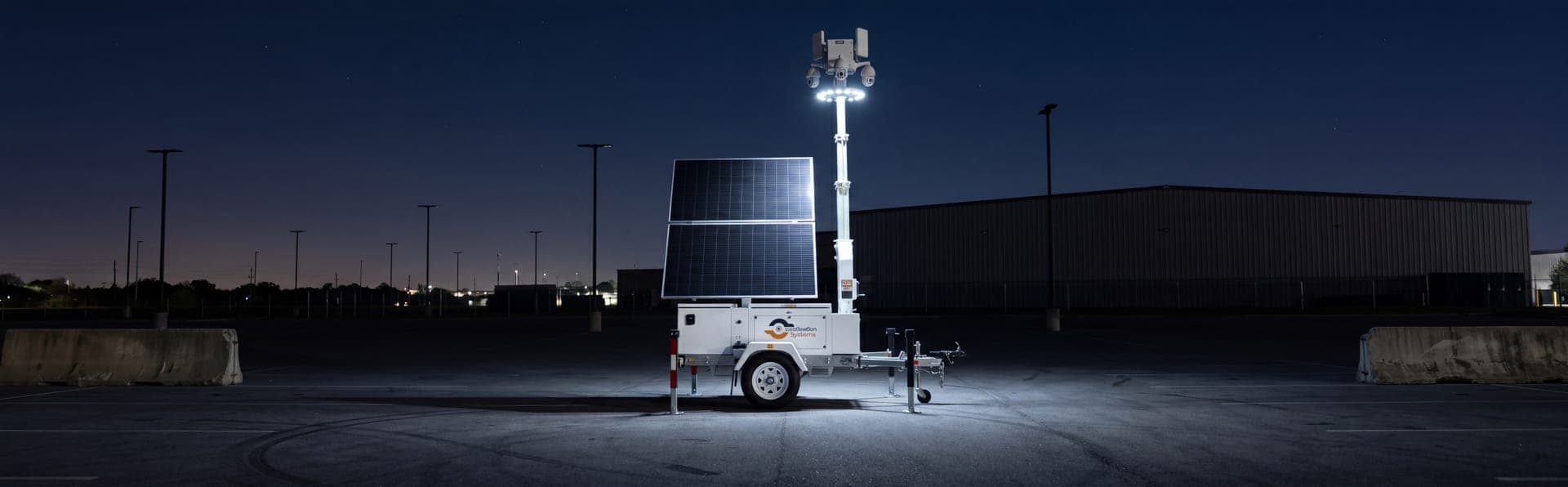
The Mobile Surveillance Unit.
Built to watch the water.
Gate LPR, thermal waterside coverage, and 24/7 SOC monitoring — all from a single solar-autonomous trailer that closes the one entry path fixed cameras and fencing were never built to see.
From assessment
to covered.
Most marina and port operators go from initial conversation to a live trailer on the property inside 7 business days.
Site assessment
We review your waterfront layout, slips, fuel dock, gate, and incident history. Fast quote turnaround.
Sensor configuration
Camera presets, LPR capture at the yard gate, thermal detection zones across the water approach, and alert rules configured for your site.
Delivery & commissioning
Trailer staged on the hard-standing or apron, mast raised, cameras and LPR calibrated. SOC monitoring begins immediately. No dock power required.
Monitoring & reporting
Monthly incident reports, access and vessel logs, and system health delivered automatically. Trailer relocated as slips and risk shift.
Common questions.
How fast can VDS deploy at a marinas & ports site?
A mobile surveillance unit is live in under 20 minutes once it arrives — most marinas & ports sites go from first call to monitored coverage in days, not months. Most marina and port operators go from initial conversation to a live trailer on the property inside 7 business days.
Do the units need power or internet at the site?
No. VDS units are solar-autonomous with battery storage and connect over cellular (4G/5G), so there is no trenching, no generator refueling schedule, and no dependence on site IT. That is what makes them practical for sites where fixed infrastructure is missing or still under construction.
What happens when the system detects someone after hours?
AI detection classifies the event and filters routine motion before a person ever sees it. A SOC operator verifies the live feed, challenges intruders by voice through 120 dB speakers with strobes, and — when it escalates — dispatches police with live video of the scene.
Which marinas & ports security problems does monitored surveillance address?
The most common incidents at marinas & ports sites are boat, motor & electronics theft, fuel dock theft, after-hours access by water, cargo theft, vandalism & liability — the same exposure areas covered in the sections above. Monitored coverage addresses them by making the site actively watched instead of just recorded.
Can VDS work alongside our existing guards or security partner?
Yes — that is the standard model. Monitored surveillance carries the perimeter and after-hours watch, so people — yours or your security partner's — handle verified incidents instead of standing watch over empty hours. The SOC can route verified alerts to your team, your guard provider, or police dispatch.
Cover your waterfront this week.
Tell us your slip count, fuel dock, gate layout, and biggest loss driver — we'll quote the deployment — fast.