
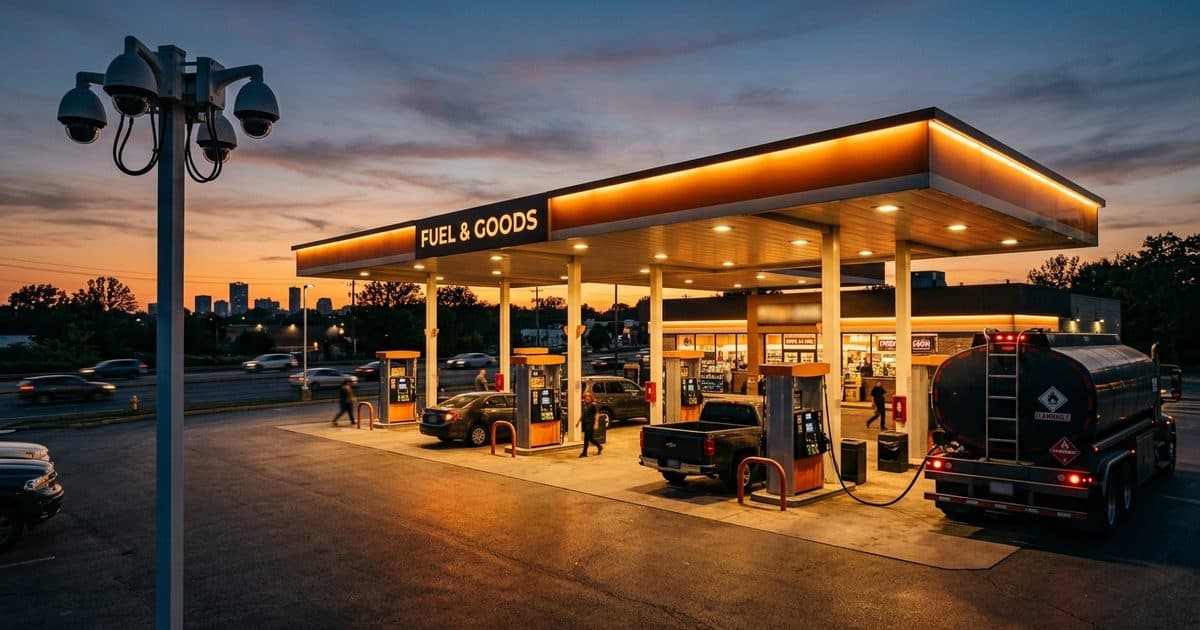
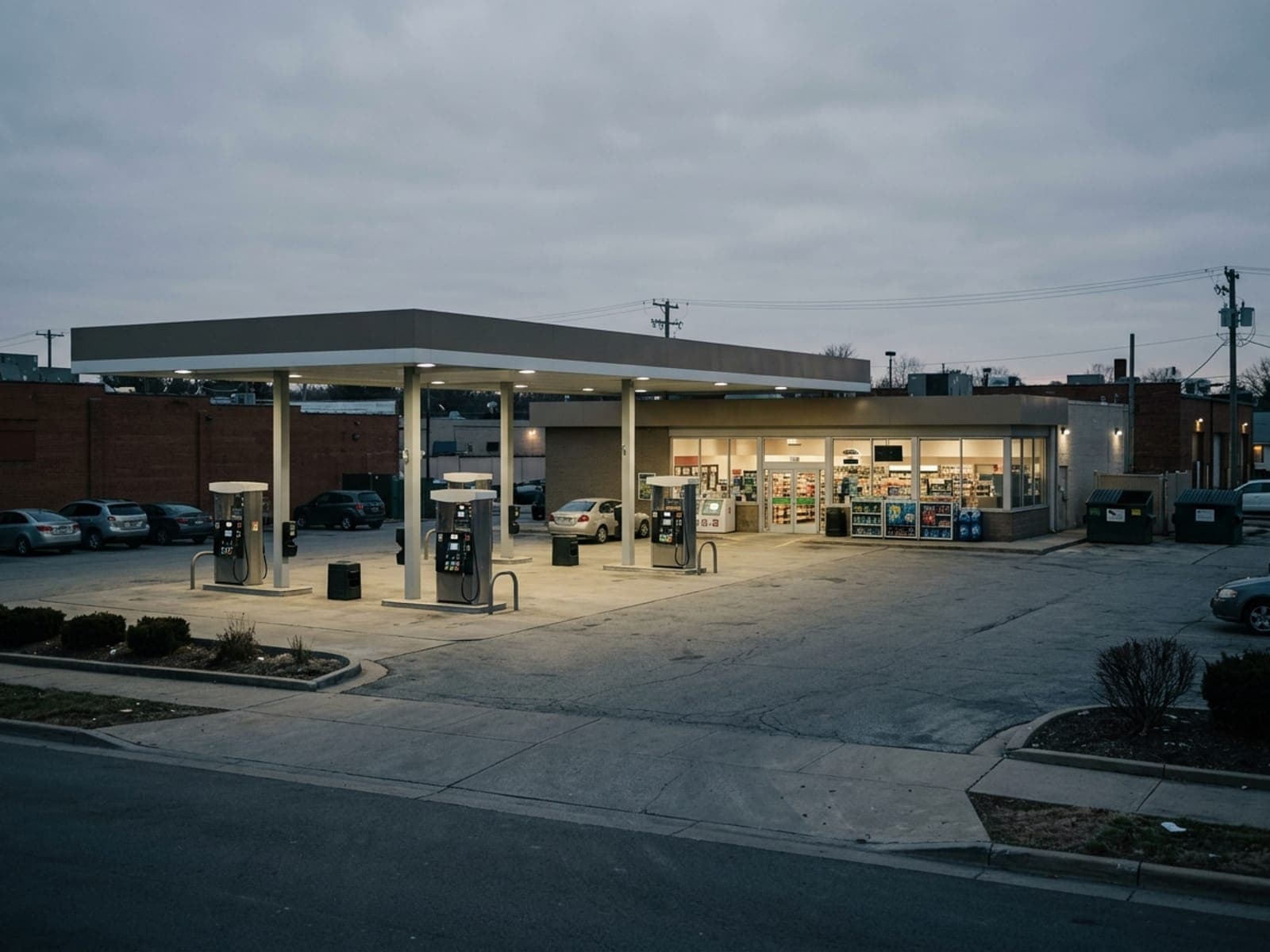
One clerk. Open pumps.A parking lot no one is watching.
Fuel stations, c-stores, and truck stops run the riskiest hours with the thinnest staffing — one clerk alone behind the counter, pumps open to anyone, and a lot that fills with loiterers after dark. Drive-offs, armed robbery, beer runs, and parking-lot incidents all happen in that same unsupervised window. VDS puts solar-autonomous coverage across the forecourt and lot, captures every plate, and puts a live SOC operator on every alert — deterrence and response without a second body on shift.
A convenience store runs its most dangerous hours with its least help. The building never closes, the forecourt is open to any vehicle, cash and high-demand merchandise sit near the door by design, and through the deep overnight a single clerk handles all of it. That combination shapes the crime: drive-offs carry almost no risk for a tank of fuel, beer runs count on the seconds between the cooler and the curb, loitering takes root at the lot edges where the building's own cameras trail off, and the robbery risk concentrates on the shift with the fewest witnesses.
Store-mounted CCTV was built to document the counter, and that is roughly where its usefulness ends: aimed at the register, blind past the pump canopy, and reviewed only after money is already gone. A recording also does nothing for the clerk watching a crowd gather outside. Gas station security shifts when the lot itself is monitored live — when analytics above the forecourt flag the group gathering at the pumps or the vehicle creeping toward the door, a real person evaluates the scene as it happens, a voice over the loudspeaker makes it plain the property is being watched, and police arrive to a verified incident with video and a captured plate rather than a cold report.
A solar-powered mobile unit covers ground a station could never economically wire: the back corner of the lot, the truck parking, the air-and-vacuum island, the ATM pad. It sets up on the pavement it will protect, needs no conduit under the forecourt and no downtime for installation, and can rotate through a chain, spending a season at whichever location the incident reports say is being worked. Behind it, the SOC monitors around the clock, so the store's own staff can run the store while verified problems on the lot are handled and escalated for them.
Keep reading for the drive-off, robbery, loitering, and retail-theft patterns operators describe; the forecourt and lot coverage VDS configures at each; customer-reported outcomes from fuel and c-store deployments; and the questions single-site owners and franchise operators ask most about placement, plates, and monitoring.
Exposed sites.
High-value targets with no one watching.
Minimal staffing, sprawling ground, and valuable assets in the open — the conditions that turn a site into a soft target the moment everyone goes home.
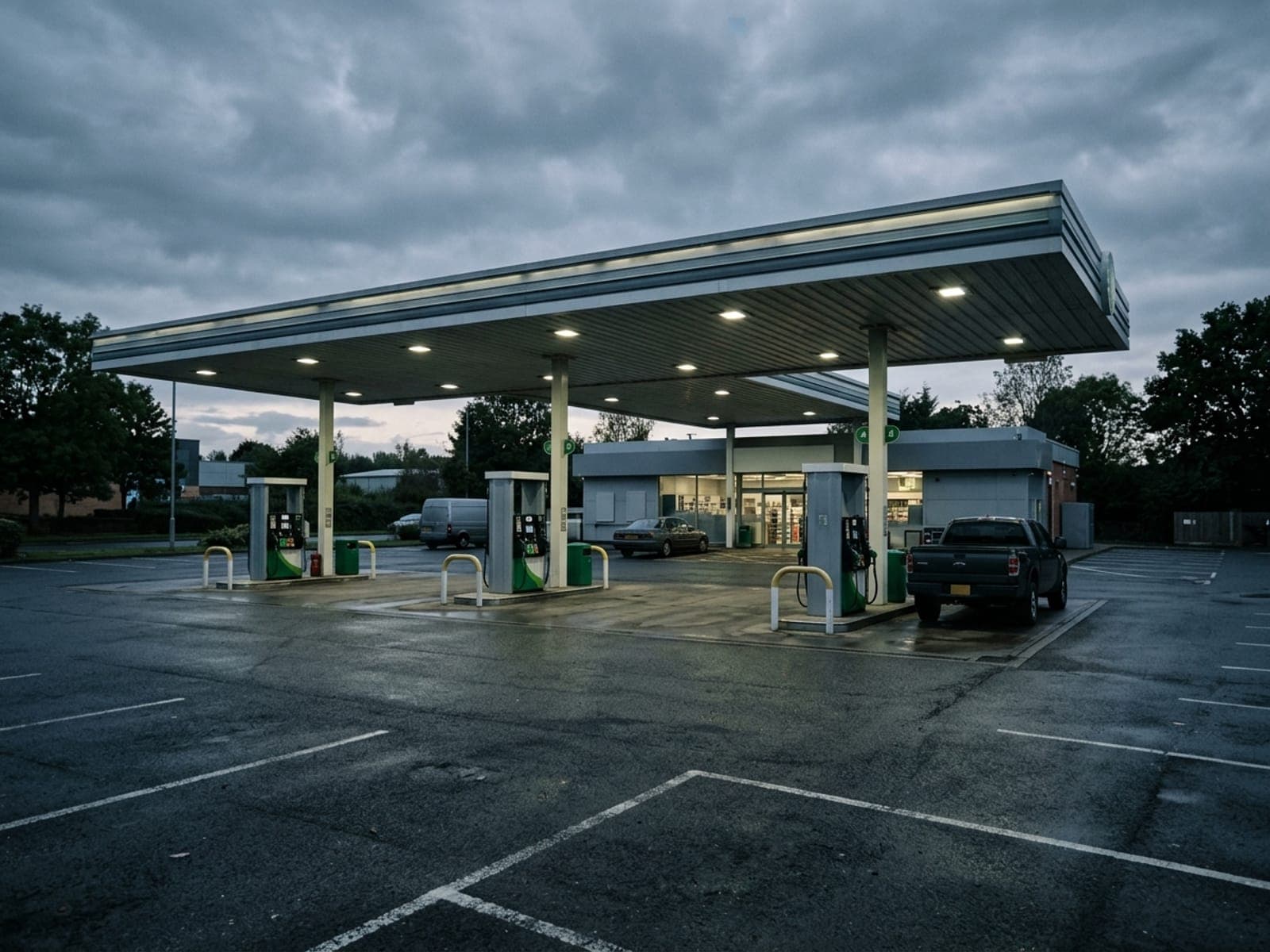
Fuel drive-offs and pump fraud
Vehicles pull away without paying, or run card skimmers at the pump, and without a captured plate the loss is simply written off.
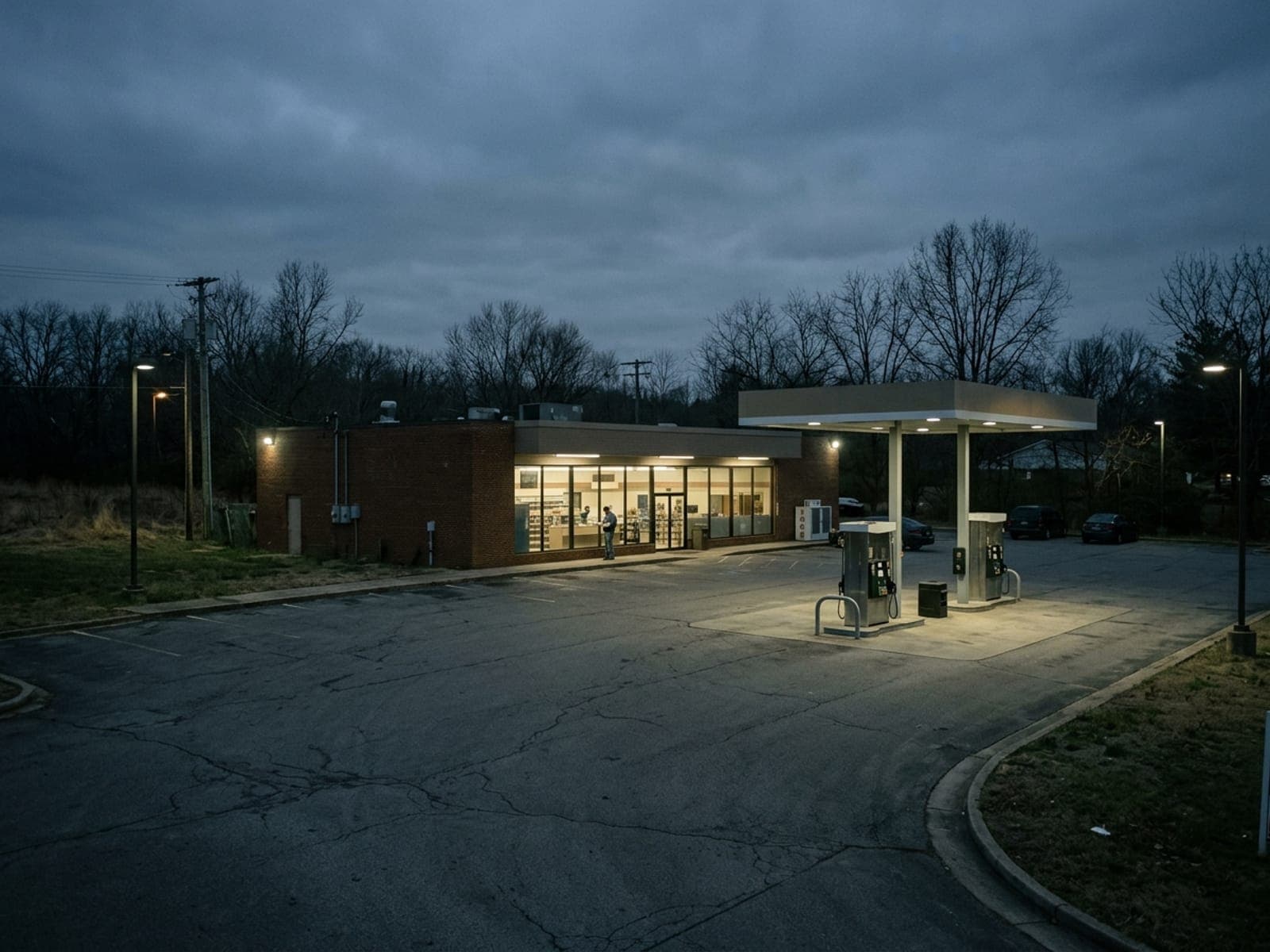
Armed robbery and after-hours holdups
A single clerk alone behind the counter overnight is the highest-risk shift in retail — and the one with the least backup if something goes wrong.
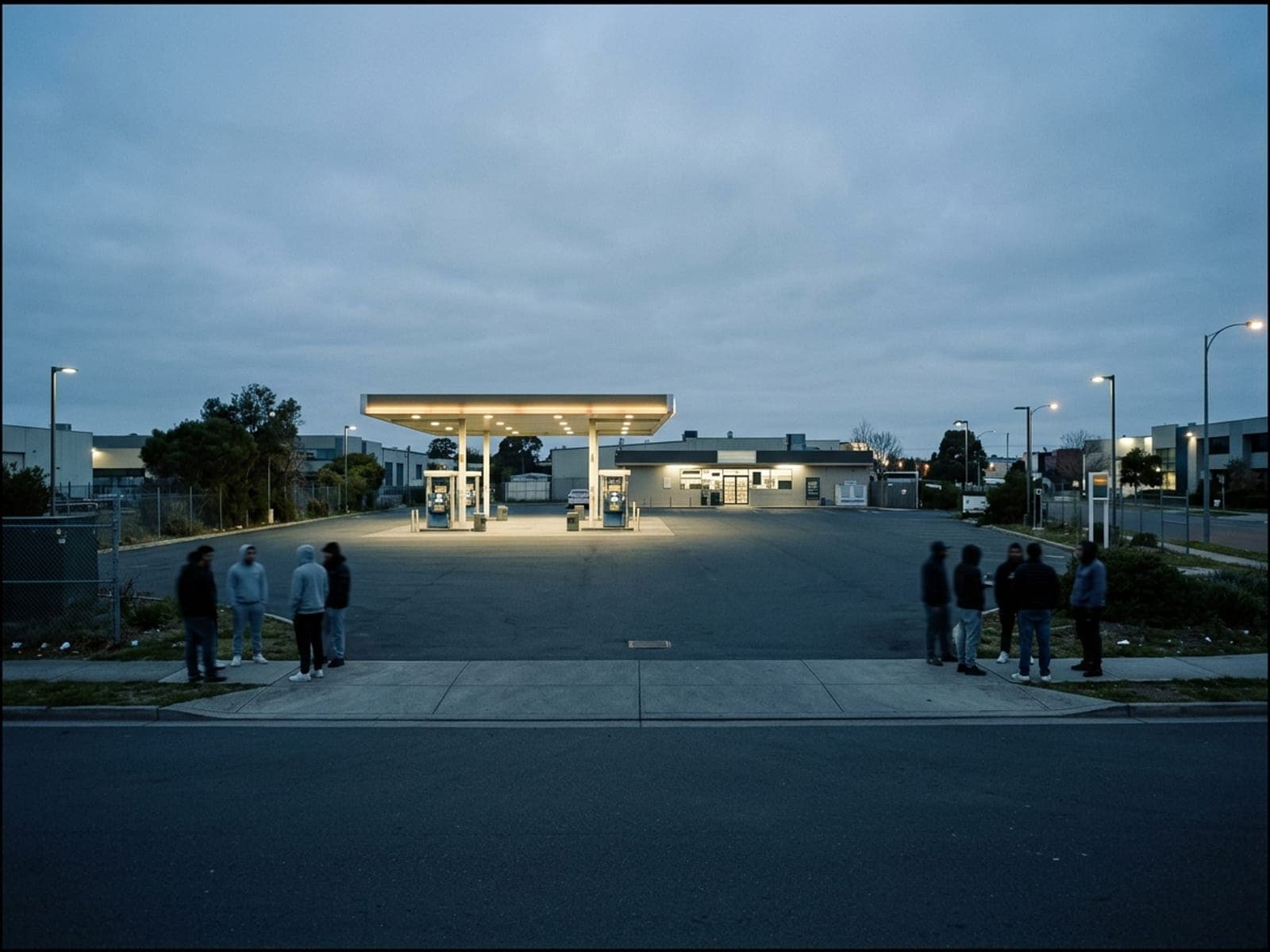
Loitering and vagrancy on the forecourt
Groups gather at the pumps and lot edges after dark, driving off legitimate customers and setting up the conditions for theft and confrontation.
Beer runs and organized retail theft
Coordinated crews grab high-value coolers and displays and are out the door and off the lot before a single clerk can react.
Drop the trailer.
The SOC takes it from here.
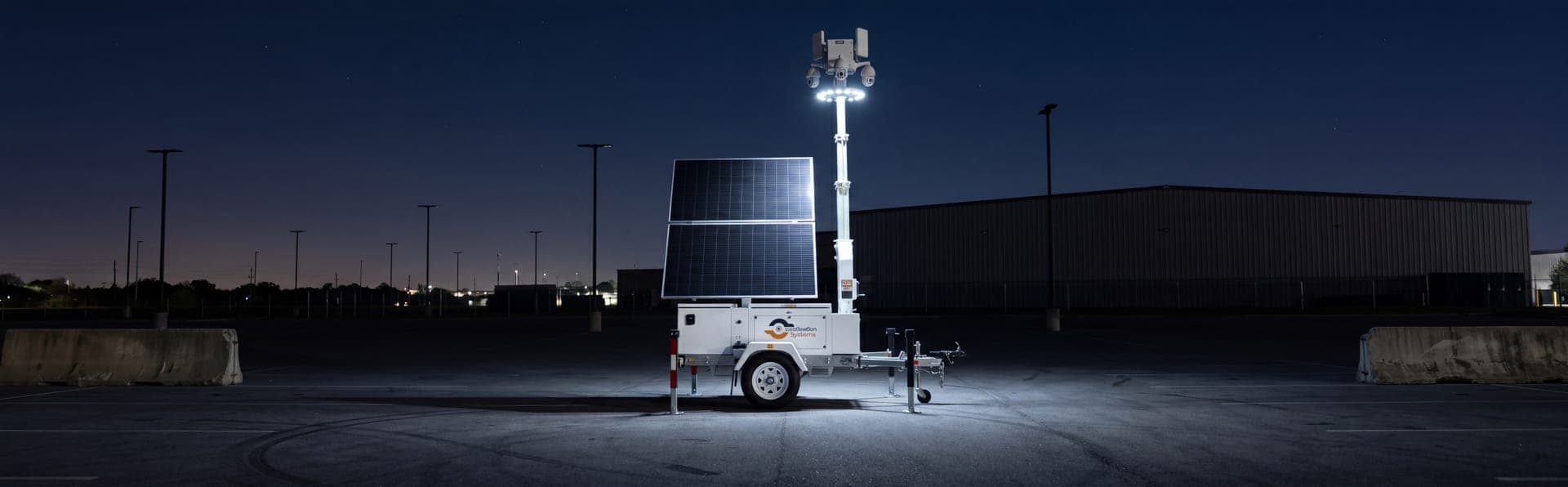
Solar-autonomous surveillance with AI analytics and live SOC operators. No power, no internet, no staffed post required.
Every pump.
Every plate.
License plate recognition across the forecourt captures every vehicle at the pumps, ties a drive-off or skimmer run to a plate and a timestamp, and turns an unpaid loss into a case law enforcement can actually work.
- Automatic plate capture at every pump lane
- Drive-off and getaway plates logged in real time
- Hotlist alerts for flagged or repeat vehicles
- Evidence packages for law enforcement and loss claims
 STEP 01
Pumps to parking.
One virtual perimeter.
The MSU covers the pump islands, the entrance, and the full parking lot from an elevated mast. Loitering analytics flag groups gathering at the pumps or lot edges before they become a confrontation or a theft.
- Elevated coverage across pumps, entrance, and lot
- Loitering detection on gathering groups after dark
- AI human and vehicle classification, zero-light capable
- Extends coverage past where fixed CCTV stops at the building line
 STEP 02
The clerk isn't alone.
A live operator has the lot.
Every alert routes to a live SOC operator who verifies it and issues a real-time audio warning through the on-unit speaker — clearing loiterers and interrupting a drive-off in progress — then escalates to law enforcement with footage and plate data.
- Live operator verification on every alert
- Real-time voice-down warnings through the speaker
- Escalation to law enforcement with footage and plate log
- 24/7 coverage independent of who's on shift inside
 STEP 03
No trenching.
No rewiring the site.
Solar power and 4G/5G cellular mean coverage goes anywhere on the property — the back of the lot, the air pump, the truck parking a fixed camera never reached — with no trenching, no conduit, and no electrician.
- Solar-autonomous — no grid power required
- 4G/5G cellular backhaul, no hardwired internet needed
- Covers lot corners and truck parking fixed cameras miss
- Relocatable to whichever site in the chain is being hit
 STEP 04
Every asset on site.
One platform.
The MSU adapts to your site layout. Here are the scenarios fuel and c-store operators deploy for most often.
Pump islands & forecourt
The highest-traffic, highest-risk ground on the property, where drive-offs and skimmer fraud happen in full view of a camera that's actually watching.
Store entrance & counter approach
The path every robbery and beer-run suspect walks — covered and logged going in and coming back out.
Parking lot & loitering zones
Lot edges and parking spaces where groups gather after dark, driving off customers and setting up confrontations.
Truck stop overnight parking
Large travel-center lots with overnight rigs, where theft, assault, and vandalism happen far from the building with no natural surveillance.
ATM & air pump islands
Standalone equipment away from the building line that fixed CCTV rarely reaches and that draws tampering and theft.
Multi-site franchise coverage
Franchise and chain operators who need consistent coverage across every location and can move the unit to whichever site is getting hit.
Real operators.
Real numbers.
Every metric below comes from a real VDS fuel and c-store customer. Names protected per agreement.
Customer-reported outcomes from VDS deployments. Results vary by site conditions, monitoring configuration, and response protocols. How we measure →
Our overnight clerk used to call us scared every other week about the crowd at the pumps. Since the trailer went up, the lot clears out on its own — the voice warning does the work before it ever gets to a call.
 MSU-A · FLAGSHIPLPR + SOC · FUEL & C-STORE
The Mobile Surveillance Unit.
Built for the forecourt.
Forecourt LPR, lot-wide coverage, and 24/7 SOC monitoring — all from a single solar-autonomous trailer that goes up in under 20 minutes and moves to whichever site needs it next.
From assessment
to covered.
Most fuel and c-store operators go from initial conversation to a live trailer on the lot inside 7 business days.
Site assessment
We review your forecourt layout, pump lanes, entrances, and incident history across the site or chain. Fast quote turnaround.
Sensor configuration
Camera presets, LPR capture at the pumps and entrance, loitering zones across the lot, and alert rules configured for your site.
Delivery & commissioning
Trailer delivered, mast raised, cameras and LPR calibrated. SOC monitoring begins immediately. No trenching or rewiring required.
Monitoring & reporting
Monthly incident reports, drive-off and access logs, and system health delivered automatically. Trailer relocated to whichever site needs it.
Common questions.
How fast can VDS deploy at a fuel & c-store site?
A mobile surveillance unit is live in under 20 minutes once it arrives — most fuel & c-store sites go from first call to monitored coverage in days, not months. Most fuel and c-store operators go from initial conversation to a live trailer on the lot inside 7 business days.
Do the units need power or internet at the site?
No. VDS units are solar-autonomous with battery storage and connect over cellular (4G/5G), so there is no trenching, no generator refueling schedule, and no dependence on site IT. That is what makes them practical for sites where fixed infrastructure is missing or still under construction.
What happens when the system detects someone after hours?
AI detection classifies the event and filters routine motion before a person ever sees it. A SOC operator verifies the live feed, challenges intruders by voice through 120 dB speakers with strobes, and — when it escalates — dispatches police with live video of the scene.
Which fuel & c-store security problems does monitored surveillance address?
The most common incidents at fuel & c-store sites are fuel drive-offs and pump fraud, armed robbery and after-hours holdups, loitering and vagrancy on the forecourt, beer runs and organized retail theft — the same exposure areas covered in the sections above. Monitored coverage addresses them by making the site actively watched instead of just recorded.
Can VDS work alongside our existing guards or security partner?
Yes — that is the standard model. Monitored surveillance carries the perimeter and after-hours watch, so people — yours or your security partner's — handle verified incidents instead of standing watch over empty hours. The SOC can route verified alerts to your team, your guard provider, or police dispatch.
Cover your forecourt before the next shift.
Tell us how many sites, their layouts, and your biggest loss driver — we'll quote the deployment — fast.