
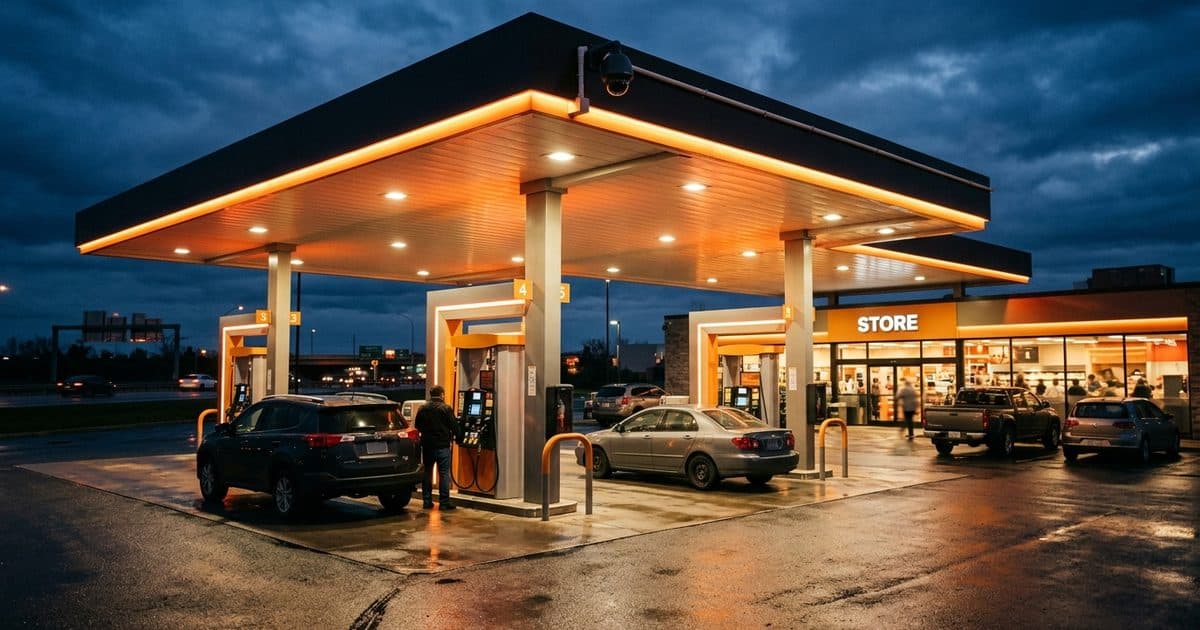
That staffing gap is structural, not a one-off failure. Fuel retail and c-store operations run long or 24-hour hours with minimal headcount by design, the product sitting at the pump — fuel — is drivable off the lot in seconds, and the parking lot itself is open, unticketed, and easy to occupy after dark. Drive-offs, pump and skimmer fraud, armed robbery, loitering that curdles into confrontation, beer runs, and incidents in the overnight lot at a truck stop all cluster in the same unsupervised window. This post covers the threats specific to fuel and c-store sites, why fixed CCTV stops at the building line, what a coverage plan for the whole property looks like, and how solar-autonomous surveillance with forecourt LPR and live monitoring closes the gap.
The Threat Landscape at Fuel Stations & C-Stores
The signature loss at a fuel site is the drive-off: a vehicle pulls up, fuels, and leaves without paying, and because there's rarely a clean plate capture, the loss is simply written off as a cost of doing business. Pump and card-skimmer fraud runs alongside it — equipment tampered with in full view of a camera that either isn't recording the pump lane or isn't being watched by anyone in real time.
Armed robbery is the sharper risk. A single clerk alone overnight, with a register full of cash and no one else on site, is one of the highest-risk shifts in retail, and it's the shift with the least backup if something goes wrong. Loitering compounds it: groups gather at the pumps and the edges of the lot after dark, which on its own drives off legitimate customers and, left unaddressed, sets up the conditions for confrontation, harassment, or theft. Add coordinated beer runs and organized retail theft crews who are in and out the door before a clerk can react, ATM tampering, vandalism, and — at larger truck stops and travel centers — assaults and theft in overnight rig parking far from the building, and a fuel or c-store site is exposed on several fronts at once, concentrated in the hours with the fewest eyes and spread across ground a single clerk was never going to cover alone.
The through-line is that the riskiest parts of the property — the pump lanes, the lot edges, the truck parking — sit outside the clerk's actual line of sight from behind the counter. Functionally, that ground is unsupervised even though someone is technically on shift, and that's exactly where the losses happen.
Why Fixed CCTV Falls Short at a Fuel or C-Store Site
Most stations already run cameras, which is why operators are often surprised to keep absorbing drive-offs and theft. The problem is that fixed CCTV concentrates where the wiring was cheap to run — the register, the entrance, maybe one pump island — and thins out or disappears across the rest of the forecourt and lot.
| Capability | Fixed CCTV | Solar Mobile Surveillance |
|---|---|---|
| Coverage | Clustered at register/entrance; thin across pump lanes and lot edges | Elevated wide-area coverage across pumps, entrance, and lot from one position |
| Plate capture | Rarely angled or resolved for pump-lane plates | Dedicated LPR at every pump lane, day and night |
| Response | Passive recording reviewed after a drive-off or robbery | Live SOC verification and audio warning in real time |
| Truck & overnight lot | Requires trenching and conduit to extend — rarely done | Solar and cellular — deploys anywhere on the property, no wiring |
| Deterrence | A camera no one is watching | Visible presence plus a live voice-down that clears a lot |
The deeper gap is the same one every unattended-hours business runs into: a recording that a vehicle drove off without paying does nothing to stop the loss — it documents it after the fact. What changes outcomes is a system that captures the plate the moment the vehicle pulls in, verifies unusual activity as it happens, and puts a voice on the lot before the vehicle clears the pump island. Fixed CCTV, installed to record the register, was never built to do that.
Tip: Angle at least one camera to capture plates head-on at every pump lane, not just a wide establishing shot of the forecourt. A wide shot documents that a drive-off happened; a dedicated LPR angle is what actually gives you a plate and a time you can hand to law enforcement.
What a Coverage Plan Looks Like for a Fuel or C-Store Site
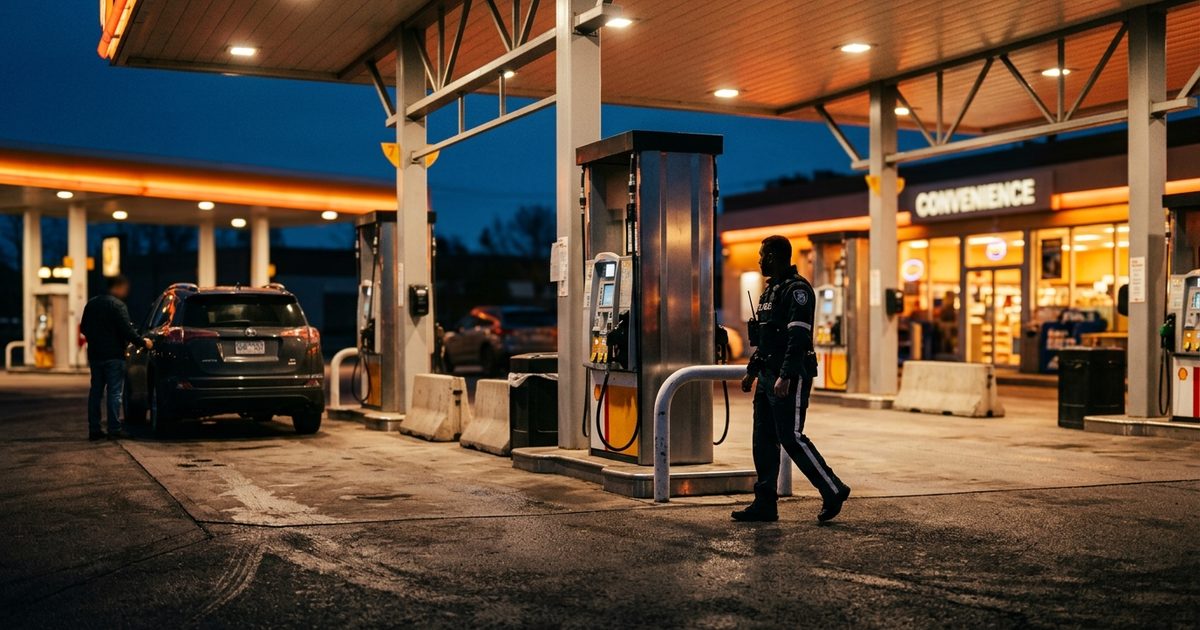
An effective plan covers the full property, weighted toward the pumps and the after-dark risk. For a typical station or c-store it includes:
- Pump islands, with LPR: The highest-traffic, highest-risk ground on the property. License plate recognition at every lane ties a fill-up to a plate and a timestamp, turning a drive-off from an unrecoverable loss into a case that can actually be worked.
- Store entrance and counter approach: The path every robbery and beer-run suspect walks, covered and logged going in and coming back out with object detection classifying people and flagging unusual movement.
- Parking lot and loitering zones: Lot edges and parking spaces where groups gather after dark. Loitering detection flags a group lingering at the pumps or lot line before it becomes a confrontation or cover for theft.
- ATM, air pump, and truck parking: Standalone equipment and overnight rig parking away from the building line — the ground fixed CCTV near the register never reaches, and where truck-stop assaults and theft cluster.
The element that converts this from recording to protection is on-lot presence backed by live response: a visible Mobile Surveillance Unit with lighting and a speaker changes how the lot reads to anyone scoping it. A lighting trailer paired with the unit removes the dark corners loiterers and thieves rely on in the first place — coverage and deterrence working together instead of a camera watching an unlit lot.
Live Monitoring: A Second Set of Eyes on Every Shift
The most expensive way to add coverage overnight is a second employee, and the least effective is a camera no one is watching. Live remote monitoring is the middle path that beats both.
Remote video monitoring routes every alert to a SOC operator who verifies it in real time. When a camera flags a group gathering at the pumps at midnight, or a vehicle lingering at the entrance longer than a normal transaction, the operator confirms what's actually happening and acts: a live audio warning through the unit's speaker — which alone clears most loiterers and interrupts a drive-off before the vehicle clears the lot — followed by escalation to law enforcement with time-stamped footage and the plate log from the pump lane. The clerk behind the counter isn't the last line of defense anymore; the operator is watching the whole property at once.
That verified-response model does two things a single additional staffer can't. It covers the entire site simultaneously — pumps, entrance, and lot — instead of wherever one person happens to be standing, and it produces a documented record for every incident: the alert, the verification, the escalation, the plate, all logged. When an operator files an insurance claim, works with law enforcement on a beer-run case, or needs to show a franchisor the site is covered, the documentation already exists. For chains and franchise groups, the same SOC covers every location to the same standard without staffing each one individually — the same model that works for retail locations and shared parking facilities facing similar after-hours exposure.
Deployment That Matches How a Fuel or C-Store Chain Operates
Fuel and c-store operators rarely run one site — they run a portfolio, and risk doesn't sit still within it. A location that's quiet for a year can suddenly take three drive-offs in a month, or draw a loitering crowd after a nearby business closes. Fixed camera systems don't move with that risk; they sit wherever they were installed on day one.
A relocatable solar-autonomous approach does. A unit covers a new site the week it opens, shifts to whichever location just got hit, or adds temporary coverage to a truck stop's overnight lot during a known-risk stretch — no trenching, no conduit, no waiting on an electrician or a lease amendment for permanent wiring. Coverage becomes something you position where the exposure is this month, not infrastructure frozen at a single address. Multi-site operators can review incident patterns across the whole portfolio and see the effect directly in case studies from comparable sites before deciding where a unit goes next.
Common Mistakes in Gas Station & C-Store Security
- Pointing cameras at the register and stopping there. The losses happen at the pumps, the lot edges, and the entrance — exactly where coverage is thinnest. Weight coverage toward the forecourt and the after-dark risk, not just the counter.
- Recording without responding. A camera that only produces footage for after a drive-off or robbery prevents nothing. Detection has to be tied to live verification and a real-time audio warning to change what happens next.
- Skipping dedicated LPR at the pump lanes. A wide establishing shot of the forecourt documents that a drive-off happened; it rarely resolves a plate. Without a dedicated LPR angle at every lane, investigations start from nothing.
- Leaving the lot dark and uncovered. Loitering and confrontation cluster wherever it's dim and unwatched. Pairing coverage with lighting removes the cover that makes the lot attractive to begin with.
- Treating one site's cameras as the whole plan. Risk moves across a chain — a quiet site can become the one taking drive-offs next month. A relocatable strategy keeps coverage where the exposure actually is instead of frozen at the location it was first installed.
Fuel and c-store sites are one of the clearest examples of a business running its highest-risk hours with its thinnest staffing, and the fix isn't more people on the schedule — it's coverage and response that don't depend on who's behind the counter. The same solar-autonomous, live-monitored model that closes the gap on the forecourt applies just as directly to the retail lots and shared parking areas around it, wherever the ground is open, unlit, and short on eyes after dark.