
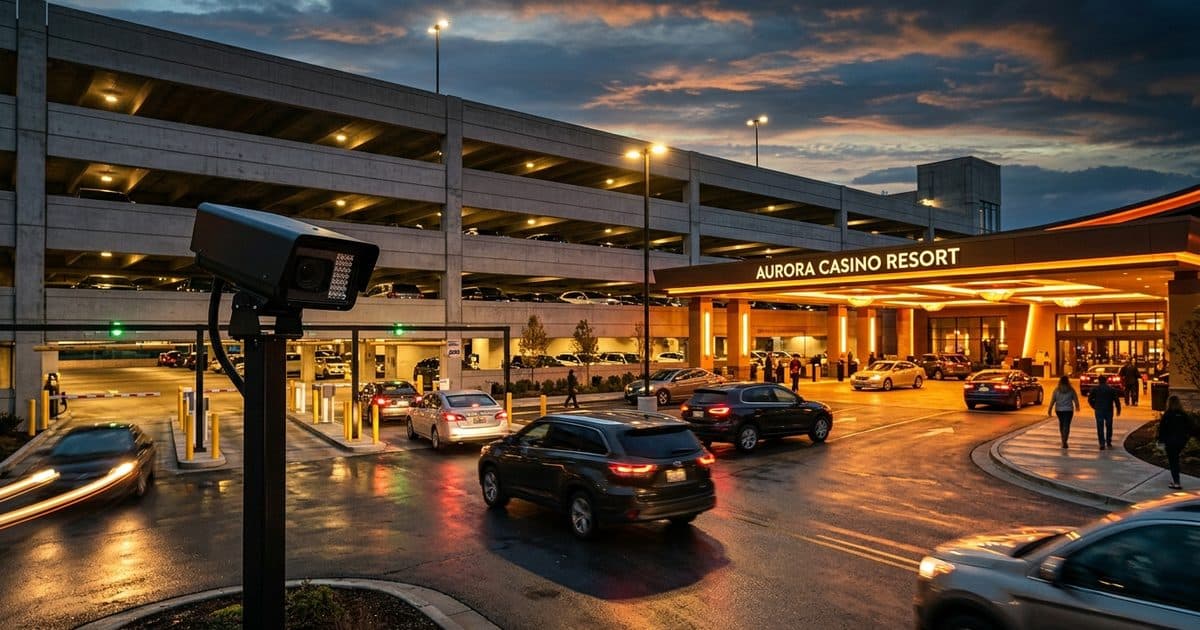
Tribal nations manage a security footprint unlike almost any other landowner in the country. A gaming enterprise sits at the center, but around it is land that can run to thousands of acres, a resort or hotel under construction, retail and fuel operations, and increasingly cannabis cultivation — all of it the responsibility of a tribal police or public safety department that is often small relative to the ground it covers. Mutual aid from surrounding county or state agencies can be a long drive away, and jurisdictional lines add complexity that off-reservation departments don't deal with. None of that changes what the exposure actually looks like on the ground: a parking lot outside the regulated gaming floor, a boundary line miles from the nearest staffed building, and enterprise sites that sit unattended overnight. This post covers that threat landscape, why fixed cameras built for other industries don't fit it, what a coverage plan looks like when it has to span both a casino's exterior and a nation's land, and how live monitoring supports a tribal department instead of substituting for it.
The Threat Landscape at Tribal Land and Gaming Properties
The gaming floor itself is not the gap. Tribal gaming operates under some of the most rigorous surveillance and internal-control requirements of any regulated industry, and that system — interior cameras, count rooms, table and cage coverage — is built, audited, and maintained specifically for gaming compliance. It stays exactly as it is.
The exposure sits everywhere around it. The casino's parking lot, valet loop, and property perimeter are a separate environment from the gaming floor, with their own pattern of vehicle break-ins, prowling, and after-hours incidents that a regulated interior system was never designed to see. Move further out and the exposure changes shape again: land that can run to thousands of acres, with a boundary line far from any building, where trespass, illegal dumping, and unauthorized access can go unnoticed for days. Tribal enterprises compound the picture — a resort or hotel expansion under construction, a C-store or fuel operation, a cannabis cultivation site — each accumulating equipment, materials, or inventory on ground that often sits unmonitored overnight and on weekends. And running under all of it is the jurisdictional reality: a tribal police department covering vast territory with a limited roster, where a fast, decisive response matters more, not less, because the next unit may be a long way off. Trespassers, dumpers, and thieves count on that distance. Cultural and natural sites add one more layer of exposure that is different in kind — ground the nation wants watched not because of dollar value, but because it can't be replaced if it's damaged.
Why Off-the-Shelf CCTV Falls Short Here
Most security systems on the market are built for a single building with a fence around it — a retail store, a warehouse, an office park. That model breaks down almost immediately against a tribal land and gaming footprint that spans a regulated casino interior, an exterior parking lot, thousands of acres of open land, and scattered enterprise sites, often without utility power or wired internet reaching most of it.
| Capability | Fixed / Off-the-Shelf CCTV | Solar Mobile Surveillance |
|---|---|---|
| Exterior vs. interior | Rarely separated cleanly from gaming-floor systems; installers often bolt on cameras without a distinct exterior plan | Independent exterior coverage — parking, perimeter, land — that never touches gaming-floor surveillance |
| Remote land | Requires trenched power and wired internet; both are absent across most tribal land | Solar-autonomous with 4G/5G cellular — deploys anywhere on the land, no infrastructure required |
| Response | Passive recording, reviewed after the fact by whoever is available | Live SOC verification and audio warning, with a verified incident handed to your own department |
| Jurisdiction & authority | Third-party monitoring companies often dispatch as if they hold local authority | Verified alerts routed to your tribal police department — the nation's own officers decide the response |
| Flexibility | Fixed; a new enterprise site or land-use change means a new install project | Relocatable as land use, enterprise sites, and priorities change |
The two gaps that matter most are power and authority. Grid power and hardwired internet simply aren't present across most tribal land outside a developed core, which rules out most fixed-camera systems before cost even enters the conversation. And a monitoring model built around dispatching for a suburban strip mall doesn't map cleanly onto a nation's own jurisdiction — the response has to route to the department that actually has authority on that ground, not around it.
Tip: Treat the casino's exterior as its own coverage zone, planned separately from the gaming floor's regulated interior system. A parking lot and property line deserve dedicated cameras and their own alert logic — layering exterior coverage on top of, or worse, mixed into, gaming-floor surveillance creates confusion about what's regulated and what isn't, and can complicate gaming compliance for no operational benefit.
What a Coverage Plan Looks Like
An effective plan treats a tribal land and gaming footprint as several distinct zones, each covered on its own terms:
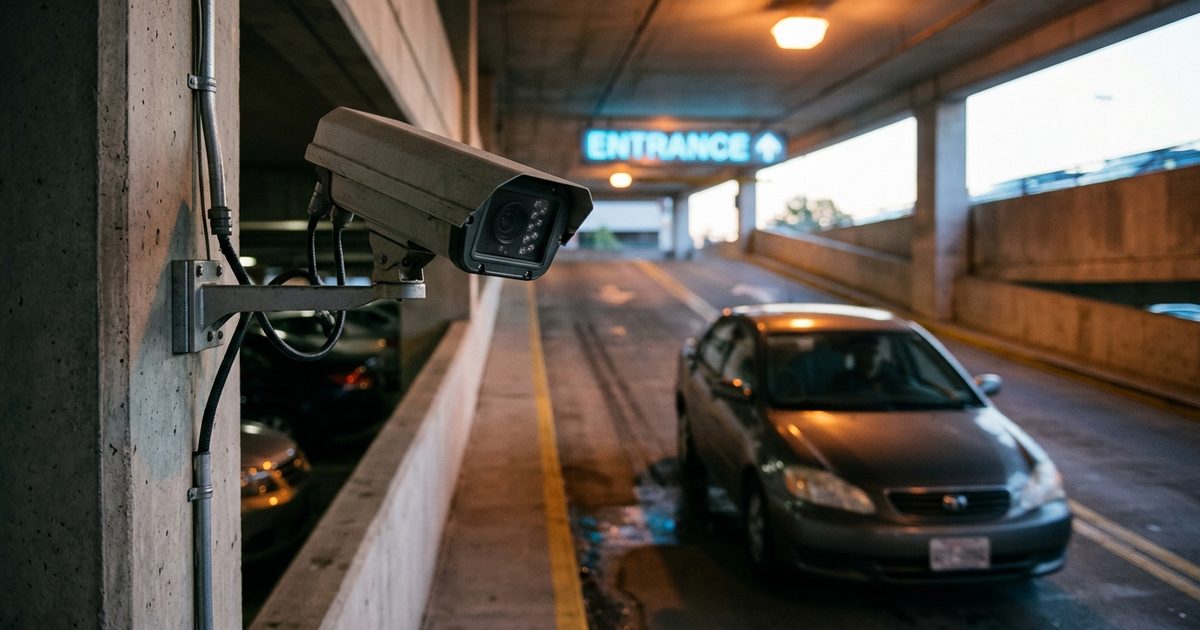
- Casino & resort parking, property perimeter: Exterior coverage of the parking lot, valet loop, and property line, entirely separate from the gaming floor's own system. License plate recognition at entrances ties every vehicle to a time and a plate.
- Remote land & boundary lines: Elevated coverage across boundary lines and remote parcels, with object detection classifying people and vehicles to flag trespass or dumping long before a ranger or officer would otherwise find it.
- Construction & enterprise sites: Resort builds, C-stores, and cannabis operations get dedicated coverage with loitering detection for equipment and inventory left exposed overnight and on weekends.
- Cultural & natural sites: A watchful presence over sensitive ground that doesn't require a permanent structure built on it — the unit can be positioned, and repositioned, without disturbing the site itself.
- Lit deterrence at high-traffic points: Casino parking and enterprise entrances benefit from a paired lighting trailer — visible presence and light where people gather after dark does real deterrence work on its own.
The unit doing this work is a solar-autonomous Mobile Surveillance Unit running on a solar kit and cellular backhaul — it goes to the boundary line, the parking lot, or the construction site with no trenching, no conduit, and no wait on utility work, and it can be pointed at whichever zone carries the most risk this month.
Live Monitoring That Supports Tribal Police — Not Around Them
The most important design choice in a plan like this is who the alert goes to and what authority it carries when it gets there. Remote video monitoring routes every alert to a live SOC operator who verifies it in real time — confirming whether movement along the boundary line or in the casino lot is a genuine incident before anyone acts on it.
From there, the model is deliberately built around the nation's own authority rather than around it. The operator can issue a real-time audio warning through the unit's speaker, which on its own clears most trespassers and prowlers off the ground. When an incident is verified as genuine, it's handed to the tribal police department as a documented, evidence-ready case — footage, timestamps, and where relevant an LPR record — for the department's own officers to act on under their own jurisdiction. This is the same posture VDS takes in other jurisdictionally sensitive environments, including public safety deployments that support local agencies rather than substitute for them, and it's the same discipline that applies at any boundary line where authority and territory matter, from a border or perimeter security deployment to a reservation's own boundary.
For a small department, that's the practical value: continuous coverage across ground no roster could watch in person, paired with a documented record for every incident, without a third party inserting itself into decisions that belong to the nation. And because VDS hardware is built to NDAA-compliant standards, the equipment itself stays eligible where federally connected funding sources require it — a factor that matters for many tribal grant programs.
Deployment: Land, Parking, and Enterprise Sites at Once
A nation's footprint doesn't stay still. A resort expansion opens a new construction phase, a cannabis operation comes online, land use shifts, or a specific stretch of boundary starts drawing repeat incidents. A relocatable model keeps pace with that instead of freezing coverage wherever cameras happened to be bolted on first.
Deployment typically runs on the same short timeline regardless of terrain: a site and sovereignty review with the nation's public safety or facilities team, sensor and LPR configuration built around the department's own protocols, delivery and commissioning with the trailer live within about a week, and ongoing monthly reporting as the unit is repositioned to wherever the land or enterprise footprint needs it next. Several deployments across similar tribal and gaming footprints are documented in VDS's case studies.
Common Mistakes in Tribal Land and Gaming Security
- Treating the gaming floor's system as if it covers everything. The regulated interior surveillance system does its job well — inside the building. It was never built to see the parking lot or the land beyond it, and assuming it does leaves the exterior with no plan at all.
- Mixing exterior cameras into gaming-floor infrastructure. Layering parking and perimeter coverage onto the same system as the regulated interior cameras blurs a line that's better kept clean, and can complicate gaming compliance without adding real protection.
- Assuming fixed cameras can reach the far boundary. Most tribal land has no grid power or wired internet reaching the boundary line, which rules out fixed CCTV there before cost is even a factor — solar and cellular are what make that ground coverable at all.
- Letting a third-party monitoring company act like it holds local authority. A generic monitoring model built for a strip mall doesn't map onto a nation's jurisdiction. Alerts need to route to the tribal police department, with the nation's own officers deciding the response.
- Leaving enterprise and construction sites uncovered between phases. A resort build, a new C-store, or a cannabis site is often at its most exposed in the gap between groundbreaking and permanent security being designed — exactly when a relocatable unit can be dropped in fastest.
Tribal land and gaming security is its own category — a regulated gaming floor at the center, a nation's own sovereignty and jurisdiction around it, and ground that ranges from a casino parking lot to thousands of acres of open land. The nation's own police and public safety department carries the authority; the coverage plan just has to make sure they can actually see what's happening across all of it.