
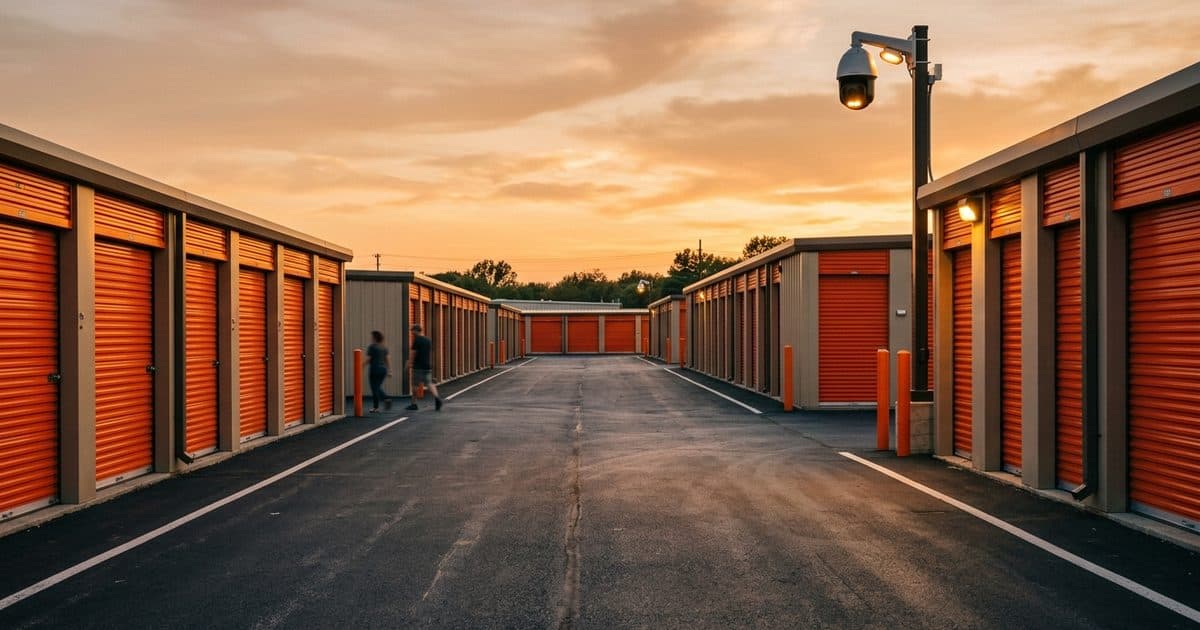
The security problem isn't a lack of cameras — most facilities have some — it's coverage and response. Fixed cameras cover the office and the main drive and leave the back rows, the far corners, and the vehicle lot thinly watched, and none of it matters if the footage is only ever reviewed after a tenant reports a loss. This post covers the threats specific to self-storage, why fixed CCTV leaves gaps across a large lot, what a coverage plan that actually protects the whole facility looks like, and how solar-autonomous surveillance with gate LPR and live monitoring closes the window.
The Threat Landscape at Self-Storage Facilities
The signature self-storage crime is methodical, not opportunistic. Someone with legitimate after-hours access — or someone tailgating in behind a real tenant — works down a row of drive-up units, cutting locks and clearing contents, with hours of cover before the next office open. Because the intruder often looks like any other tenant on camera, weak coverage produces footage that documents the loss without identifying anyone.
Outdoor vehicle, RV, and boat storage raises the stakes. These rows hold high-value, mobile assets that a thief can simply drive away, and a single loss can run into tens of thousands of dollars. On an unmonitored lot, a stored boat or RV can be hitched and gone in minutes with nothing to stop it and nothing to trace it. Add graffiti and dumping, squatting in empty units, and tenant-versus-tenant disputes that become liability claims, and the facility operator is exposed on multiple fronts at once — all of it concentrated in the unstaffed hours and spread across ground no fixed-camera cluster near the office was ever going to cover.
The through-line is that a storage facility is remote from supervision even when it sits in a populated area. The back fence line, the far vehicle row, and the corner unit are, functionally, unwatched sites — and that's exactly where the losses happen.
Why Fixed CCTV Leaves Gaps at a Storage Facility
Most facilities already have cameras, which is why operators are often surprised to keep taking losses. The problem is that fixed CCTV concentrates where the wiring was easy to run — the office, the gate, the main drive — and thins out or disappears across the parts of the lot that are hardest to reach and easiest to hit.
| Capability | Fixed CCTV | Solar Mobile Surveillance |
|---|---|---|
| Coverage | Clustered near office/gate; thin across back rows and vehicle lots | Elevated wide-area coverage across the whole lot from one position |
| Far corners | Requires trenching and conduit to extend — rarely done | Solar and cellular — deploys anywhere on the lot, no wiring |
| Response | Passive recording reviewed after a tenant reports a loss | Live SOC verification and audio warning in real time |
| Expansion | Fixed; new rows mean new install work | Relocatable as the facility grows or risk shifts |
| Deterrence | A camera no one is watching | Visible presence plus a live voice-down that clears people out |
The deeper gap is response. A recording that a tenant's stolen contents were carried off at 2am does nothing to prevent the loss — it documents it. What changes outcomes is a system that detects the movement as it happens, verifies it, and puts a voice on the lot before the lock is cut. Fixed cameras almost never do that; they were installed to record, not to respond.
Tip: At self-storage, position coverage to see across the rows, not just down the main drive. An elevated unit sited to look along the ends of multiple rows catches someone moving unit to unit — the signature break-in pattern — far better than a camera pointed straight down a single aisle. And put license plate recognition where every vehicle has to pass: the gate. It's the one universal chokepoint on the property, which makes it the highest-value single camera you can place.
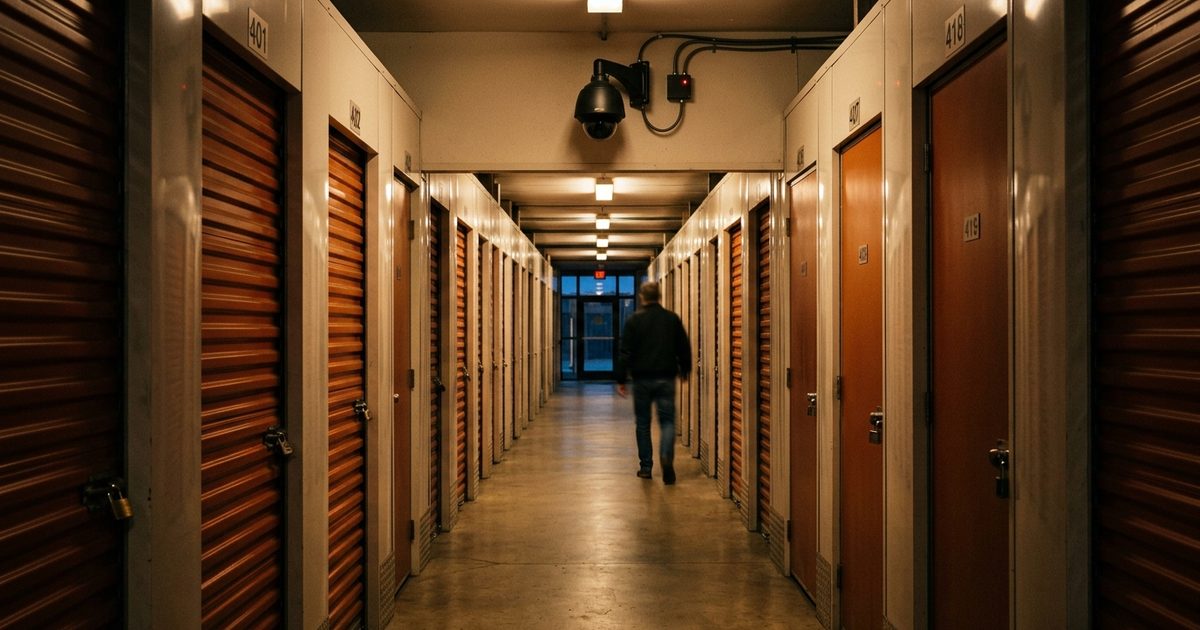
What a Coverage Plan Looks Like for Self-Storage
An effective plan covers the whole property, weighted toward the assets and the after-hours risk. For a typical drive-up facility it includes:
- The gate, with LPR: The universal chokepoint. License plate recognition at the gate ties every entry and exit to a plate and a timestamp, exposes tailgating, and flags hotlisted vehicles. When something happens, the entry log narrows the investigation instantly.
- Drive-up unit rows: Elevated coverage looking across the row ends, with object detection to classify people versus vehicles and flag movement between units when the facility should be empty.
- Outdoor RV, boat, and vehicle storage: The highest-value rows, where a single theft is a large loss. Dedicated coverage with loitering detection and LPR on any vehicle movement.
- Perimeter fence line: The back and side lines where climbers and fence-cutters bypass the gate entirely — the blind spot fixed cameras near the office never see.
The element that converts this from recording to protection is on-lot presence backed by live response: a visible Mobile Surveillance Unit with lighting and a speaker changes how the property reads to anyone scoping it, and the corners a fixed system never reached are suddenly covered — because a solar-autonomous unit goes where the rows are, not where the conduit runs.
Live Monitoring: Eyes on Every Aisle, All Night
The most expensive way to watch a storage facility is a single posted person, and the least effective is a camera no one is watching. Live remote monitoring is the middle path that beats both.
Remote video monitoring routes every alert to a SOC operator who verifies it in real time. When a camera flags someone moving down a row at 2am, the operator confirms it isn't a legitimate late tenant, then acts: a live audio warning through the unit's speaker — which alone clears most people off the lot — followed by escalation to law enforcement with time-stamped footage and the gate's LPR record of what drove in. The intruder who counted on an empty, automated facility instead meets an immediate, human response.
That verified-response model does two things a single posted person can't. It covers the entire lot at once instead of wherever one person happens to be standing, and it delivers a documented record for every incident — the alert, the verification, the escalation, the plate, all logged. When an operator files an insurance claim, defends a liability dispute between tenants, or hands law enforcement an evidence package, the documentation already exists. For multi-site operators, the same SOC covers every facility to the same standard without staffing each one.
Deployment That Matches How Facilities Grow
Storage portfolios expand — new phases, new vehicle lots, acquired sites — and fixed camera systems don't follow. Every new row or corner means another install project, which is why coverage always lags the footprint.
A relocatable solar-autonomous approach keeps pace. A unit covers a new phase the day it opens, shifts to the vehicle lot after a theft, or drops onto an acquired facility while a permanent plan is designed — no trenching, no conduit, no waiting on an electrician. Coverage becomes something you position where the risk is this month, not infrastructure frozen where it was first installed.
Common Mistakes in Self-Storage Security
- Clustering cameras near the office. The losses happen at the back rows, the far corners, and the vehicle lot — exactly where fixed coverage thins out. Weight coverage toward the assets and the after-hours risk, not the front drive.
- Recording without responding. A camera that only produces footage for after a tenant reports a loss prevents nothing. Detection has to be tied to live verification and a real-time audio warning to change outcomes.
- Skipping LPR at the gate. The gate is the one universal chokepoint. Without a plate-and-time record of every entry, investigations start from nothing and tailgating stays invisible.
- Leaving the vehicle lot thinly covered. Outdoor RV and boat rows are the highest-value, most mobile assets on the property and deserve the densest coverage — not the thinnest.
- Treating coverage as a one-time install. Facilities grow and risk moves. A fixed system installed once falls behind the footprint; a relocatable strategy keeps coverage where the exposure actually is.
Self-storage is one of several sprawling, low-staffed, high-asset environments where the same solar-autonomous, live-monitored model closes the after-hours gap. It's the flagship of a broader set of underserved verticals — from truck and cargo yards to equipment rental yards — where acres of assets sit exposed with no one watching.