
If you are new to the subject, start with what remote video monitoring is.
1. A response during the incident
Analytics flag a person or vehicle where none should be, and an operator is looking at the scene within moments. A live voice from a loudspeaker telling someone they are being watched is often enough to end it. When it is not, police are called while the person is still there.
Research on public camera systems supports the difference this makes. A 2019 review of 76 studies found that actively monitored systems were associated with about a 15% reduction in crime, while recording-only systems showed no significant effect.
2. Fewer false alarms
Traditional alarms dispatch on a sensor trip with no way of knowing what caused it. With monitoring, a person looks first. Wind-blown tarps, animals and an employee who forgot something are screened out, and you are not woken for them.
3. Verified reports to police
When an operator calls, they can say what they are seeing: how many people, what they are doing, what they are driving. Dispatch centers treat a confirmed crime in progress differently from an unverified alarm.
4. Coverage for the hours and places people cannot cover
No team can watch every gate, lot and fence line all night. Monitoring handles the continuous watching across many cameras, so people, yours or your security partner's, handle verified incidents. Security companies use it this way to extend what their officers and patrols can cover.
5. Evidence that is ready to use
Each event is logged with time, video and the operator's actions. That record supports police reports and insurance claims, and it settles questions about what happened and when.
6. Predictable cost for continuous coverage
Monitoring is billed as a service, and one operator team covers many cameras. For the factors that drive the figure, see our guide to remote video monitoring cost.
7. It goes where the need is
Monitoring is not tied to a building. Cameras on a mobile surveillance unit with solar power and a cellular connection can be monitored on a construction site, an overflow lot or a remote yard, and moved when the need changes.
Where it has limits
- It depends on good detection. Poorly tuned analytics bury operators in alerts. Ask a provider how they handle false positives.
- It depends on the camera view. A camera that cannot see the gate cannot protect it. Placement and lighting still matter.
- It is not a physical presence. An operator can warn and call police but cannot lock a door. Some sites need people on the ground as well.
- Response depends on local police. Verified calls are prioritised in many places, but arrival times vary.
Event-based or continuous
Most monitoring is event-based: operators respond when analytics raise an alert. Some sites add scheduled video tours or continuous live viewing during high-risk hours. Our comparison of event-based and live video monitoring explains when each fits.
What to ask a provider
- Who watches, where are they, and how are they trained?
- What happens, step by step, when an alert comes in?
- How are false alarms filtered?
- What do I receive after an incident?
- Does it work with my existing cameras?
Our guide to choosing a video monitoring provider goes through these in detail.
How VDS delivers it
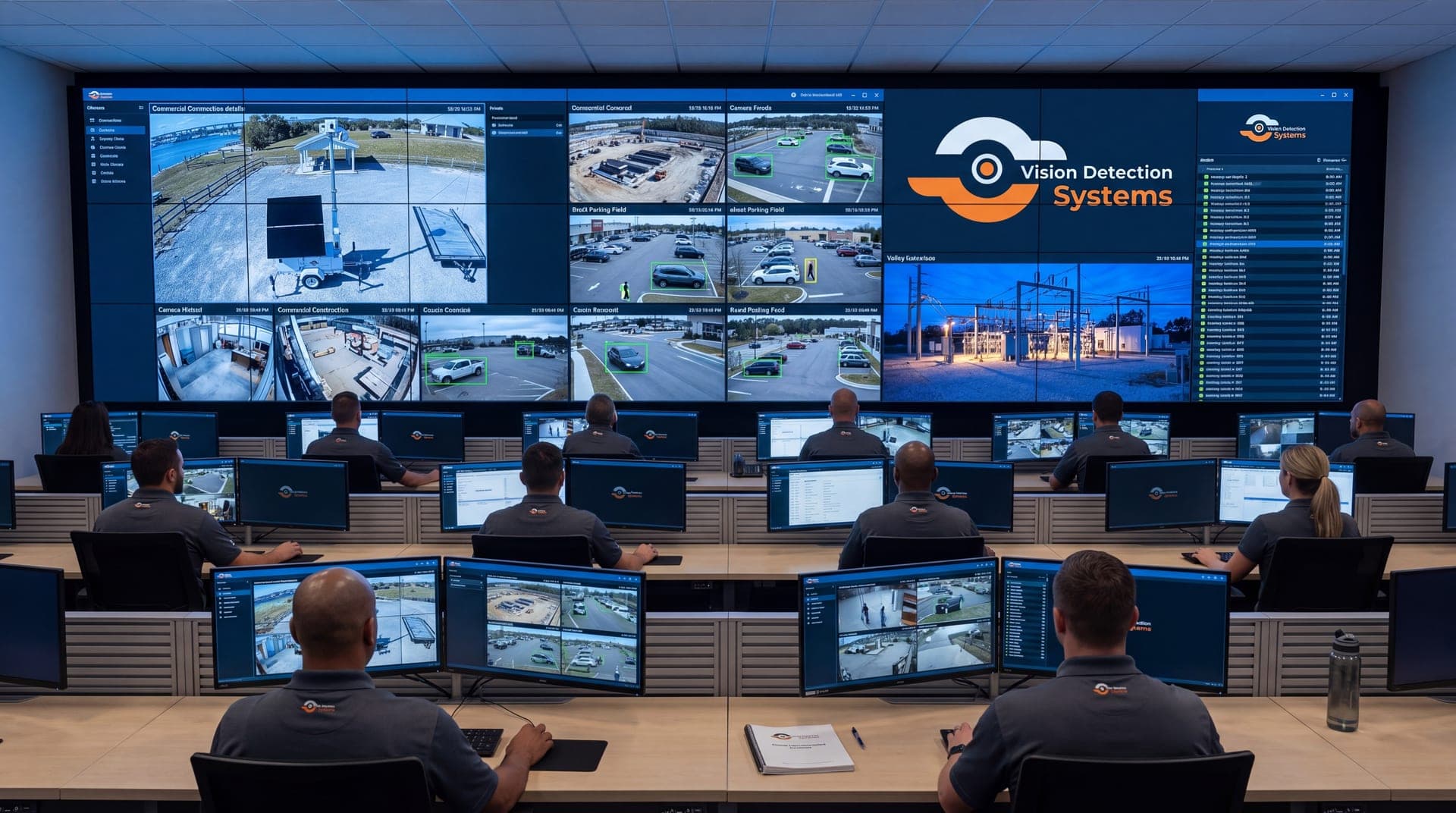
VDS runs a 24/7 US-based security operations center. Operators verify AI alerts, respond with live talk-down, and dispatch police with video. The service works with VDS trailers or with cameras you already have. See remote video monitoring or talk to our team.
Sources
- Piza, E. L., Welsh, B. C., Farrington, D. P., & Thomas, A. L. (2019). CCTV surveillance for crime prevention: A 40-year systematic review with meta-analysis. Criminology & Public Policy, 18(1). onlinelibrary.wiley.com