
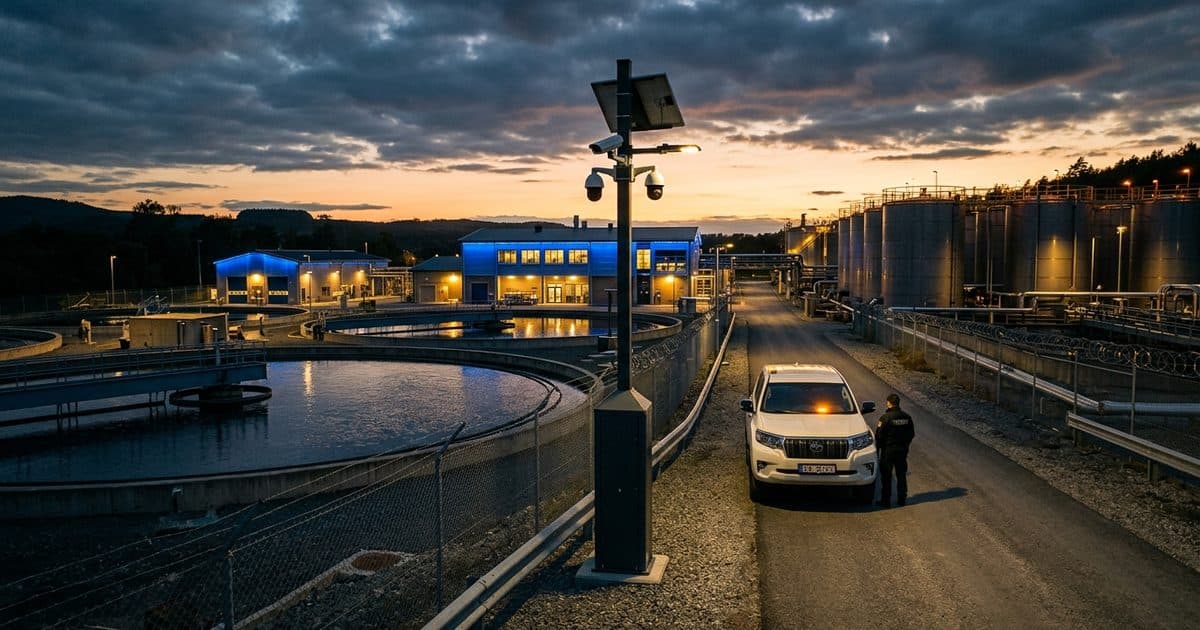
One breach at the plant.A thousand unmanned sites behind it.
Water and wastewater utilities run one or two central plants worth watching closely — and dozens of pump stations, tanks, and well heads with no power, no comms, and no one on site. Tampering at a treatment facility is a public-health event, not a property crime. VDS covers the plant during elevated-risk periods and drops solar-autonomous coverage on remote unmanned sites in under 20 minutes, with a live SOC operator behind every alert.
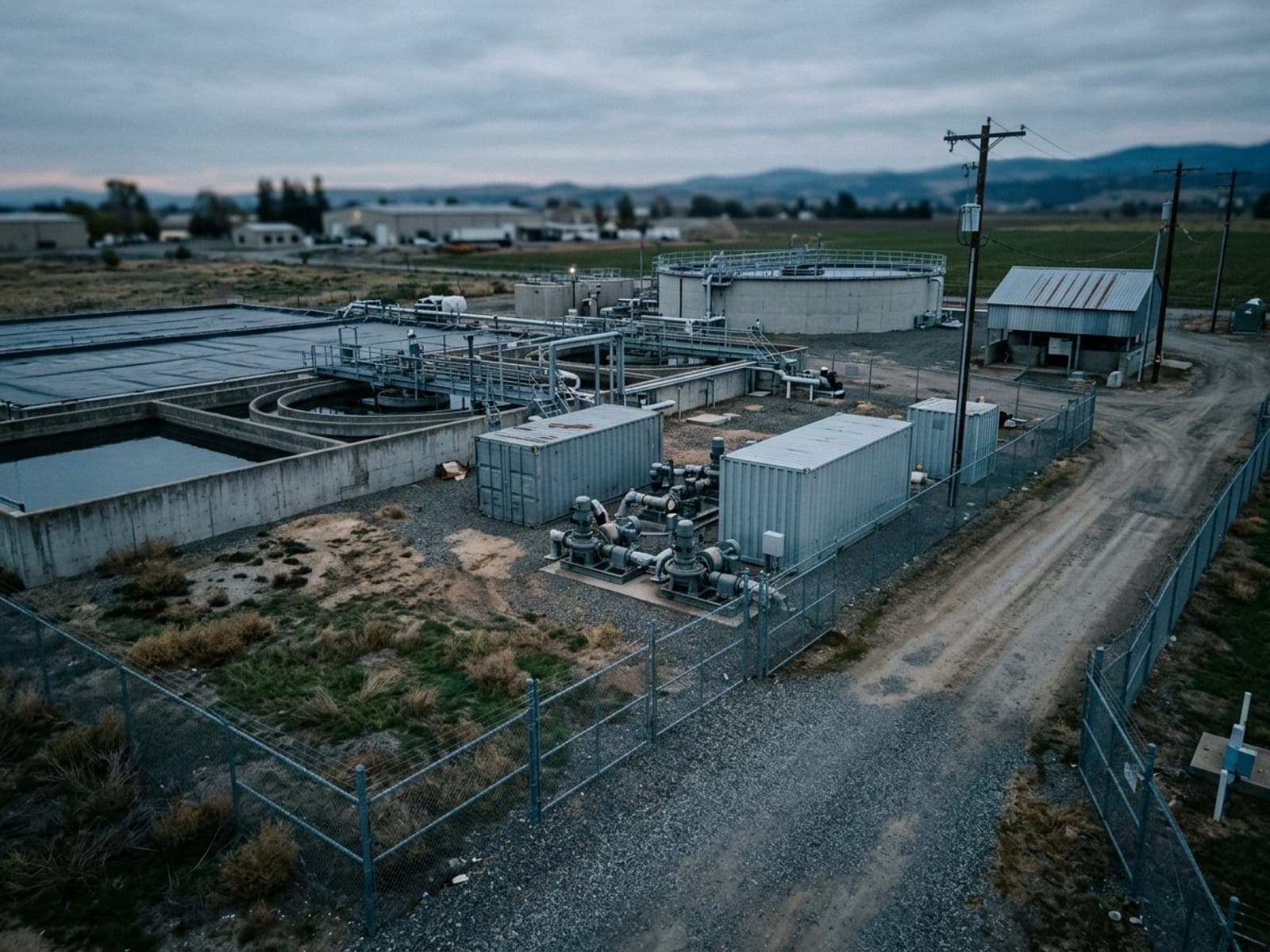
A water utility's risk map is a hub with far-flung spokes: a central treatment plant that justifies serious fixed security, and behind it a long tail of pump stations, lift stations, tanks, and well heads that justify almost none — unstaffed, frequently unlit, and often without grid power or wired communications at all. The threat splits the same way. At the plant, unauthorized access to treatment processes or chemical storage is a public-health event with regulatory consequences, not a property loss. At the remote sites, exposed copper, motors, and control equipment draw the same metal theft that hits any unattended infrastructure, with the added cost that a disabled lift station announces itself as an overflow or an outage.
The traditional compromise — harden the plant, accept the gaps — is getting harder to defend as risk and resilience assessments under America's Water Infrastructure Act push utilities to document security at assets they have no practical way to wire. A passive recorder at a tank site would not meet the real requirement anyway: an intrusion near finished water or chemical storage needs to be verified and acted on while it is happening, not reconstructed at the next site visit.
This is why solar-powered mobile surveillance maps so cleanly onto water utility security. A unit reaches the well field or lift station no cabling project could economically serve — no trenching, no fiber, no power drop — and the same unit can stand up an added layer over the plant, tanks, or chemical storage during a threat period or construction window. Every alert routes to a live SOC operator around the clock, who verifies the intrusion, warns the subject through the on-unit speaker, and calls law enforcement in with live video, leaving the documented monitoring trail that assessments and audits ask for.
The rest of this page connects tampering, perimeter, copper-theft, and compliance pressures to the configuration VDS deploys across utility systems, the outcomes operators describe, and answers to the questions utility and operations managers most often ask about remote-site coverage and documentation.
Exposed sites.
High-value targets with no one watching.
Minimal staffing, sprawling ground, and valuable assets in the open — the conditions that turn a site into a soft target the moment everyone goes home.
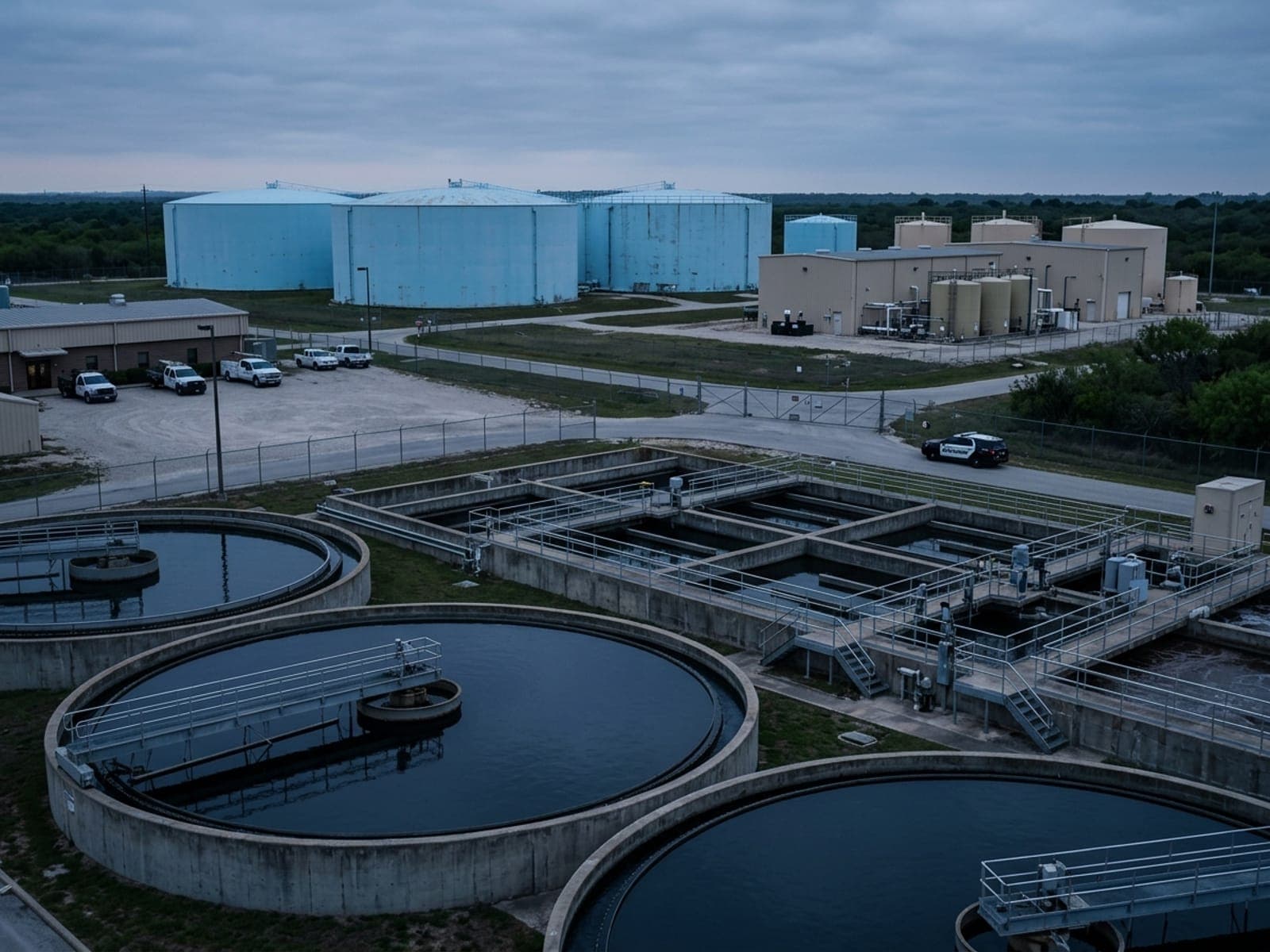
Tampering at treatment and storage
Unauthorized access to treatment processes, chemical storage, or a finished-water tank isn't a theft risk — it's a public-health and regulatory event that demands immediate verification, not next-day review.
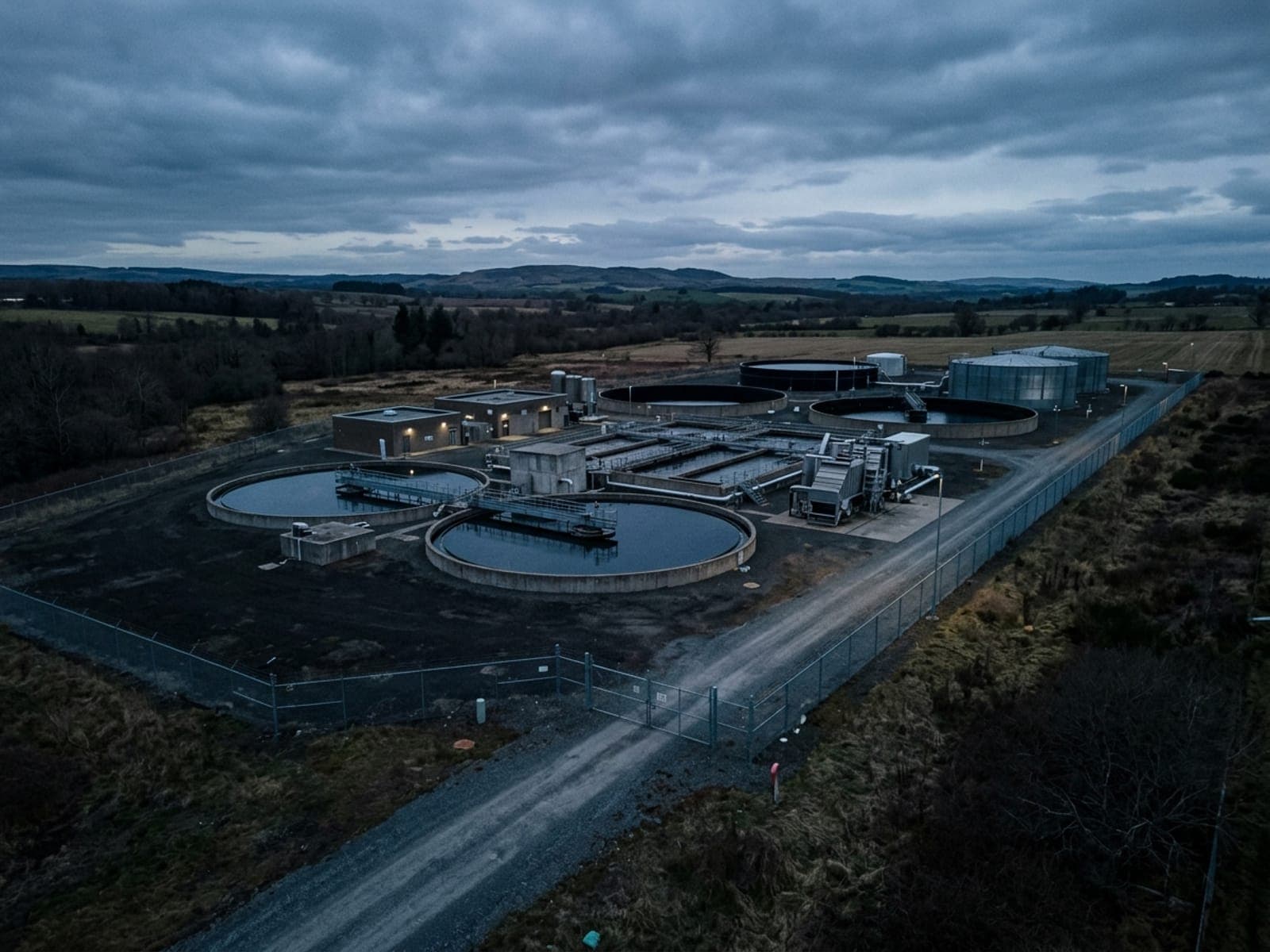
Perimeter breach and trespass
Fence lines around plants, reservoirs, and storage tanks sit in open, often rural ground where a cut fence or a climbed gate can go unnoticed for hours.
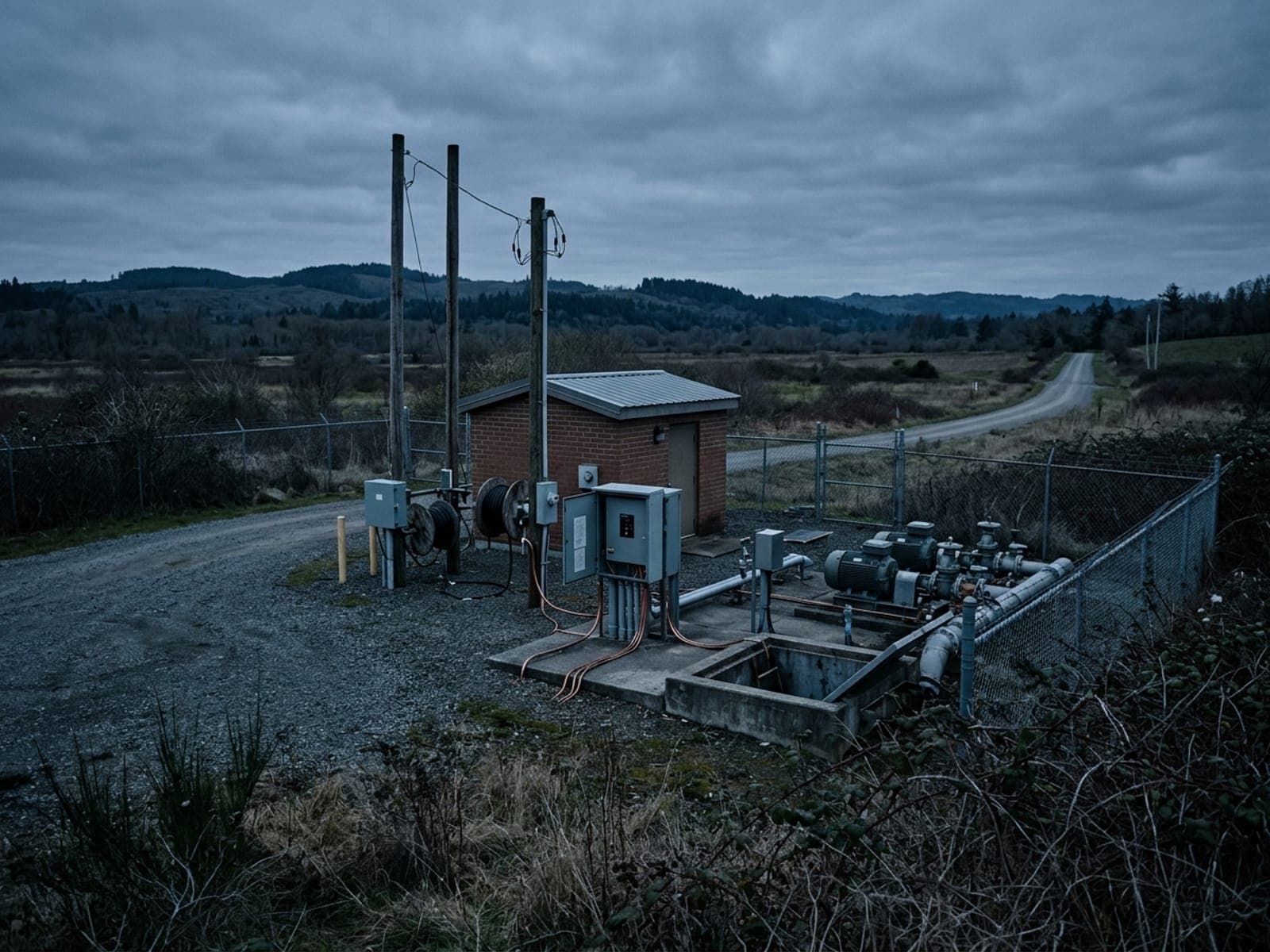
Copper and equipment theft at pump stations
Remote lift and pump stations hold exposed copper wiring, motors, and control equipment — unstaffed, often unlit, and miles from the nearest responder.
Vandalism and mounting regulatory pressure
Vandalism at unmanned sites compounds with growing expectations under AWIA risk and resilience assessments and EPA guidance to document perimeter security and monitoring — pressure most utilities have no easy way to meet at every remote site.
Drop the trailer.
The SOC takes it from here.
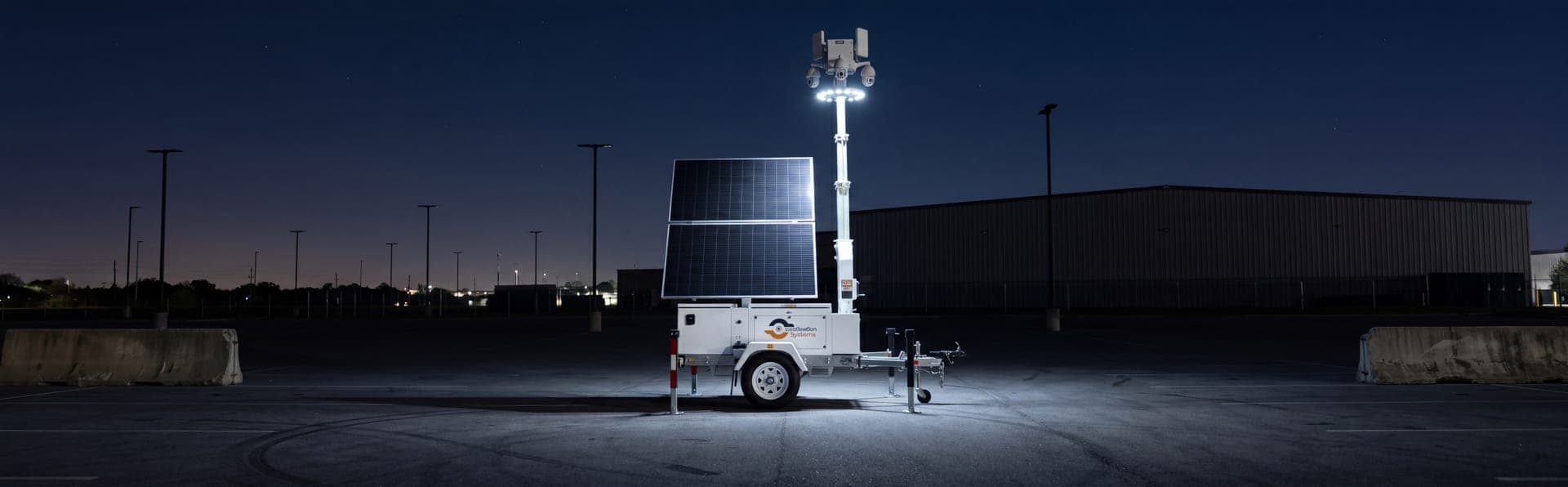
Solar-autonomous surveillance with AI analytics and live SOC operators. No power, no internet, no staffed post required.
The one site that matters most.
Watched like it does.
During a threat period, an infrastructure upgrade, or a known vulnerability window, an MSU adds a second layer of live-verified coverage over the treatment plant, chemical storage, and finished-water tanks — without touching the facility's existing fixed system.
- Rapid-deploy coverage over treatment and storage areas
- AI loitering detection near tanks and chemical storage
- Live SOC verification on every alert, day or night
- Deploys for a threat window or stays long-term
 STEP 01
No power at the well head.
No problem.
Pump stations, lift stations, and well fields sit miles from grid power and wired internet. The MSU runs on solar with 4G/5G cellular backhaul, so coverage reaches every unmanned site in the system — not just the ones near a utility pole.
- Solar-autonomous — no grid power required
- 4G/5G cellular backhaul, no fiber or trenching
- Deploys to well fields, tanks, and lift stations alike
- Relocatable as the utility's risk priorities shift
 STEP 02
Every vehicle at the fence.
Logged and matched.
License plate recognition at plant and pump station access points ties every entry to a plate and a timestamp, flags hotlisted vehicles, and gives investigators and regulators a verifiable record instead of a gap.
- Automatic plate capture at every gated access point
- Entry/exit log tied to time and plate
- Hotlist alerts for flagged or unauthorized vehicles
- Evidence packages for law enforcement and regulators
 STEP 03
No one on site.
A live operator instead.
A verified detection at a treatment plant or pump station routes to a live SOC operator who confirms the threat, issues a real-time audio warning, and escalates directly to law enforcement — the response a public-health-critical site needs, without staffing every remote location.
- Live operator verification on every alert
- Real-time audio warnings through the on-unit speaker
- Direct escalation to law enforcement with footage
- Documented incident logs for compliance and audits
 STEP 04
Every asset on site.
One platform.
The MSU adapts to a utility's full footprint — from the central plant to the most remote well head. Here's where operators deploy it most.
Treatment plants
Central facilities where contamination risk and process security make verified, live-monitored coverage a public-health necessity, not a convenience.
Remote pump & lift stations
Unstaffed sites with exposed copper and equipment, often with no power or wired connectivity for miles.
Finished-water storage tanks
Elevated and ground-level tanks where unauthorized access is a direct contamination and compliance concern.
Well fields
Distributed, low-traffic sites spread across open ground where a single incident can go unnoticed for days.
Reservoirs
Large open-water assets with long perimeters that are impractical to wire or staff continuously.
Elevated-risk periods
Rapid, temporary coverage during construction, known threats, or heightened alert levels at any facility in the system.
Real operators.
Real numbers.
Metrics below reflect real VDS deployments across water and wastewater utility customers. Names protected per agreement.
Customer-reported outcomes from VDS deployments. Results vary by site conditions, monitoring configuration, and response protocols. How we measure →
We have thirty-some remote sites and no way to power a camera at half of them. The trailer went to our most exposed lift station the same week we called, and it's been the easiest security decision we've made.
 MSU-A · FLAGSHIPSOLAR MSU · WATER & WASTEWATER
The Mobile Surveillance Unit.
Built for sites with no infrastructure.
Solar power, cellular backhaul, gate LPR, and 24/7 SOC monitoring in a single trailer that reaches the plant, the tank farm, and the well head no one wired for security.
From assessment
to covered.
Most utilities go from initial conversation to a live trailer on their highest-priority site inside 7 business days.
System assessment
We review your plant, tank, well field, and pump station footprint, existing fixed systems, and any AWIA risk assessment findings. Fast quote turnaround.
Sensor configuration
Detection zones for tanks, chemical storage, and fence lines; LPR at gated access points; alert rules set for public-health-sensitive areas.
Delivery & commissioning
Trailer delivered to the priority site, mast raised, cameras and LPR calibrated. SOC monitoring begins immediately — no trenching, no fiber run.
Monitoring, reporting & relocation
Documented incident and access logs for compliance and audits. Units relocate across the system as risk priorities and elevated-threat periods shift.
Common questions.
How fast can VDS deploy at a water & wastewater site?
A mobile surveillance unit is live in under 20 minutes once it arrives — most water & wastewater sites go from first call to monitored coverage in days, not months. Most utilities go from initial conversation to a live trailer on their highest-priority site inside 7 business days.
Do the units need power or internet at the site?
No. VDS units are solar-autonomous with battery storage and connect over cellular (4G/5G), so there is no trenching, no generator refueling schedule, and no dependence on site IT. That is what makes them practical for sites where fixed infrastructure is missing or still under construction.
What happens when the system detects someone after hours?
AI detection classifies the event and filters routine motion before a person ever sees it. A SOC operator verifies the live feed, challenges intruders by voice through 120 dB speakers with strobes, and — when it escalates — dispatches police with live video of the scene.
Which water & wastewater security problems does monitored surveillance address?
The most common incidents at water & wastewater sites are tampering at treatment and storage, perimeter breach and trespass, copper and equipment theft at pump stations, vandalism and mounting regulatory pressure — the same exposure areas covered in the sections above. Monitored coverage addresses them by making the site actively watched instead of just recorded.
Can VDS work alongside our existing guards or security partner?
Yes — that is the standard model. Monitored surveillance carries the perimeter and after-hours watch, so people — yours or your security partner's — handle verified incidents instead of standing watch over empty hours. The SOC can route verified alerts to your team, your guard provider, or police dispatch.
Cover the plant and the sites no one else can reach.
Tell us your plant, tank, and pump station footprint and where the gaps are — we'll build the coverage plan, fast.