
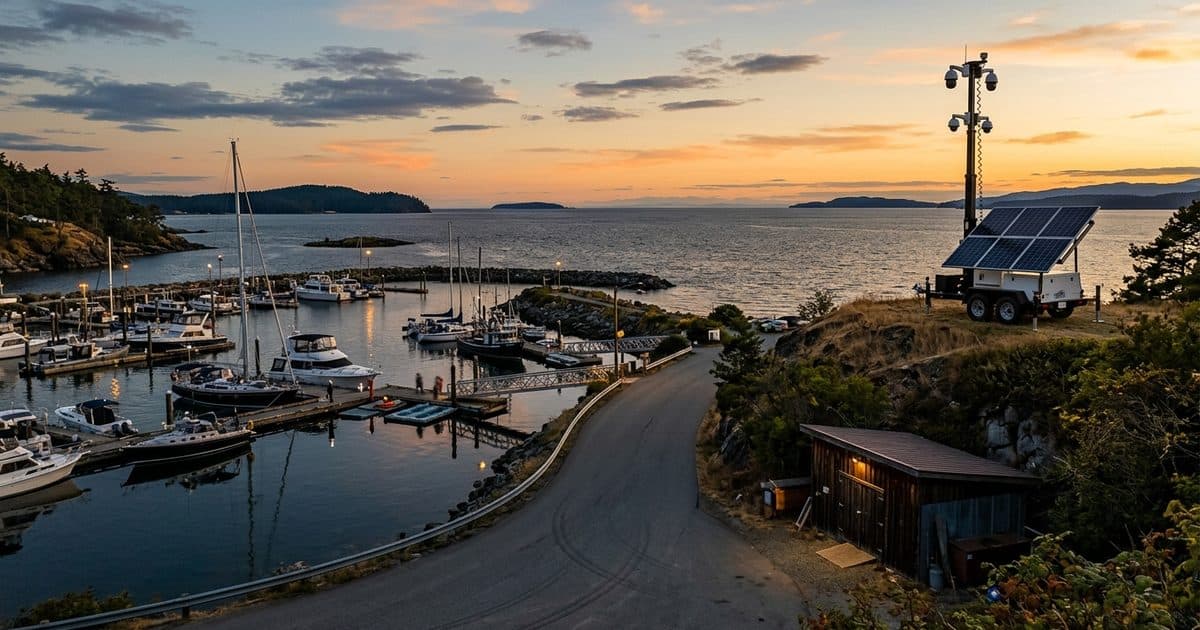
No grid. No fiber. No fast response.That's where we start.
An island strips away the grid power, the hardwired internet, and the police station down the road — leaving the core remote-security problem with no shortcuts. VDS is built for exactly that: units that generate their own power, transmit over cellular or satellite, and tie a dock, a compound, and a shoreline into one live-monitored view — buying back the response time that distance takes away.
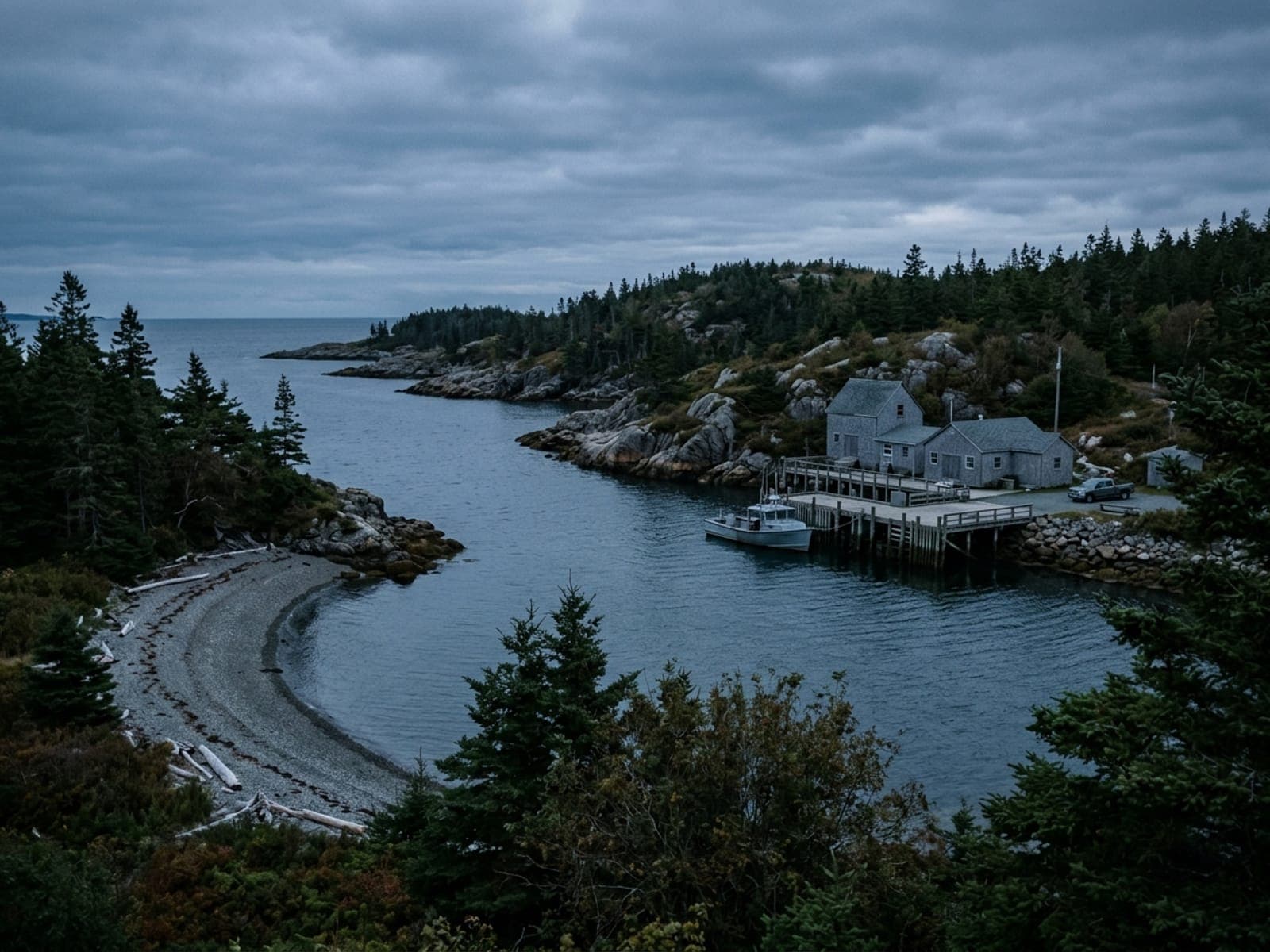
Island and off-grid properties invert the usual security math. The water that keeps casual trouble away also keeps help away: anyone who does arrive — at the dock, or at a quiet cove on the far shore — has time a mainland intruder never gets. Seasonal occupancy compounds it. A house that sits empty between visits signals its own vacancy to every passing boat, and by the time the next crossing happens, an incident has long since started, finished, and gone cold.
Standard security architecture quietly assumes infrastructure: grid power, wired broadband, and a patrol car minutes down the road. An island offers none of it. Cameras that merely record become archaeology — footage reviewed after the boat ride over, documenting an event nobody could have interrupted. What actually closes the gap is live verification with immediate reach-back: an operator who sees the landing as it happens, challenges the intruder by voice on the spot, calls the owner or manager, and coordinates marine patrol or law enforcement while the vessel is still tied up.
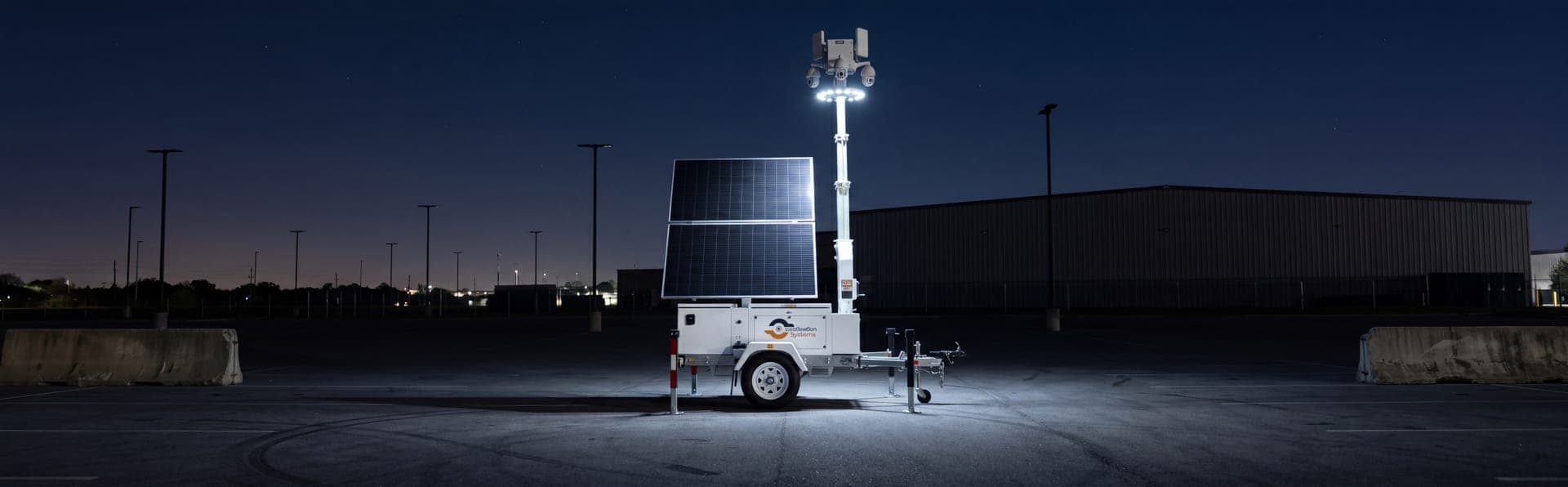
Few settings match a solar-powered mobile surveillance unit's design brief this exactly. Each unit generates its own power, holds battery reserve to ride through stretches of storm and overcast, and transmits over cellular where a signal exists — or satellite where it does not. Positions at the dock, the compound, and the vulnerable stretch of shoreline tie into one live-monitored picture, with hardware sized to need as little on-site attention as possible, because reaching the equipment means a boat. Watched around the clock by the VDS SOC, a property nobody occupies becomes one that is always answered — the substance of practical private island security.
The sections below cover the threats owners and managers report — unauthorized landings, off-season theft, the response-time gap, unwatched secondary shorelines — the solar-and-satellite configuration VDS deploys against them, outcomes from real off-grid deployments, and answers to common questions about power, connectivity, and servicing a system across water.
Exposed sites.
High-value targets with no one watching.
Minimal staffing, sprawling ground, and valuable assets in the open — the conditions that turn a site into a soft target the moment everyone goes home.
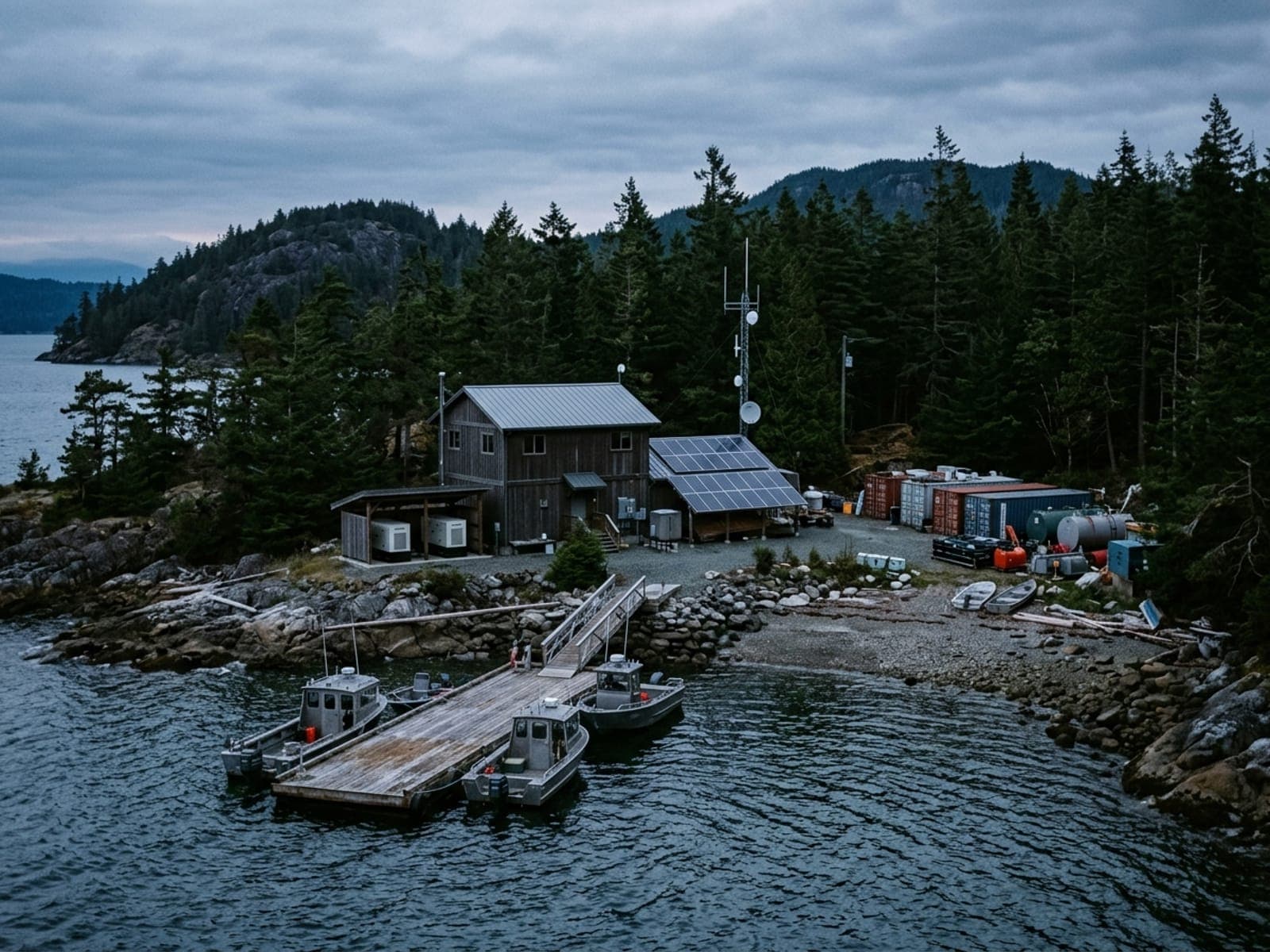
Unauthorized landings
Docks and beaches are the funnels everyone must arrive through — and the same water that limits access keeps responders far away.
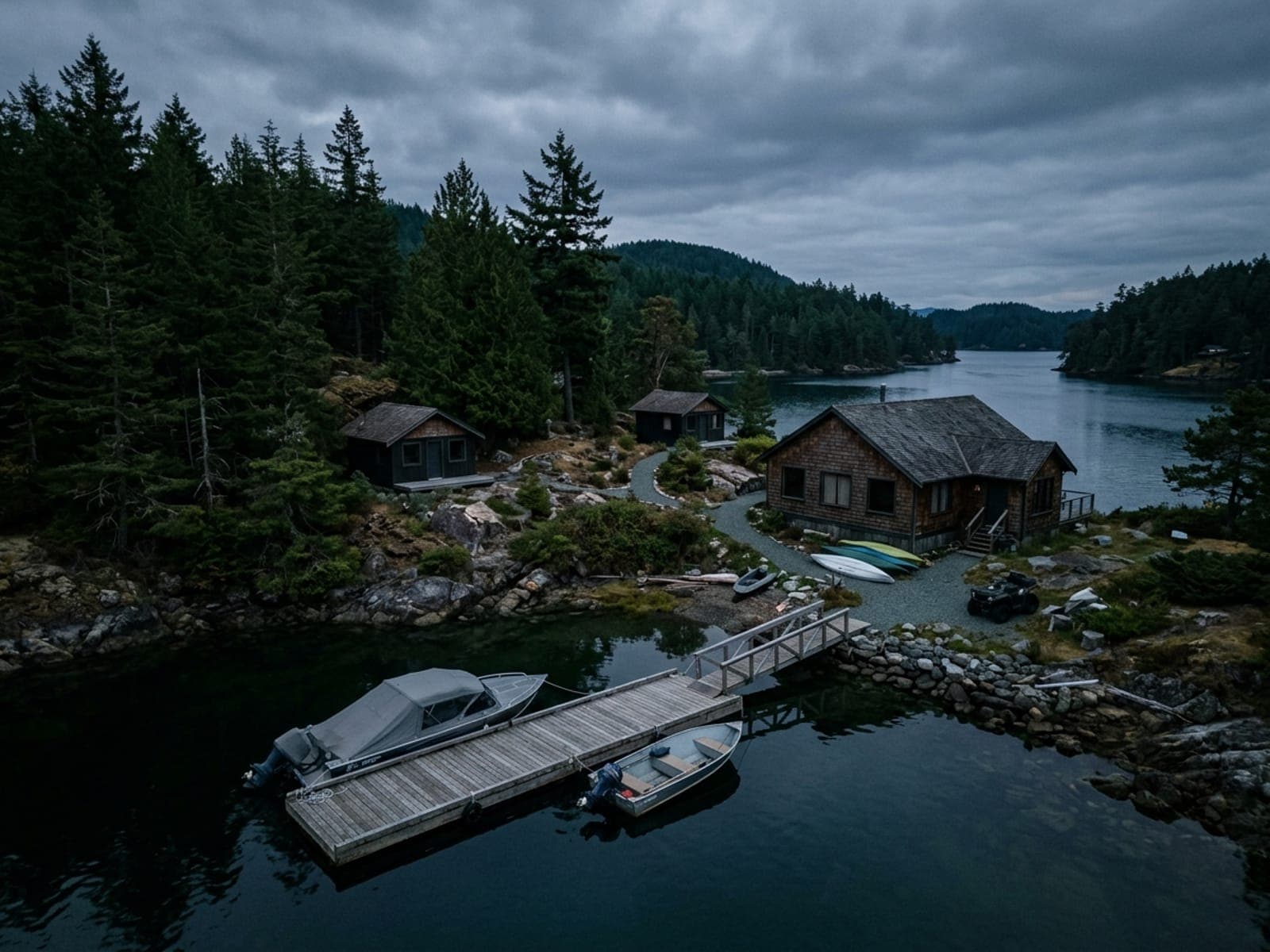
Off-season vacancy theft
Seasonal and vacation properties sit empty for months, advertising their vacancy to anyone passing by water.
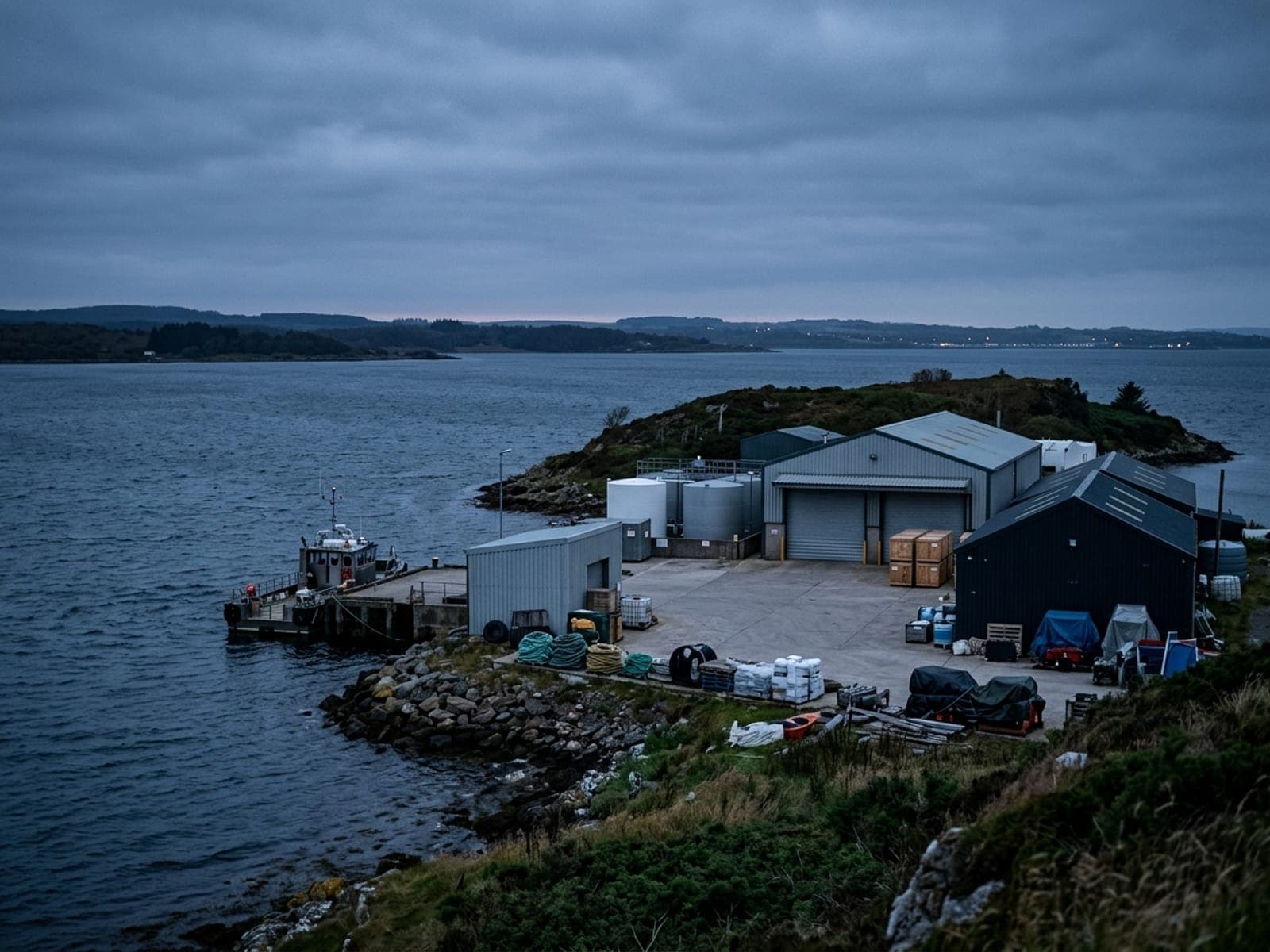
The response-time gap
An incident a mainland site would resolve in a five-minute police response can play out completely before anyone crosses the water.
Unwatched secondary landings
Coves and beaches away from the main dock give a boat a quiet place to put in — with no staff and too much shoreline to watch.
Drop the trailer.
The SOC takes it from here.
Solar-autonomous surveillance with AI analytics and live SOC operators. No power, no internet, no staffed post required.
No grid to plug into.
No wire to pull.
Solar generation with oversized battery storage powers each position indefinitely, and transmission runs over 4G/LTE cellular — or satellite where there's no cell signal. Coverage no longer depends on running power and data across water.
- Solar with 72+ hour battery autonomy
- 4G/LTE cellular or satellite backhaul
- No grid, no generator, no fuel runs
- Rides through multi-day storms and overcast
 STEP 01
Watch the points.
Not every foot.
You don't blanket an island — you cover the dock everyone must pass through, the compound and structures, and the vulnerable shoreline, tied together through one feed with no cabling between positions.
- Priority coverage at the dock or landing
- Overlapping coverage of the compound
- Thermal detection at secondary landings
- No wiring between independent positions
 STEP 02
Response at the speed
of the threat.
Every alert reaches a live SOC operator who verifies it, issues an audio challenge through the speaker, calls the owner or manager, and coordinates marine patrol or law enforcement — instead of an incident playing out unseen until the next visit.
- Live verification on every alert
- Real-time audio challenge through the speaker
- Owner and law-enforcement escalation
- Documented record for a property you can't watch
 STEP 03
Every service call
is a boat trip.
Hardware and battery capacity are sized for minimal intervention, and the system reports its own health remotely — worth far more on an island than the same system on the mainland, where a technician can just drive over.
- Oversized battery for worst-case autonomy
- Remote system-health monitoring
- Minimal on-site intervention by design
- Add or reposition units as needs change
 STEP 04
Every asset on site.
One platform.
The MSU is built for sites with no infrastructure at all. Here are the island and off-grid scenarios operators deploy for most often.
Private islands
Docks, main residence, and shoreline on an island with no grid power and no year-round staff.
Island resorts
Dispersed high-value assets and a long shoreline that staff can't watch end to end.
Seasonal & vacation properties
Homes that sit unoccupied for months and need eyes on them from the mainland.
Remote waterfront compounds
Off-road, off-grid estates where the infrastructure runs out but the risk doesn't.
Docks & landings
The one place everyone must arrive — the highest-value camera on any island.
Off-grid remote sites
Any site with no power and no cell service where satellite backhaul keeps coverage live.
Real operators.
Real numbers.
Every metric below reflects a real VDS off-grid deployment. Names protected per agreement.
Customer-reported outcomes from VDS deployments. Results vary by site conditions, monitoring configuration, and response protocols. How we measure →
There's no power and no cell out there. The unit runs on solar, talks to the SOC over satellite, and I finally know what happens at the dock when I'm not on the island.
 MSU-A · FLAGSHIPSOLAR + SATELLITE · ISLAND
The Mobile Surveillance Unit.
Built with no grid in mind.
Solar power, satellite backhaul, thermal detection, and 24/7 SOC monitoring — coverage for a dock, a compound, and a shoreline with no wiring and no crossing to service it.
From assessment
to covered.
Islands take a bit more transport planning than a roadside site — but once positioned, coverage is live and monitored the same day.
Site assessment
We map the dock, compound, and shoreline, and test cellular and satellite signal at each position during planning.
Sensor configuration
Camera presets, thermal zones, battery sizing for worst-case autonomy, and alert rules configured for the island.
Delivery & commissioning
Units barged or transported to each position, powered on, and calibrated. SOC monitoring begins over cellular or satellite.
Remote monitoring & health
Live monitoring plus remote system-health checks minimize crossings. Reposition or add units as needs change.
Common questions.
How fast can VDS deploy at a islands & off-grid site?
A mobile surveillance unit is live in under 20 minutes once it arrives — most islands & off-grid sites go from first call to monitored coverage in days, not months. Islands take a bit more transport planning than a roadside site — but once positioned, coverage is live and monitored the same day.
Do the units need power or internet at the site?
No. VDS units are solar-autonomous with battery storage and connect over cellular (4G/5G), so there is no trenching, no generator refueling schedule, and no dependence on site IT. That is what makes them practical for sites where fixed infrastructure is missing or still under construction.
What happens when the system detects someone after hours?
AI detection classifies the event and filters routine motion before a person ever sees it. A SOC operator verifies the live feed, challenges intruders by voice through 120 dB speakers with strobes, and — when it escalates — dispatches police with live video of the scene.
Which islands & off-grid security problems does monitored surveillance address?
The most common incidents at islands & off-grid sites are unauthorized landings, off-season vacancy theft, the response-time gap, unwatched secondary landings — the same exposure areas covered in the sections above. Monitored coverage addresses them by making the site actively watched instead of just recorded.
Can VDS work alongside our existing guards or security partner?
Yes — that is the standard model. Monitored surveillance carries the perimeter and after-hours watch, so people — yours or your security partner's — handle verified incidents instead of standing watch over empty hours. The SOC can route verified alerts to your team, your guard provider, or police dispatch.
Secure the island without a bridge.
Tell us about the dock, the compound, and the shoreline — we'll design coverage that runs with no grid and no fiber.