
Construction site security in Washington.
Washington construction runs from crane-heavy mixed-use towers in Seattle to orchard-country warehouses and Columbia Basin industrial pads. Dense urban lots invite after-hours trespass and encampment pressure, while remote eastern sites sit miles from the nearest patrol and often have no grid power available at all.
VDS puts solar-powered, cellular-connected surveillance trailers on Washington construction sites. AI detection flags people and vehicles, operators verify alerts and talk down live, and your team gets video of every verified event. No site power, trenching or internet required.
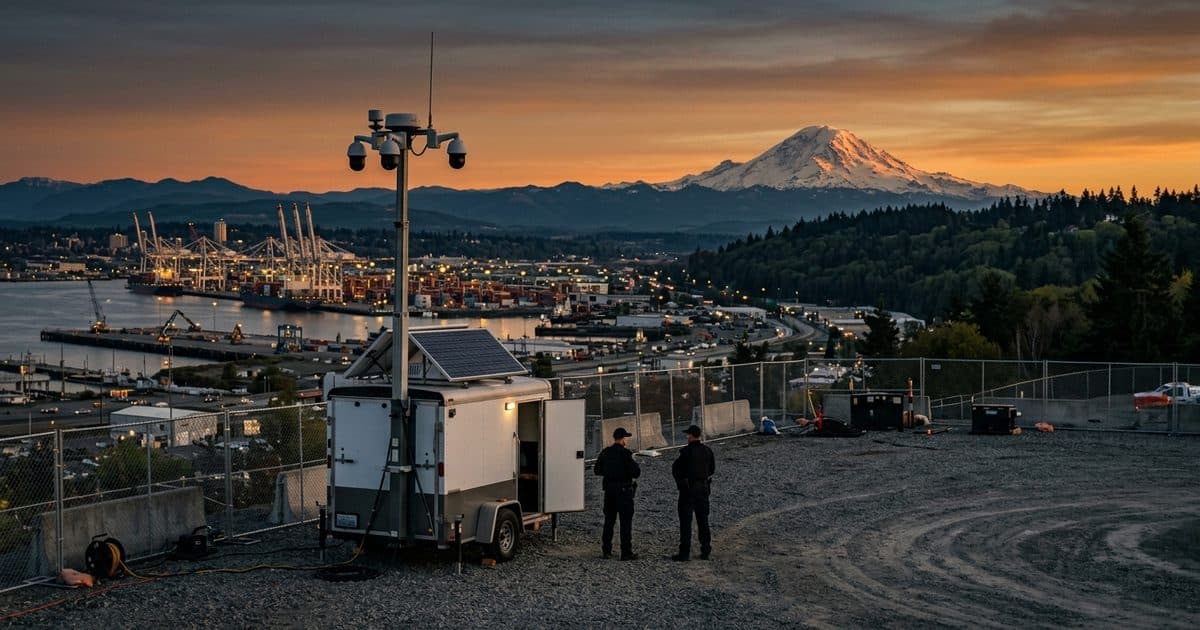
Projects we cover in Washington.
Different project types carry different risks. Here is how coverage plays out on the work that drives Washington construction.
Urban mixed-use towers
Tight Seattle and Tacoma lots mean material staged on sidewalks and shared alleys. A trailer on the perimeter watches laydown and street access without needing a power drop.
Warehouse and data center shells
Large eastern Washington pads hold stored copper, cable reels and electrical gear for months. A mast-mounted view across open ground flags vehicles pulling in after hours.
Highway, bridge and rail work
Long linear work zones along mountain passes and river crossings are hard to fence. Relocatable trailers follow the active stretch and cover staged equipment each night.
Townhome and subdivision builds
Suburban plats in the south Sound and Vancouver area fill with appliances, framing lumber and fixtures. One trailer at the entrance can cover a whole phase before locks go on.
What gets targeted.
Copper wire and conduit lead the list in the Puget Sound area, followed by tools from job boxes and catalytic converters cut from parked equipment. Fuel drained from tanks is a steady problem on rural and highway sites. Dark, wet winter evenings start early, which lengthens the window when trespassers and scrappers can work unseen. Vacant buildings under renovation also draw people looking for shelter, metal and fixtures.
Weather and power.
Western Washington brings long gray winters, low sun angles and persistent drizzle, so panel tilt, a generous battery reserve and a clear southern exposure matter more than raw panel size. East of the Cascades the picture flips: strong summer sun, but cold snaps, wind and snow on the mountain passes. The trailer is solar powered and cellular connected, with the mast raised in under 20 minutes, so planning mostly means choosing an open spot.
Where we deliver in Washington.
VDS can deliver across the Puget Sound and Seattle-Tacoma region, over the mountains to Spokane and the Inland Northwest, down into the Tri-Cities, and throughout Southwest Washington near the Columbia River.
See it on your site.
Type your address, and the designer opens on a live map of your property — place trailers, draw the perimeter, and get a coverage plan in minutes. No call required.
Common questions.
Do I need a power hookup for a trailer on a Washington site?
No. The trailer runs on its own solar panels and battery and connects over cellular, so you do not wait on a temporary electrical service before cameras can start watching. If you are unsure about site rules, confirm requirements with the local authority or your general contractor.
How does the system cope with a gray Seattle winter?
Panels still gather light under cloud, and the battery carries the unit through dim stretches. Ask us to size the setup for your site: a south-facing spot, adjusted panel tilt and a larger battery reserve all help through the darkest months of the year.
Can you cover a remote site east of the Cascades?
Yes, if there is cellular coverage. Cameras watch the site around the clock, AI flags people and vehicles, and a live talk-down can speak to intruders. Delivery is usually about a week, depending on where the trailer is coming from.
Can a construction site in Washington get cameras before power is connected?
Yes. Each trailer runs on solar power with cellular connectivity, so it works on a bare lot with no utilities, no trenching and no site internet. One person levels the unit and raises the mast in under 20 minutes.
Can one trailer move between phases or sites?
Yes. Trailers relocate as work moves, from site clearing to foundations to framing to finish, and between projects. Term options run from short rentals to annual subscriptions.
Cost & buyer guides
General Contractor Site Security: Access, Liability and Schedule
General contractor site security explained: control subcontractor access, document incidents for liability, and protect the schedule from theft and damage.
Site Security Plan: A 6-Step Framework for Construction and Commercial Sites
Build a site security plan that satisfies insurers, bonding requirements, and compliance audits. A 6-step framework covering risk assessment through reporting.
Night Shift Construction Security: Lighting, Visibility and Worker Safety
Night shift construction security covers lighting, visibility, worker safety and trespass control for sites that stay active after dark. A practical guide.
Protect your Washington site this week.
Tell us the address, phase and timeline. We will quote the trailer, monitoring plan and delivery.