
Construction site security in Virginia.
Virginia construction is shaped by big data center campuses in Northern Virginia, shipyard and port work in Hampton Roads, steady apartment and office building around Richmond, and warehouses strung along I-81 in the valley. Sites range from crowded commuter corridors to remote ridgetop lots where help is far away.
VDS puts solar-powered, cellular-connected surveillance trailers on Virginia construction sites. AI detection flags people and vehicles, operators verify alerts and talk down live, and your team gets video of every verified event. No site power, trenching or internet required.
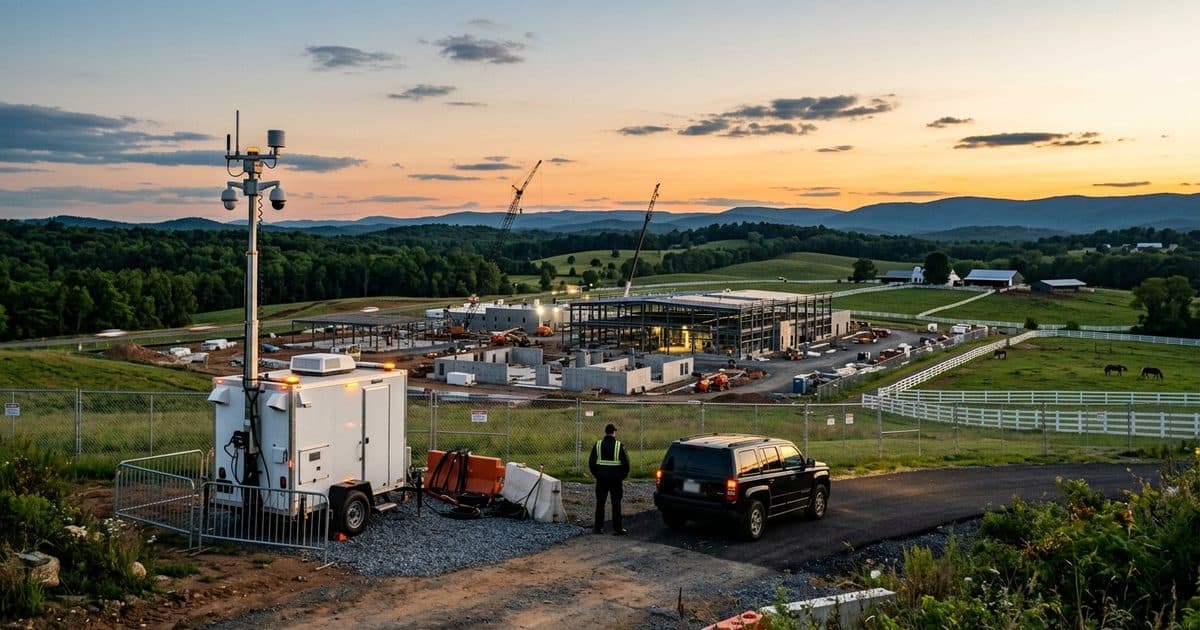
Projects we cover in Virginia.
Different project types carry different risks. Here is how coverage plays out on the work that drives Virginia construction.
Northern Virginia data center campuses
Enormous shells hold stacks of electrical gear, copper and cable that attract organized theft. Trailers watch gates and perimeters, with cameras verifying people before anyone is dispatched.
Hampton Roads port and shipyard work
Waterfront yards with heavy equipment, steel and fuel sit near busy roads and open water. A trailer covers gates and lay-down areas that existing lighting does not reach.
Richmond multifamily and mixed use
Mid-rise apartments and renovations store appliances, wire and finishes. Trailers sit at construction entrances and watch loading areas until buildings are secured and occupied.
I-81 valley warehouses
Distribution buildings go up on open sites between small towns with sparse patrol coverage. A trailer on the access road verifies trucks and visitors after the crew leaves.
What gets targeted.
Copper wire, switchgear parts and cable are the leading targets, especially on data center and utility work. Catalytic converters and batteries come off parked equipment, and fuel is drained from tanks on remote lots. Tools walk out of job boxes at apartment and office projects. Losses spike on weekends, holidays and during storm cleanup, when crews are away, roads are busy elsewhere, and sites sit dark.
Weather and power.
Virginia has humid summers, coastal storms and hurricane season in Hampton Roads, ice in the mountains, and heavy snow in the valley some winters. The trailer is solar powered and cellular connected, and the mast can be lowered ahead of tropical systems and raised again in under 20 minutes. Plan battery reserve for storm weeks, tilt panels for winter sun, and anchor or position the unit away from flood-prone ground.
Where we deliver in Virginia.
VDS delivers to Northern Virginia, Hampton Roads, the Richmond Metro, and the Shenandoah Valley along the I-81 corridor, including remote sites in between that sit well away from the nearest town.
See it on your site.
Type your address, and the designer opens on a live map of your property — place trailers, draw the perimeter, and get a coverage plan in minutes. No call required.
Common questions.
What happens to a trailer when a hurricane threatens Hampton Roads?
We lower the mast ahead of the storm, which takes little time, and can reposition the unit away from low or flooding ground if you give notice. After conditions clear, the mast goes back up in under 20 minutes, and we can confirm the cameras and connection are working before your crew returns.
Is a trailer a fit for a Northern Virginia data center site?
Yes, for the construction phase. It watches gates, laydown yards and perimeters with cameras and live talk-down, so people, yours or your security partner's, handle verified incidents. Check the client's security rules with your general contractor before placement, since some campuses restrict outside equipment.
Can you cover a remote warehouse site in the Shenandoah Valley?
Yes. A solar powered, cellular connected trailer needs no utility hookup, so empty valley parcels work well. Confirm cell signal at the site, and expect delivery in about a week at most once the location is set. Send gate details early so the driver can get in.
Can a construction site in Virginia get cameras before power is connected?
Yes. Each trailer runs on solar power with cellular connectivity, so it works on a bare lot with no utilities, no trenching and no site internet. One person levels the unit and raises the mast in under 20 minutes.
Can one trailer move between phases or sites?
Yes. Trailers relocate as work moves, from site clearing to foundations to framing to finish, and between projects. Term options run from short rentals to annual subscriptions.
Cost & buyer guides
General Contractor Site Security: Access, Liability and Schedule
General contractor site security explained: control subcontractor access, document incidents for liability, and protect the schedule from theft and damage.
Site Security Plan: A 6-Step Framework for Construction and Commercial Sites
Build a site security plan that satisfies insurers, bonding requirements, and compliance audits. A 6-step framework covering risk assessment through reporting.
Night Shift Construction Security: Lighting, Visibility and Worker Safety
Night shift construction security covers lighting, visibility, worker safety and trespass control for sites that stay active after dark. A practical guide.
Protect your Virginia site this week.
Tell us the address, phase and timeline. We will quote the trailer, monitoring plan and delivery.