
Construction site security in South Carolina.
South Carolina building splits between port-driven industrial and logistics work near Charleston, manufacturing and warehouse campuses along the I-85 corridor, and steady residential and resort construction on the coast. Many sites sit on rural parcels or fast-growing suburban edges, far from streetlights and neighbors, so long stretches pass after crews leave with nobody watching.
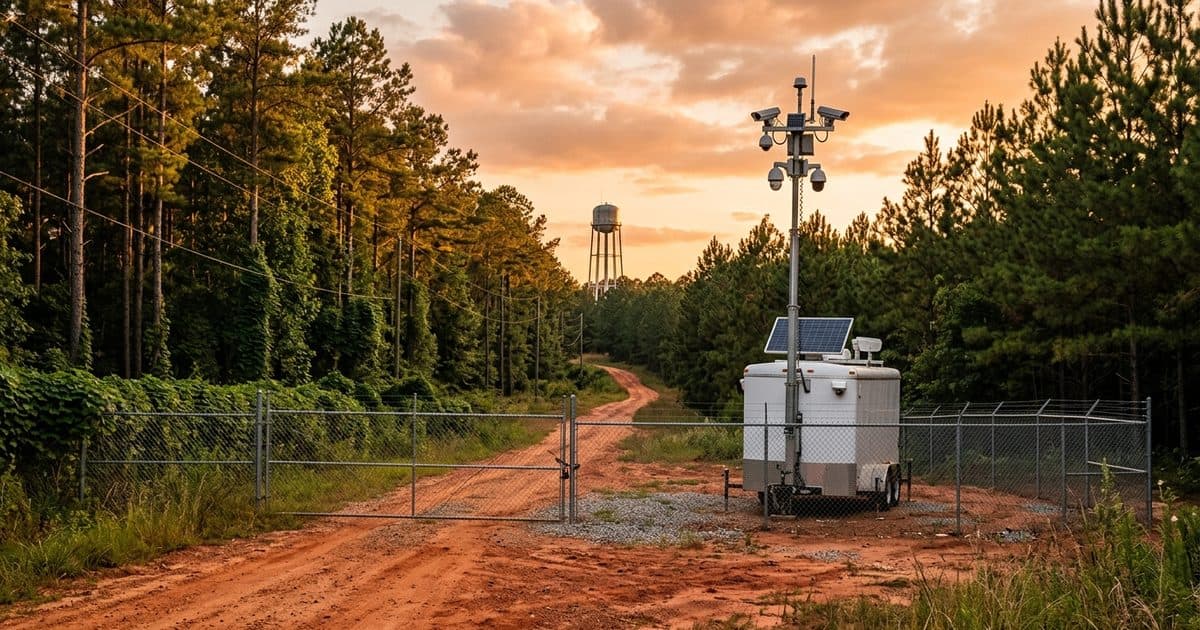
VDS puts solar-powered, cellular-connected surveillance trailers on South Carolina construction sites. AI detection flags people and vehicles, operators verify alerts and talk down live, and your team gets video of every verified event. No site power, trenching or internet required.
Projects we cover in South Carolina.
Different project types carry different risks. Here is how coverage plays out on the work that drives South Carolina construction.
Distribution and warehouse parks
Big tilt-up shells and truck courts stay open for months along I-85. Staged wire, tools and equipment are exposed, and a trailer covers gates and long perimeters without trenching power.
Coastal residential subdivisions
Dozens of framed homes with appliances, copper and lumber sit unlocked on shared roads. A trailer at the entrance records who arrives after hours and can speak to them live.
Port and marine industrial work
Laydown yards near the Charleston harbor hold steel, cable and heavy equipment. A trailer on the yard edge watches fences and staging areas where temporary lighting is thin.
Resort and hospitality builds
Hotels and condo towers rising on the Grand Strand hold fixtures, finishes and tools in open floors. A mast-mounted camera watches ground access and the crane and material zone.
What gets targeted.
Copper wire and pipe are the steady favorite on new commercial and residential builds, especially once rough-in is done. Catalytic converters come off idle equipment and trucks parked overnight, and diesel is siphoned from tanks and skid steers. Appliances, HVAC units and power tools disappear from nearly finished homes, with weekends and holiday stretches the most exposed.
Weather and power.
Hurricane season and humid summer thunderstorms shape planning here. The trailer is designed for outdoor use, and the mast comes down in well under 20 minutes ahead of a named storm. Live oak and pine canopy in the Lowcountry can shade panels, so site them in open sun. Muggy cloudy stretches call for extra battery reserve, and mild Upstate winters rarely limit solar charging.
Where we deliver in South Carolina.
VDS delivers across South Carolina, including Charleston and the Lowcountry, the Upstate and Greenville-Spartanburg I-85 corridor, the Midlands around Columbia, and Myrtle Beach and the Grand Strand. Trailers can usually be placed on a site within about a week.
See it on your site.
Type your address, and the designer opens on a live map of your property — place trailers, draw the perimeter, and get a coverage plan in minutes. No call required.
Common questions.
Can a trailer run at a Lowcountry site that has no power yet?
Yes. The trailer is solar powered and cellular connected, so it works on raw land before temporary power arrives. Place it in open sun away from tree cover, and confirm any site requirements with the local authority or your general contractor before delivery.
What happens to the trailer when a hurricane is forecast?
The mast lowers in under 20 minutes, so the unit can be secured ahead of high wind. Talk with your VDS contact early in the season about tie-down locations and whether to relocate the trailer for a named storm, so the plan is ready.
How quickly can we get cameras on a new Upstate warehouse site?
Delivery to the Greenville-Spartanburg area and most of the state is about a week at most. Once the trailer is set and the mast is raised, remote monitoring, AI detection and live talk-down can begin the same day on the warehouse perimeter.
Can a construction site in South Carolina get cameras before power is connected?
Yes. Each trailer runs on solar power with cellular connectivity, so it works on a bare lot with no utilities, no trenching and no site internet. One person levels the unit and raises the mast in under 20 minutes.
Can one trailer move between phases or sites?
Yes. Trailers relocate as work moves, from site clearing to foundations to framing to finish, and between projects. Term options run from short rentals to annual subscriptions.
Cost & buyer guides
General Contractor Site Security: Access, Liability and Schedule
General contractor site security explained: control subcontractor access, document incidents for liability, and protect the schedule from theft and damage.
Site Security Plan: A 6-Step Framework for Construction and Commercial Sites
Build a site security plan that satisfies insurers, bonding requirements, and compliance audits. A 6-step framework covering risk assessment through reporting.
Night Shift Construction Security: Lighting, Visibility and Worker Safety
Night shift construction security covers lighting, visibility, worker safety and trespass control for sites that stay active after dark. A practical guide.
Protect your South Carolina site this week.
Tell us the address, phase and timeline. We will quote the trailer, monitoring plan and delivery.