
Construction site security in Oklahoma.
Oklahoma construction centers on Oklahoma City and Tulsa growth, along with energy, pipeline and highway work across wide rural distances. Big open sites sit far from neighbors, so equipment, fuel and copper become easy targets, and severe weather regularly pauses work and leaves projects exposed.
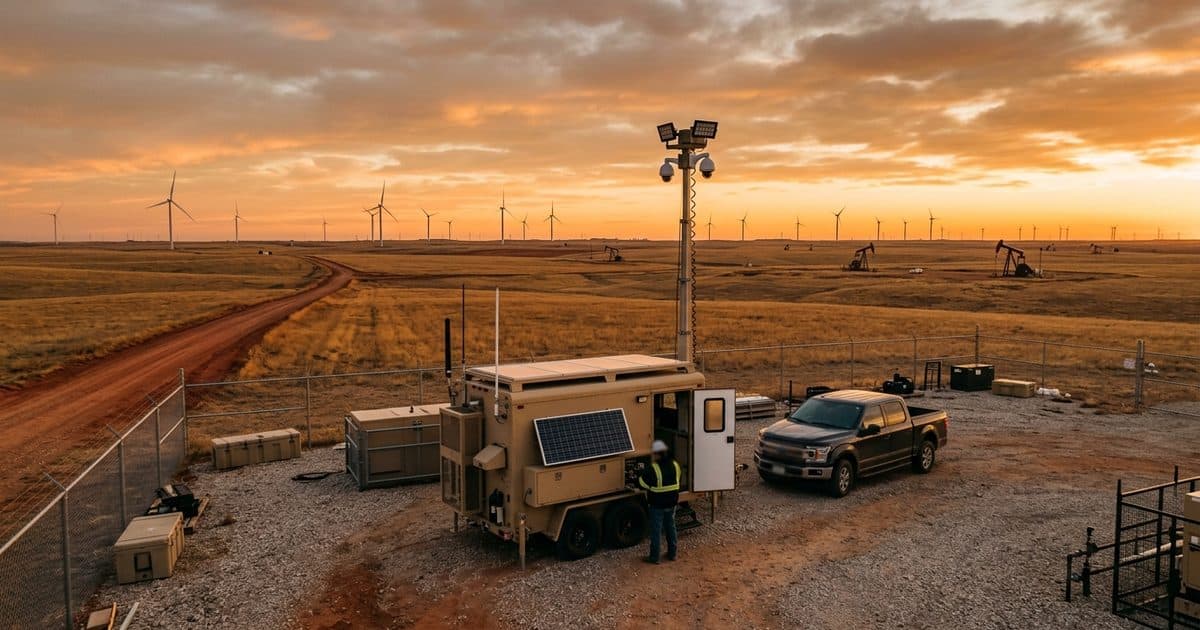
VDS puts solar-powered, cellular-connected surveillance trailers on Oklahoma construction sites. AI detection flags people and vehicles, operators verify alerts and talk down live, and your team gets video of every verified event. No site power, trenching or internet required.
Projects we cover in Oklahoma.
Different project types carry different risks. Here is how coverage plays out on the work that drives Oklahoma construction.
Warehouse and distribution buildings
I-35 and I-40 logistics parks hold racking, conduit and electrical gear. A mast view over open ground covers gates and loading areas after the crews leave.
Pipeline and energy sites
Anadarko Basin work puts fuel, tools and heavy equipment miles from town. A solar trailer with cellular video watches the yard where no grid service exists.
Highway and bridge projects
Interstate work along I-35 and I-40 stages excavators and materials overnight. Relocatable units follow the active zone and cover equipment parked at the roadside.
Housing subdivisions near the metros
Growth around Oklahoma City and Tulsa fills lots with framing, appliances and copper. One trailer at the plat entrance covers a phase until homes are locked.
What gets targeted.
Copper wire and pipe lead the list, followed by catalytic converters cut from equipment, fuel drained from tanks and tools taken from unlocked boxes. Remote oilfield and pipeline sites lose parts and diesel when nobody is nearby. New homes lose appliances and fixtures before closing. Weekends, holidays and nights after storms, when crews have been sent home, are the riskiest times.
Weather and power.
Oklahoma brings intense summer heat, strong sun that suits solar, and severe spring storms with hail, tornadoes and high wind. Ice storms can hit in winter, and red dust blows across the western part of the state. The trailer is solar powered and cellular connected, with the mast raised in under 20 minutes. Planning helps: lower the mast ahead of severe weather, choose an unshaded spot and discuss wind exposure before delivery.
Where we deliver in Oklahoma.
VDS can deliver across the Oklahoma City metro and the Tulsa metro, out to the Anadarko Basin in the west, and along the I-35 and I-40 corridors that cross the state.
See it on your site.
Type your address, and the designer opens on a live map of your property — place trailers, draw the perimeter, and get a coverage plan in minutes. No call required.
Common questions.
What happens to the trailer in a tornado or hail storm?
We plan for severe weather by agreeing on placement and mast height beforehand. The mast can be lowered when storms are forecast, and raising it again takes under 20 minutes once the weather has passed and the site is safe. Safety of crews always comes first.
Can you cover a remote Anadarko Basin work site?
Yes, as long as cellular signal reaches the location. The trailer makes its own power from solar panels, so no utility hookup is needed on open ranch or oilfield ground. Delivery is about a week at most, depending on schedule and distance.
Does red dust or summer heat hurt the system?
Dust can settle on panels, so a clean, open spot helps, and we discuss siting with you before delivery. Strong sun suits solar well, and shading the battery area keeps equipment comfortable through the hottest months of summer. Cleaning panels is simple.
Can a construction site in Oklahoma get cameras before power is connected?
Yes. Each trailer runs on solar power with cellular connectivity, so it works on a bare lot with no utilities, no trenching and no site internet. One person levels the unit and raises the mast in under 20 minutes.
Can one trailer move between phases or sites?
Yes. Trailers relocate as work moves, from site clearing to foundations to framing to finish, and between projects. Term options run from short rentals to annual subscriptions.
Cost & buyer guides
General Contractor Site Security: Access, Liability and Schedule
General contractor site security explained: control subcontractor access, document incidents for liability, and protect the schedule from theft and damage.
Site Security Plan: A 6-Step Framework for Construction and Commercial Sites
Build a site security plan that satisfies insurers, bonding requirements, and compliance audits. A 6-step framework covering risk assessment through reporting.
Night Shift Construction Security: Lighting, Visibility and Worker Safety
Night shift construction security covers lighting, visibility, worker safety and trespass control for sites that stay active after dark. A practical guide.
Protect your Oklahoma site this week.
Tell us the address, phase and timeline. We will quote the trailer, monitoring plan and delivery.