
Construction site security in Ohio.
Ohio construction mixes large industrial and logistics campuses, hospital and university expansions, and a steady run of new subdivisions on farmland outside Columbus. Many sites sit far from neighbors or on the edge of older industrial districts, so nobody notices activity after dark and a drive-by patrol cannot be everywhere.
VDS puts solar-powered, cellular-connected surveillance trailers on Ohio construction sites. AI detection flags people and vehicles, operators verify alerts and talk down live, and your team gets video of every verified event. No site power, trenching or internet required.
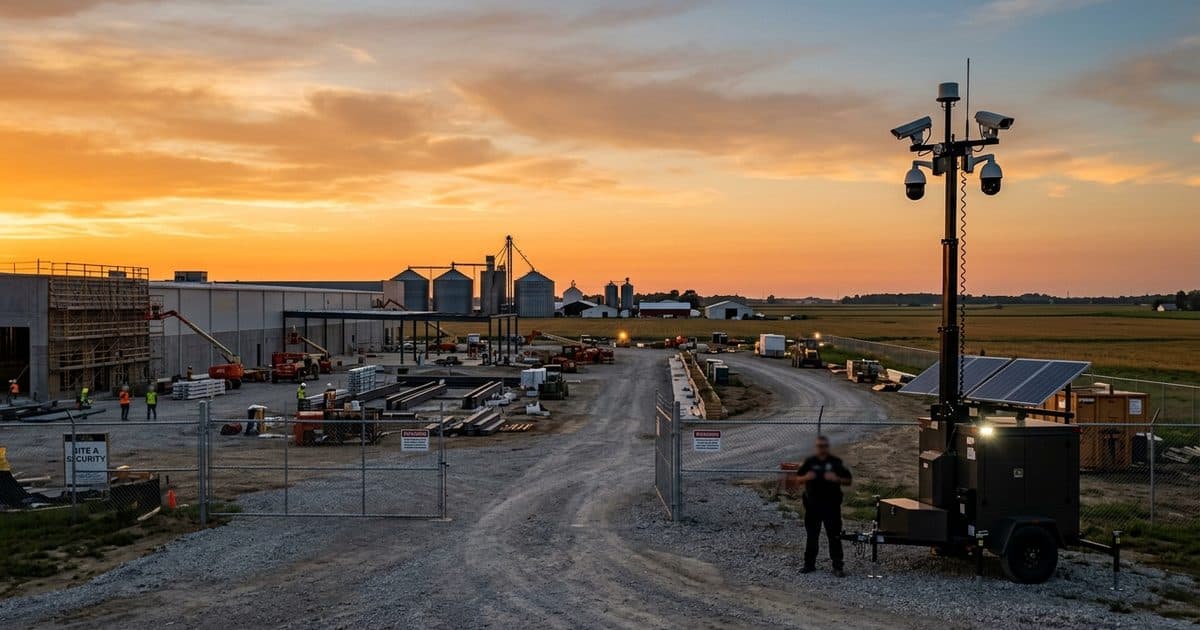
Projects we cover in Ohio.
Different project types carry different risks. Here is how coverage plays out on the work that drives Ohio construction.
Logistics and manufacturing campuses
Big graded pads with open perimeters and staged steel, conduit and equipment. One trailer watches a long fence line and talks down trespassers before they reach materials.
Columbus-area subdivisions
New homes fill with appliances, copper and lumber well before occupancy. Trailers move street to street as phases finish, watching open framing that has no doors or locks yet.
Hospital and campus additions
Active medical and university grounds bring heavy foot traffic and shared access. A trailer covers laydown yards and crane pads while the owner's own team handles the occupied buildings.
Interstate and bridge reconstruction
Work zones leave equipment parked overnight along open shoulders and ramps. A trailer at the zone edge verifies who is near machinery and fuel tanks after the crew leaves.
What gets targeted.
Copper wire and pipe are the steady favorite, especially at buildings nearing rough in. Catalytic converters and batteries come off parked equipment, and diesel is siphoned from tanks left on site. In new subdivisions, appliances and fixtures vanish just before closing. Scrap value drives much of it, so weekends, holidays and dark winter evenings, when sites are quiet and nobody is nearby, see the most attempts.
Weather and power.
Ohio brings lake effect snow near Cleveland and Toledo, gray winter stretches with short days, humid summers and spring storms with strong gusts. Solar keeps producing under overcast skies, but plan extra battery reserve on winter jobs, set panels at a steeper tilt, and keep the trailer clear of snow drifts. Lower the mast in severe wind, then raise it again in under 20 minutes once conditions settle.
Where we deliver in Ohio.
VDS delivers across Columbus Metro, Cleveland and Northeast Ohio, the Cincinnati to Dayton I-75 corridor, and Toledo along Lake Erie, plus the rural stretches between them where a site sits far from the nearest town.
See it on your site.
Type your address, and the designer opens on a live map of your property — place trailers, draw the perimeter, and get a coverage plan in minutes. No call required.
Common questions.
Do I need to run power or pull a permit to put a trailer on an Ohio site?
The trailer is solar powered and cellular connected, so there is no temporary electric service, trenching or generator to arrange. Permit rules differ by city and township, so confirm requirements with the local authority or your general contractor before the unit is scheduled.
How does a trailer cope with lake effect snow around Cleveland?
Snow and short days mean the battery reserve matters more than panel size, so plan for it when scheduling winter work. Panels tilt steeper to shed snow, and the mast can be lowered ahead of heavy bands and raised again in under 20 minutes.
Can one trailer follow a phased Ohio subdivision build?
Yes. Trailers are towable, so a unit can sit at the model home early, then shift to the next street as framing finishes. Tell us the phase order and we plan moves around inspections and when new homes become tempting targets.
Can a construction site in Ohio get cameras before power is connected?
Yes. Each trailer runs on solar power with cellular connectivity, so it works on a bare lot with no utilities, no trenching and no site internet. One person levels the unit and raises the mast in under 20 minutes.
Can one trailer move between phases or sites?
Yes. Trailers relocate as work moves, from site clearing to foundations to framing to finish, and between projects. Term options run from short rentals to annual subscriptions.
Cost & buyer guides
General Contractor Site Security: Access, Liability and Schedule
General contractor site security explained: control subcontractor access, document incidents for liability, and protect the schedule from theft and damage.
Site Security Plan: A 6-Step Framework for Construction and Commercial Sites
Build a site security plan that satisfies insurers, bonding requirements, and compliance audits. A 6-step framework covering risk assessment through reporting.
Night Shift Construction Security: Lighting, Visibility and Worker Safety
Night shift construction security covers lighting, visibility, worker safety and trespass control for sites that stay active after dark. A practical guide.
Protect your Ohio site this week.
Tell us the address, phase and timeline. We will quote the trailer, monitoring plan and delivery.