
Construction site security in New York.
New York construction is a study in contrast: crowded Manhattan and outer borough lots with strict logistics, suburban building on Long Island, and warehouse and industrial growth in the Hudson Valley, Capital Region and Buffalo area. Urban sites battle foot traffic and tight space, while upstate ones are cold and isolated.
VDS puts solar-powered, cellular-connected surveillance trailers on New York construction sites. AI detection flags people and vehicles, operators verify alerts and talk down live, and your team gets video of every verified event. No site power, trenching or internet required.
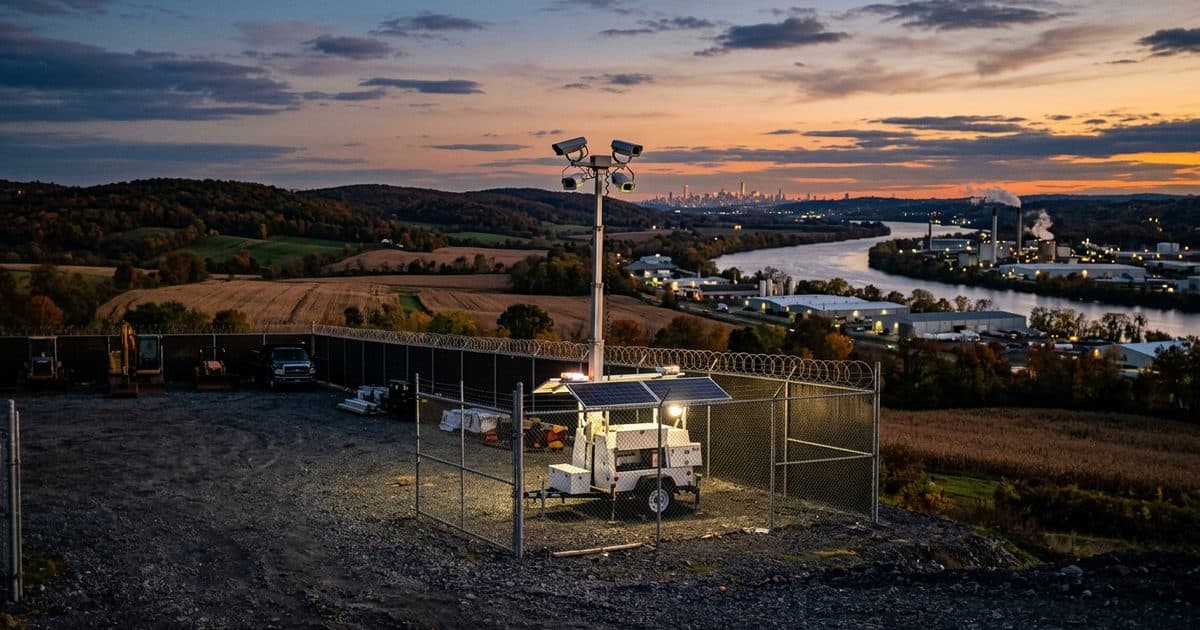
Projects we cover in New York.
Different project types carry different risks. Here is how coverage plays out on the work that drives New York construction.
New York City mid-rise and residential
Tight lots, shared sidewalks and constant foot traffic make staging hard. A compact trailer watches the gate and loading zone when the crew leaves for the night.
Long Island subdivisions and retail
Suburban builds hold appliances, copper and fixtures in unfinished homes. Trailers move street to street, watching framing and open garages until locks and alarms go in.
Hudson Valley and Capital Region warehouses
Large pads along the Thruway and Northway sit empty at night with staged equipment. Trailers cover entrances and truck courts where thieves can approach unseen.
Western New York plant and campus sites
Industrial and institutional projects around Buffalo work through long winters with yards of fuel and steel. A trailer watches gates and storage areas after crews depart.
What gets targeted.
Copper wire and pipe lead the list across the state, followed by catalytic converters and batteries from parked equipment. In the city, tools and materials are taken from unattended sidewalk staging, while upstate and Long Island sites lose diesel, appliances and fixtures. Thieves favor weekends, holidays and early winter evenings, when sites go dark and neighbors stay indoors.
Weather and power.
New York weather runs from humid summers and coastal storms downstate to heavy snow in the west, with lake effect bands near Buffalo and cold, short winter days across the Hudson Valley and Capital Region. The trailer is solar powered and cellular connected, and the mast can be lowered before storms and raised again in under 20 minutes. Plan battery reserve for long gray winters and tilt panels to shed snow.
Where we deliver in New York.
VDS delivers across New York City Metro, Long Island, the Hudson Valley, the Capital Region around Albany, and Western New York, including smaller upstate towns, Thruway exits and lake shore communities between those hubs where a job site sits far from help.
See it on your site.
Type your address, and the designer opens on a live map of your property — place trailers, draw the perimeter, and get a coverage plan in minutes. No call required.
Common questions.
Can you place a trailer on a New York City site?
Possibly. The compact footprint suits tight lots, but sidewalk and street use is regulated, so confirm requirements with the local authority or your general contractor before scheduling. Send a photo and the site plan so we can choose a position.
How do trailers cope with lake effect snow near Buffalo?
Heavy bands and gray days reduce solar input, so battery reserve and panel tilt matter. Keep plow piles away from the unit and tell us about the driveway or lot layout. The mast can be lowered ahead of severe storms and raised again in under 20 minutes.
Do you cover Long Island subdivisions as they are built?
Yes. Trailers are towable, so a unit can sit at the model home first, then move as streets close in. Give us the phase schedule and we plan moves around framing, inspections and the point when finished homes become tempting targets for appliance theft.
Can a construction site in New York get cameras before power is connected?
Yes. Each trailer runs on solar power with cellular connectivity, so it works on a bare lot with no utilities, no trenching and no site internet. One person levels the unit and raises the mast in under 20 minutes.
Can one trailer move between phases or sites?
Yes. Trailers relocate as work moves, from site clearing to foundations to framing to finish, and between projects. Term options run from short rentals to annual subscriptions.
Cost & buyer guides
General Contractor Site Security: Access, Liability and Schedule
General contractor site security explained: control subcontractor access, document incidents for liability, and protect the schedule from theft and damage.
Site Security Plan: A 6-Step Framework for Construction and Commercial Sites
Build a site security plan that satisfies insurers, bonding requirements, and compliance audits. A 6-step framework covering risk assessment through reporting.
Night Shift Construction Security: Lighting, Visibility and Worker Safety
Night shift construction security covers lighting, visibility, worker safety and trespass control for sites that stay active after dark. A practical guide.
Protect your New York site this week.
Tell us the address, phase and timeline. We will quote the trailer, monitoring plan and delivery.