
Construction site security in Maryland.
Maryland construction is packed into a few distinct worlds: tight Baltimore infill, mixed use and apartment projects in the DC suburbs, big warehouses along I-95, and open farmland on the Eastern Shore. Urban sites face constant foot traffic and tight laydown space, while rural ones are quiet and hard to watch.
VDS puts solar-powered, cellular-connected surveillance trailers on Maryland construction sites. AI detection flags people and vehicles, operators verify alerts and talk down live, and your team gets video of every verified event. No site power, trenching or internet required.
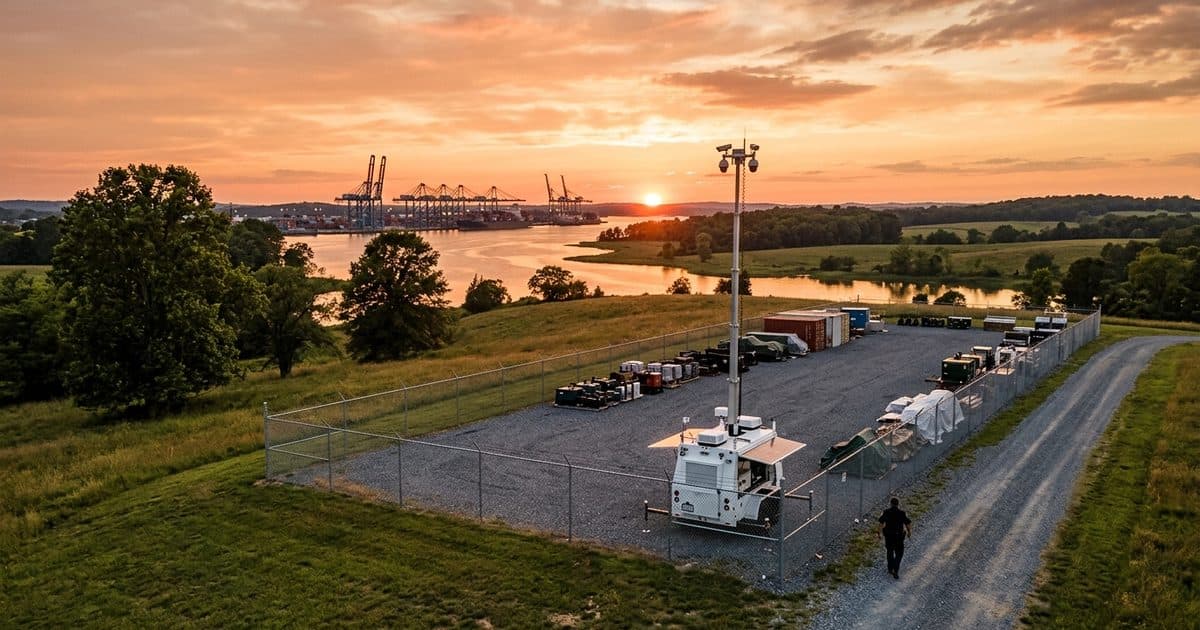
Projects we cover in Maryland.
Different project types carry different risks. Here is how coverage plays out on the work that drives Maryland construction.
Baltimore rowhouse and infill redevelopment
Vacant lots and gutted rowhouses attract scrappers hunting copper and fixtures. A trailer on a small footprint watches the street frontage and alley access without blocking either.
DC suburb apartments and mixed use
Tall residential builds hold appliances, wire and finishes across many floors. Trailers cover gates, loading zones and perimeter fencing while the building shell is still open.
I-95 corridor warehouses
Large pads and trailers of staged material sit near major highways, easy to reach and leave quickly. A trailer at the entrance verifies vehicles and covers the yard.
Eastern Shore solar and agricultural sites
Large rural parcels have long fence lines and few eyes. Trailers watch panel racking, modules and equipment yards in open fields far from any patrol route.
What gets targeted.
Copper pipe and wire lead the list in Baltimore and the older suburbs, followed by catalytic converters and batteries from parked equipment. Diesel goes missing on large pads and rural sites, and tools vanish from unlocked gang boxes. Appliances and fixtures disappear from new apartments and townhomes before turnover. Weekends, holidays and early dark winter evenings give thieves the most cover, especially on vacant or partly fenced lots.
Weather and power.
Maryland swings from humid summer heat to icy winters, with nor'easters, coastal storms and remnants of tropical systems reaching the Eastern Shore, and heavier mountain snow in Western Maryland. The trailer is solar powered and cellular connected, and the mast can be lowered ahead of high wind and raised again in under 20 minutes. Plan extra battery reserve for winter and tilt panels toward the low sun.
Where we deliver in Maryland.
VDS delivers across the Baltimore Metro, the DC suburbs, the I-95 corridor between the two cities, the Eastern Shore, and Western Maryland, including mountain and rural jobs far from the beltway.
See it on your site.
Type your address, and the designer opens on a live map of your property — place trailers, draw the perimeter, and get a coverage plan in minutes. No call required.
Common questions.
Can a trailer fit on a tight Baltimore city lot?
Usually yes. The trailer has a compact footprint and can sit on a corner, alley edge or sidewalk apron if the city or your general contractor allows it. Confirm requirements with the local authority before placement, and share a site photo so we can plan the angle.
What about winter in Western Maryland?
Mountain jobs get deeper snow and shorter, grayer days, so battery reserve and panel tilt matter. Keep the trailer clear of plow piles and plan snow removal around it. The mast can come down ahead of heavy storms and go back up in under 20 minutes.
Can you cover a solar farm or farm field on the Eastern Shore?
Yes. These sites have no grid power, which suits a solar trailer with cellular service. Wide fields may need more than one unit, so send us a site plan and we will suggest placement for fence lines and gate approaches.
Can a construction site in Maryland get cameras before power is connected?
Yes. Each trailer runs on solar power with cellular connectivity, so it works on a bare lot with no utilities, no trenching and no site internet. One person levels the unit and raises the mast in under 20 minutes.
Can one trailer move between phases or sites?
Yes. Trailers relocate as work moves, from site clearing to foundations to framing to finish, and between projects. Term options run from short rentals to annual subscriptions.
Cost & buyer guides
General Contractor Site Security: Access, Liability and Schedule
General contractor site security explained: control subcontractor access, document incidents for liability, and protect the schedule from theft and damage.
Site Security Plan: A 6-Step Framework for Construction and Commercial Sites
Build a site security plan that satisfies insurers, bonding requirements, and compliance audits. A 6-step framework covering risk assessment through reporting.
Night Shift Construction Security: Lighting, Visibility and Worker Safety
Night shift construction security covers lighting, visibility, worker safety and trespass control for sites that stay active after dark. A practical guide.
Protect your Maryland site this week.
Tell us the address, phase and timeline. We will quote the trailer, monitoring plan and delivery.