
Construction site security in Florida.
Florida construction never fully slows, with condo towers rising along the coast, new communities spreading inland and warehouse parks near the interstates. Heavy rain, storm prep and fast schedules mean materials are often staged outside and unattended, and half-finished buildings sit open to anyone walking in at night.
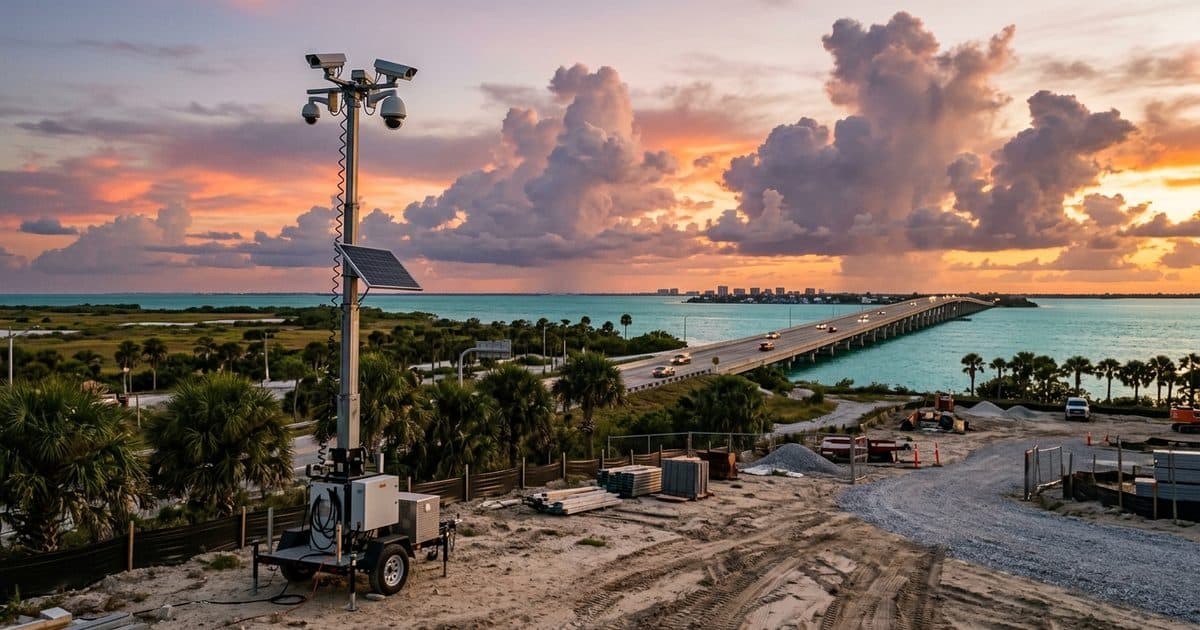
VDS puts solar-powered, cellular-connected surveillance trailers on Florida construction sites. AI detection flags people and vehicles, operators verify alerts and talk down live, and your team gets video of every verified event. No site power, trenching or internet required.
Projects we cover in Florida.
Different project types carry different risks. Here is how coverage plays out on the work that drives Florida construction.
Coastal condo and hotel towers
Tall frames with open floors, elevators and storage decks are easy to enter from the beach side or parking. A trailer watches ground access and laydown areas.
Planned communities
Whole subdivisions go up at once, with vacant homes holding appliances and copper. A mobile trailer follows the active phase and watches model lots and entrances.
Distribution and logistics centers
Large tilt-up warehouses near the interstates have wide yards and loading docks. Trailers watch gates, trailer parking and staged material.
Storm rebuild and repair work
After a hurricane, damaged properties sit unsecured while insurance and contractors line up. A trailer provides watch and a record when fencing and power are gone.
What gets targeted.
Copper and wire from unfinished buildings is a steady Florida loss, along with air conditioning units, appliances at new homes, tools and catalytic converters off parked trucks. Boat motors and trailers sometimes appear on large sites near the water. After a hurricane, generators, fuel and salvage materials attract opportunists. Theft tends to follow nights, weekends and the days when crews have been sent home for storm prep.
Weather and power.
Florida gives plenty of sun but also summer afternoon storms, lightning and, in hurricane season, serious wind. Lower the mast ahead of a named storm, which can be raised again in under 20 minutes afterward, and discuss where the trailer should ride out the event. Salt air near the coast and heavy humidity are worth mentioning when you order. Summer haze and rain reduce charging for a few days, so battery reserve matters.
Where we deliver in Florida.
VDS delivers to job sites in South Florida, Tampa Bay, Orlando and the I-4 Corridor, Jacksonville and the First Coast, and the Panhandle, including projects on barrier islands and inland growth areas.
See it on your site.
Type your address, and the designer opens on a live map of your property — place trailers, draw the perimeter, and get a coverage plan in minutes. No call required.
Common questions.
What happens to the trailer during a hurricane?
Plan before the season starts. The mast can be lowered ahead of a storm and raised again in under 20 minutes after it passes. Talk with your VDS contact about moving or securing the trailer when a watch is issued, and about restart once cell service returns.
Can we use it on a condo tower with no permanent power yet?
Yes. It is solar powered and cellular connected, so it works before the building has any temporary electric service. Confirm sidewalk or right of way placement with the local authority or your general contractor, and tell VDS which sides of the structure need a view.
Can you reach the Panhandle as quickly as Miami?
Delivery is generally about a week at most across Florida. Remote Panhandle locations and busy storm recovery periods can add time, so share the address, gate access and ground conditions as early as you can, ideally before the mobilization date.
Can a construction site in Florida get cameras before power is connected?
Yes. Each trailer runs on solar power with cellular connectivity, so it works on a bare lot with no utilities, no trenching and no site internet. One person levels the unit and raises the mast in under 20 minutes.
Can one trailer move between phases or sites?
Yes. Trailers relocate as work moves, from site clearing to foundations to framing to finish, and between projects. Term options run from short rentals to annual subscriptions.
Cost & buyer guides
General Contractor Site Security: Access, Liability and Schedule
General contractor site security explained: control subcontractor access, document incidents for liability, and protect the schedule from theft and damage.
Site Security Plan: A 6-Step Framework for Construction and Commercial Sites
Build a site security plan that satisfies insurers, bonding requirements, and compliance audits. A 6-step framework covering risk assessment through reporting.
Night Shift Construction Security: Lighting, Visibility and Worker Safety
Night shift construction security covers lighting, visibility, worker safety and trespass control for sites that stay active after dark. A practical guide.
Protect your Florida site this week.
Tell us the address, phase and timeline. We will quote the trailer, monitoring plan and delivery.