
Construction site security in Colorado.
Colorado construction swings between the busy Front Range, where apartments, offices and warehouses fill the corridor from Fort Collins to Pueblo, and remote mountain and plains projects. Elevation, weather and long drives make mountain and plains sites hard to patrol, while Front Range lots fill fast with trades and deliveries.
VDS puts solar-powered, cellular-connected surveillance trailers on Colorado construction sites. AI detection flags people and vehicles, operators verify alerts and talk down live, and your team gets video of every verified event. No site power, trenching or internet required.
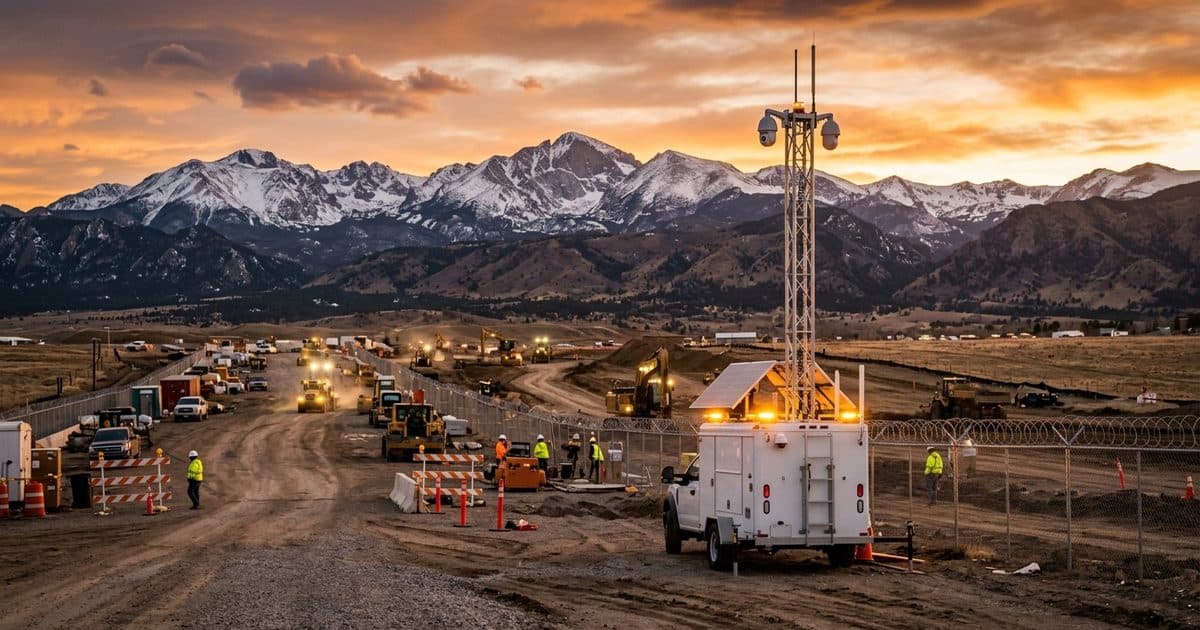
Projects we cover in Colorado.
Different project types carry different risks. Here is how coverage plays out on the work that drives Colorado construction.
Front Range apartment communities
Fast moving multifamily builds hold appliances, fixtures and copper in open buildings. A trailer watches entrances and parking while doors and stairs are still unfinished.
Warehouse and distribution parks
Plains land near the interstates allows big pads and wide yards. Trailers watch gates and staged materials where a roving patrol cannot cover everything.
Mountain resort and lodging work
Remote Western Slope projects have limited roads and long travel times. A solar trailer watches the site where there is no grid power or nearby patrol.
Utility and wind work on the plains
Remote Eastern Plains jobs stage cable and heavy equipment on open land. A relocatable trailer watches the laydown yard and follows the active segment.
What gets targeted.
Catalytic converters, copper wire, tools and fuel top the list in Colorado, along with equipment batteries and appliances from new apartments. Remote mountain jobs lose materials and fuel when crews head down the valley for the weekend. Plains projects lose cable and equipment to quick nighttime visits along open roads. Losses cluster on weekends, holidays and in the dark winter evenings when nobody is nearby.
Weather and power.
Colorado has strong sun even in winter, but the story changes with elevation and storms. Mountain sites see snow, short days and deep cold, so ask for extra battery reserve and a panel tilt that sheds snow. Plains sites face hail, wind and spring storms. Lower the mast when strong wind or hail is forecast, and raise it again in under 20 minutes. Clear panels after snowfall to keep charging steady.
Where we deliver in Colorado.
VDS delivers across Colorado to the Denver Metro, the Front Range Urban Corridor, the Western Slope and the Eastern Plains, including mountain approach roads and open plains sites with no utilities.
See it on your site.
Type your address, and the designer opens on a live map of your property — place trailers, draw the perimeter, and get a coverage plan in minutes. No call required.
Common questions.
Does snow stop a solar trailer from working in the mountains?
Snow and short days reduce charging, so plan for extra battery reserve and a panel tilt that sheds snow. After a storm, clear the panels. The mast can be lowered ahead of heavy wind and raised again in under 20 minutes.
Can you reach a Western Slope site with poor roads?
Possibly. Delivery is about a week at most for typical sites, though winter road conditions and remote mountain access may change timing. Share the route, gate position and slope details early so the trailer can be placed and set up safely.
Is cell coverage a problem on the Eastern Plains?
Coverage can vary on open plains and in mountain valleys. Check signal at the exact placement before you commit. The trailer is cellular connected and solar powered, so once there is signal it needs no outlet. Confirm local requirements with your general contractor.
Can a construction site in Colorado get cameras before power is connected?
Yes. Each trailer runs on solar power with cellular connectivity, so it works on a bare lot with no utilities, no trenching and no site internet. One person levels the unit and raises the mast in under 20 minutes.
Can one trailer move between phases or sites?
Yes. Trailers relocate as work moves, from site clearing to foundations to framing to finish, and between projects. Term options run from short rentals to annual subscriptions.
Cost & buyer guides
General Contractor Site Security: Access, Liability and Schedule
General contractor site security explained: control subcontractor access, document incidents for liability, and protect the schedule from theft and damage.
Site Security Plan: A 6-Step Framework for Construction and Commercial Sites
Build a site security plan that satisfies insurers, bonding requirements, and compliance audits. A 6-step framework covering risk assessment through reporting.
Night Shift Construction Security: Lighting, Visibility and Worker Safety
Night shift construction security covers lighting, visibility, worker safety and trespass control for sites that stay active after dark. A practical guide.
Protect your Colorado site this week.
Tell us the address, phase and timeline. We will quote the trailer, monitoring plan and delivery.