
Construction site security in Arizona.
Arizona construction pushes into desert at the edge of every city: semiconductor and data campuses, vast housing tracts and solar fields set well away from neighbors. Quiet night streets and long dirt access roads mean there is rarely anyone nearby to notice a truck pulling up at a yard.
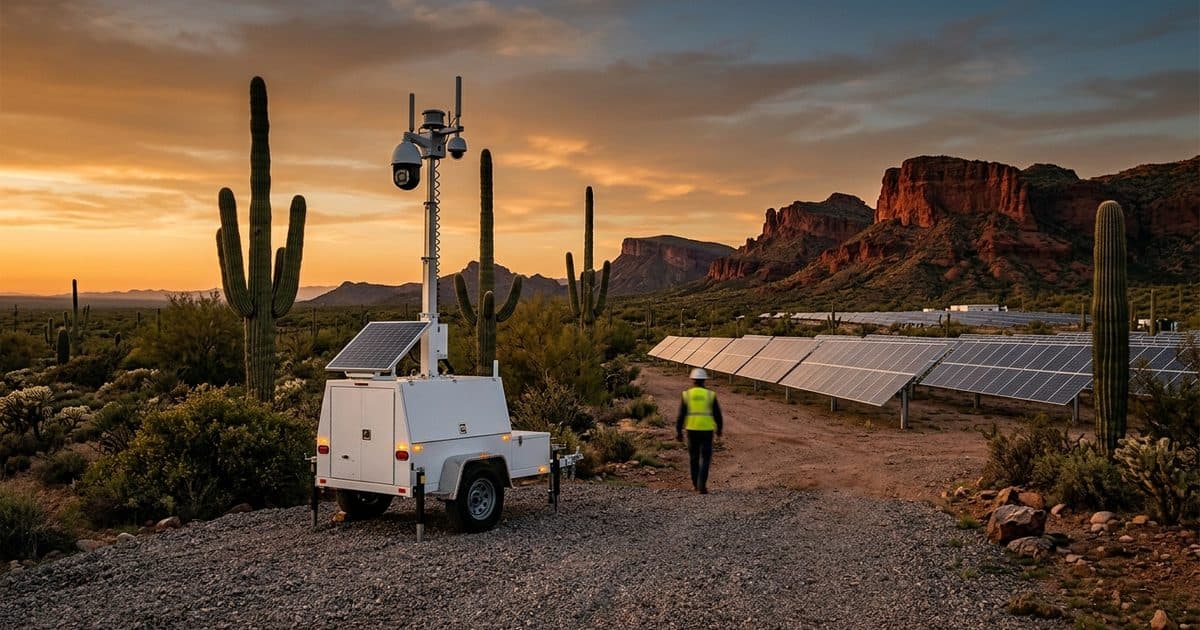
VDS puts solar-powered, cellular-connected surveillance trailers on Arizona construction sites. AI detection flags people and vehicles, operators verify alerts and talk down live, and your team gets video of every verified event. No site power, trenching or internet required.
Projects we cover in Arizona.
Different project types carry different risks. Here is how coverage plays out on the work that drives Arizona construction.
Semiconductor and industrial campuses
Large secured pads carry expensive electrical and mechanical stock. Trailers cover the outer fence and truck gates while the permanent security system is still being installed.
Valley housing tracts
Phoenix area builders open hundreds of lots across raw desert. A mobile trailer watches model homes and the framing phase before doors and garage locks are in.
Utility scale solar and storage
Open desert sites hold modules, racking and cable far from outlets and neighbors. A solar trailer needs no grid hookup and watches laydown yards.
Highway and bridge work on I-40
Long linear jobs through empty country leave equipment staged overnight. A relocatable trailer follows the active segment and watches fuel and heavy machines.
What gets targeted.
Copper wire and cable are the most common Arizona loss, followed by catalytic converters from trucks and equipment, diesel from site tanks and tools from unattended containers. At desert solar fields, modules and wire have value to thieves who work at night and leave by dirt roads. New homes lose appliances and air conditioning parts. Theft often rises on summer nights, when crews start before dawn and leave early.
Weather and power.
Arizona is the sunniest place VDS delivers, so charging is rarely the concern. The concerns are heat and dust. Summer sun is punishing on exposed gear, and haboobs and monsoon storms can push dust and sudden wind across the Valley. Set the trailer on firm ground, lower the mast ahead of a big storm and raise it again in under 20 minutes. Higher elevations near Flagstaff add winter snow and short days.
Where we deliver in Arizona.
VDS delivers to Arizona sites in the Phoenix Valley of the Sun, Tucson and Southern Arizona, and Northern Arizona along the I-40 Corridor, including projects out on desert roads far from the nearest town.
See it on your site.
Type your address, and the designer opens on a live map of your property — place trailers, draw the perimeter, and get a coverage plan in minutes. No call required.
Common questions.
Will heat damage the trailer or its cameras?
The trailer is built for outdoor solar use, and Arizona sun means abundant charging. Heat is still worth a conversation when you order, so ask about placement in shade or with airflow for anything you add. Avoid parking against a dark wall that traps heat.
How does a dust storm affect the system?
A haboob can coat panels and reduce camera visibility while it lasts. Lower the mast if strong wind is forecast and raise it again in under 20 minutes once it passes. A quick wipe of the panels afterward gets charging back to normal.
Can a trailer cover a remote solar field outside the metro areas?
Yes, the trailer needs no outlet, only cell coverage. Check signal at the actual site before you commit, since canyons and rural stretches vary. Delivery is about a week at most, and gate access details help the drop go smoothly.
Can a construction site in Arizona get cameras before power is connected?
Yes. Each trailer runs on solar power with cellular connectivity, so it works on a bare lot with no utilities, no trenching and no site internet. One person levels the unit and raises the mast in under 20 minutes.
Can one trailer move between phases or sites?
Yes. Trailers relocate as work moves, from site clearing to foundations to framing to finish, and between projects. Term options run from short rentals to annual subscriptions.
Cost & buyer guides
General Contractor Site Security: Access, Liability and Schedule
General contractor site security explained: control subcontractor access, document incidents for liability, and protect the schedule from theft and damage.
Site Security Plan: A 6-Step Framework for Construction and Commercial Sites
Build a site security plan that satisfies insurers, bonding requirements, and compliance audits. A 6-step framework covering risk assessment through reporting.
Night Shift Construction Security: Lighting, Visibility and Worker Safety
Night shift construction security covers lighting, visibility, worker safety and trespass control for sites that stay active after dark. A practical guide.
Protect your Arizona site this week.
Tell us the address, phase and timeline. We will quote the trailer, monitoring plan and delivery.