
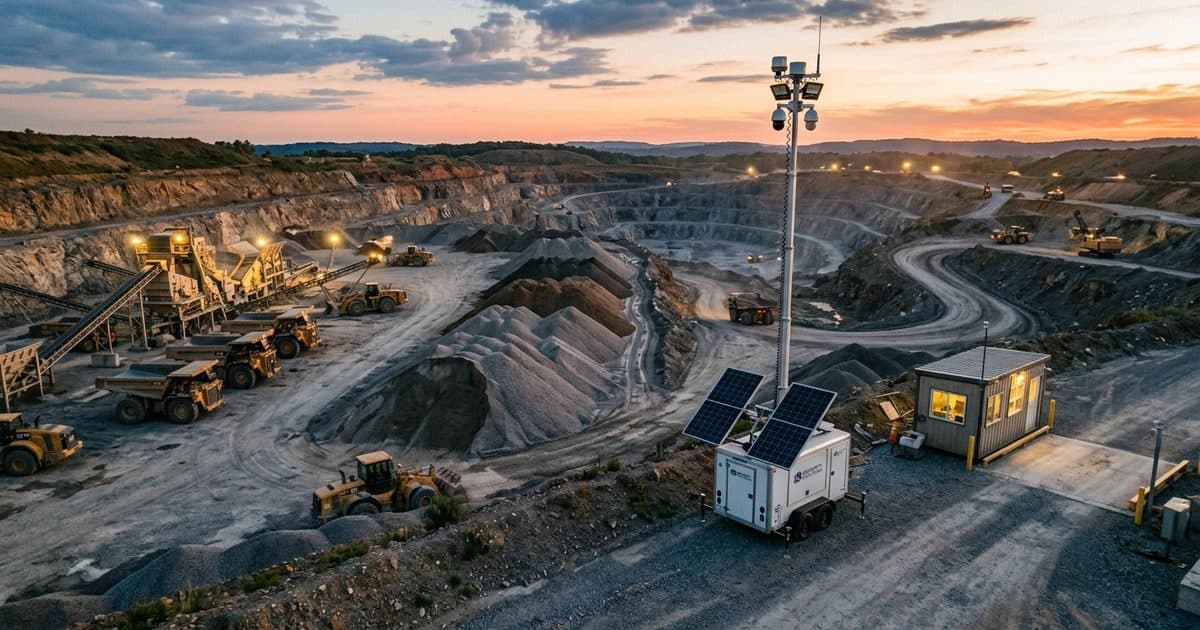
Idle iron. Full fuel tanks.No one past the scale house.
Quarries and aggregate pits sit wide open after the last shift leaves — hundreds of acres with no fence line that means anything, diesel tanks and idle haul trucks worth more than the crusher, and no staff on site until the next start-up whistle. VDS deploys solar-autonomous surveillance at the entrance, the laydown yard, and the fuel island, reads every plate at the scale house, and puts a live SOC operator on every alert — no night watchman required.
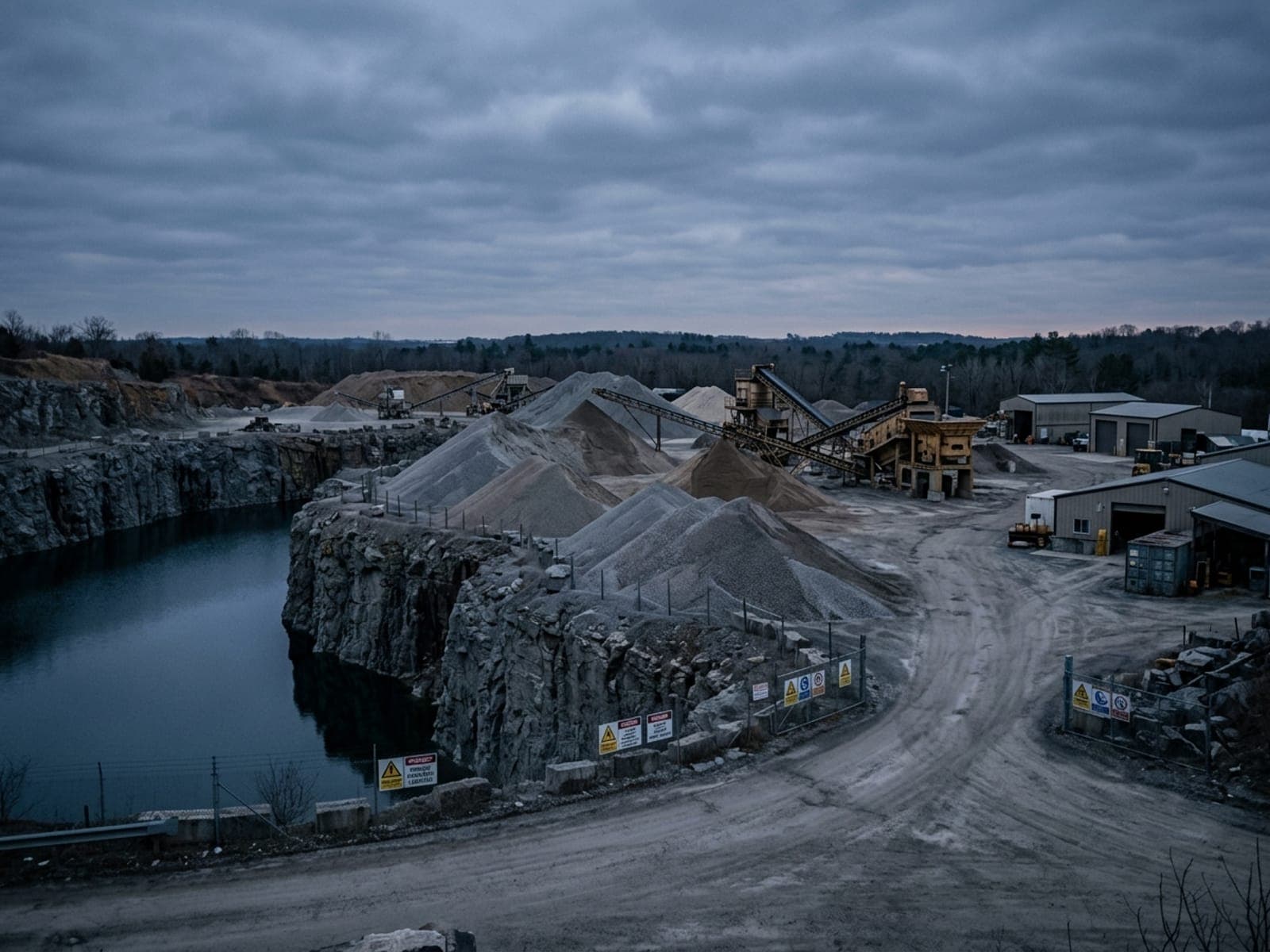
An aggregates operation is easy to protect in theory and hard to protect in practice. The working boundary of a quarry is not a fence but a haul road, the pit advances season by season, and when the last shift leaves, loaders, excavators, and haul trucks sit fueled beside bulk diesel tanks with nobody due back until the start-up whistle. Thieves are after the consumables — diesel, batteries, copper wiring, hydraulic attachments — because those vanish into the scrap and resale market faster than a whole machine ever could.
Conventional security struggles with the shape of the property. Wired cameras need power and conduit the pit floor does not have, lighting rarely extends past the plant, and a recorder nobody watches turns a siphoning run into a morning-after discovery. The exposure is not only theft: a flooded pit and a sheer high-wall make after-hours trespass a serious liability problem, and an idle quarry an attractive one for joyriders. What turns that around is monitoring with a human decision behind it — an operator confirming the intrusion while it is still happening and acting on it in the moment.
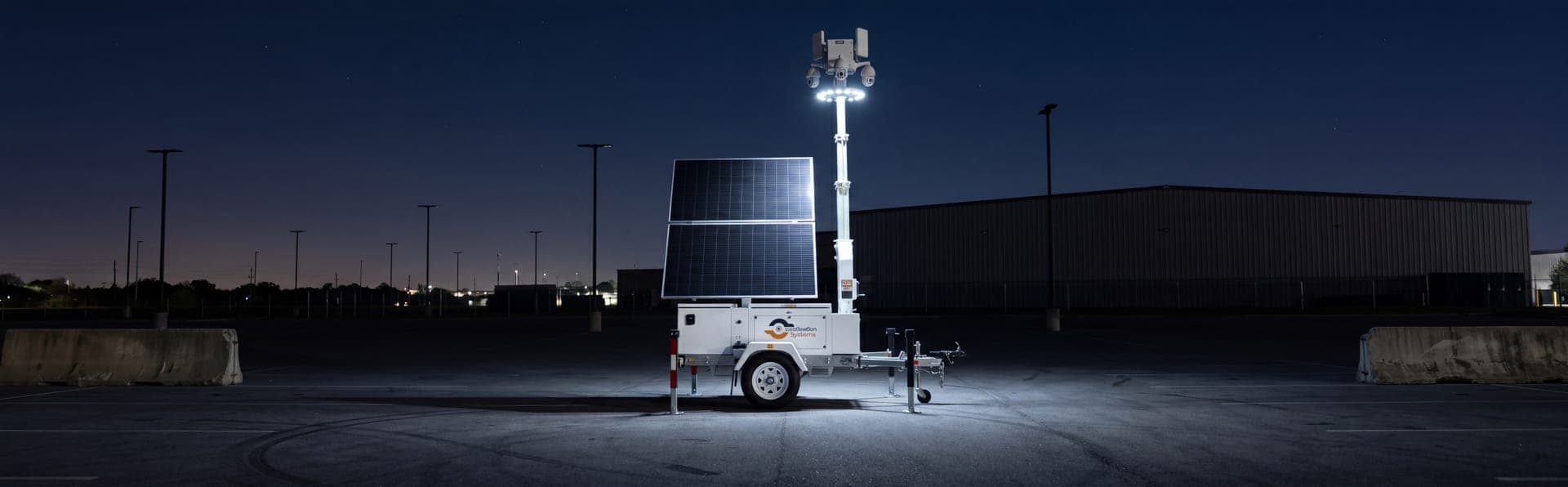
That is why quarry security cameras increasingly arrive on a trailer. A solar-powered mobile surveillance unit tows up the haul road, raises an elevated mast over the laydown yard and fuel island, and starts monitored coverage without trenching a foot of conduit. License plate recognition at the scale house ties every after-hours vehicle to a plate and a time, optional thermal imaging reads a pitch-black pit, and when the SOC verifies an intruder, the talk-down and the call to law enforcement happen while there is still something to stop. When the pit advances or the laydown yard moves, the coverage moves with it.
The sections below break down the threats aggregate producers report most — fuel theft, parts stripping, joyriding, and trespass liability — the sensor and monitoring configuration VDS fields against each, customer-reported results from working pits, and answers to the questions quarry operators ask before the first trailer arrives.
Exposed sites.
High-value targets with no one watching.
Minimal staffing, sprawling ground, and valuable assets in the open — the conditions that turn a site into a soft target the moment everyone goes home.
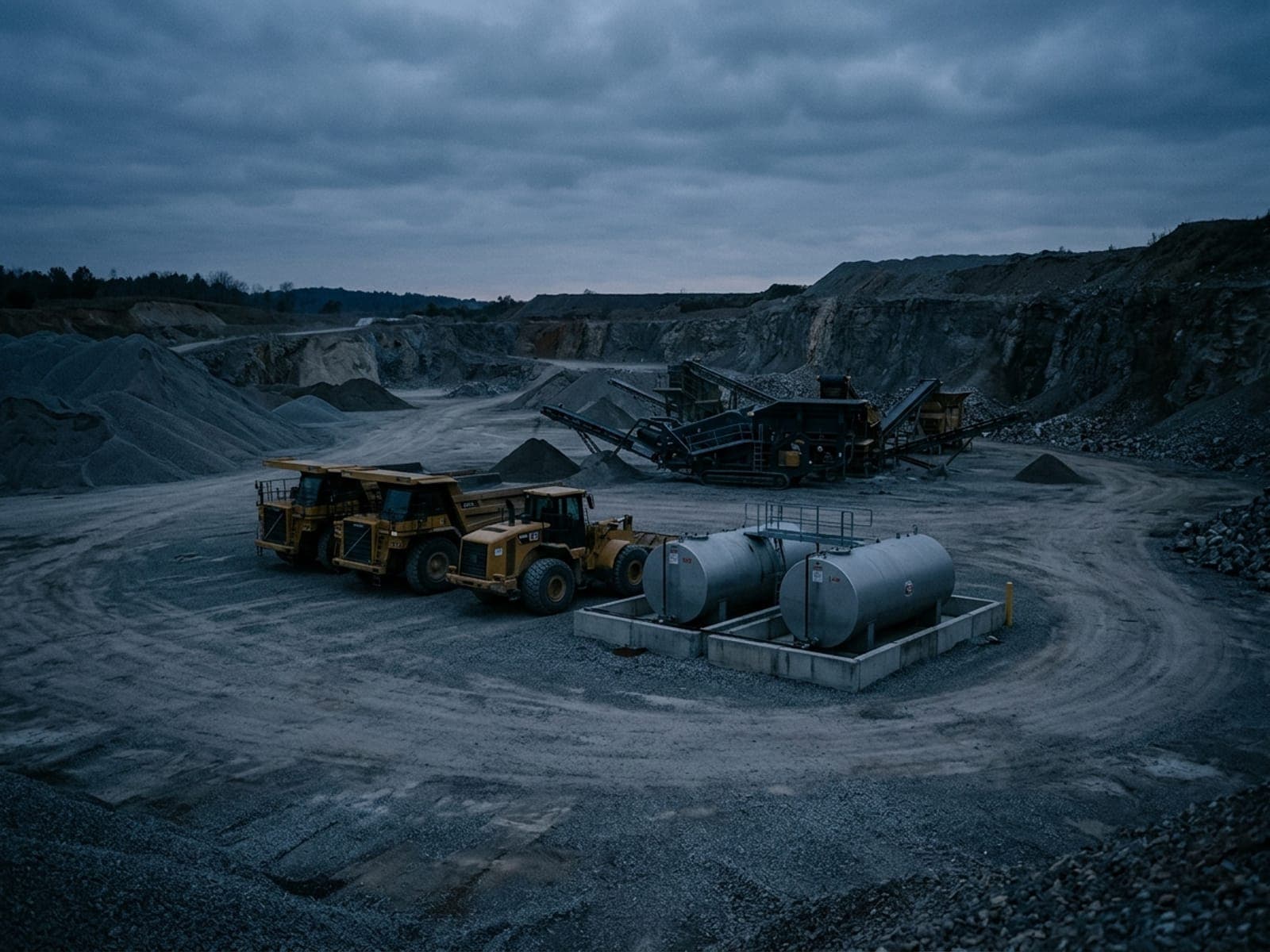
Diesel and fuel tank theft
Haul trucks, loaders, and crushers sit fueled and idle overnight next to bulk tanks — an easy siphon target on a pit with no lighting and no one watching until morning shift.
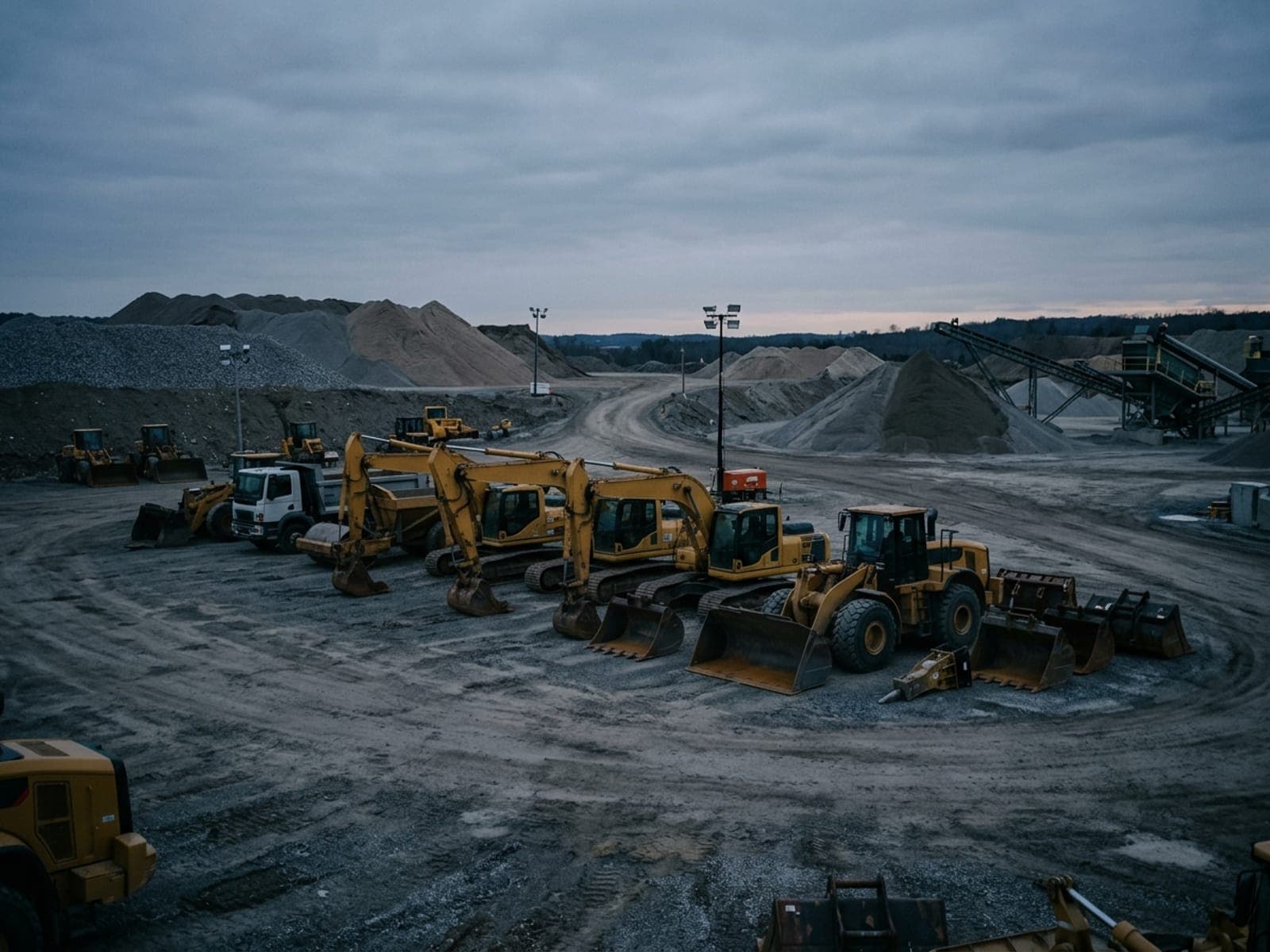
Equipment, parts, and copper theft
Idle excavators, loaders, and attachments left in the laydown yard overnight are stripped for copper wiring, batteries, hydraulic components, and high-value parts before anyone notices.
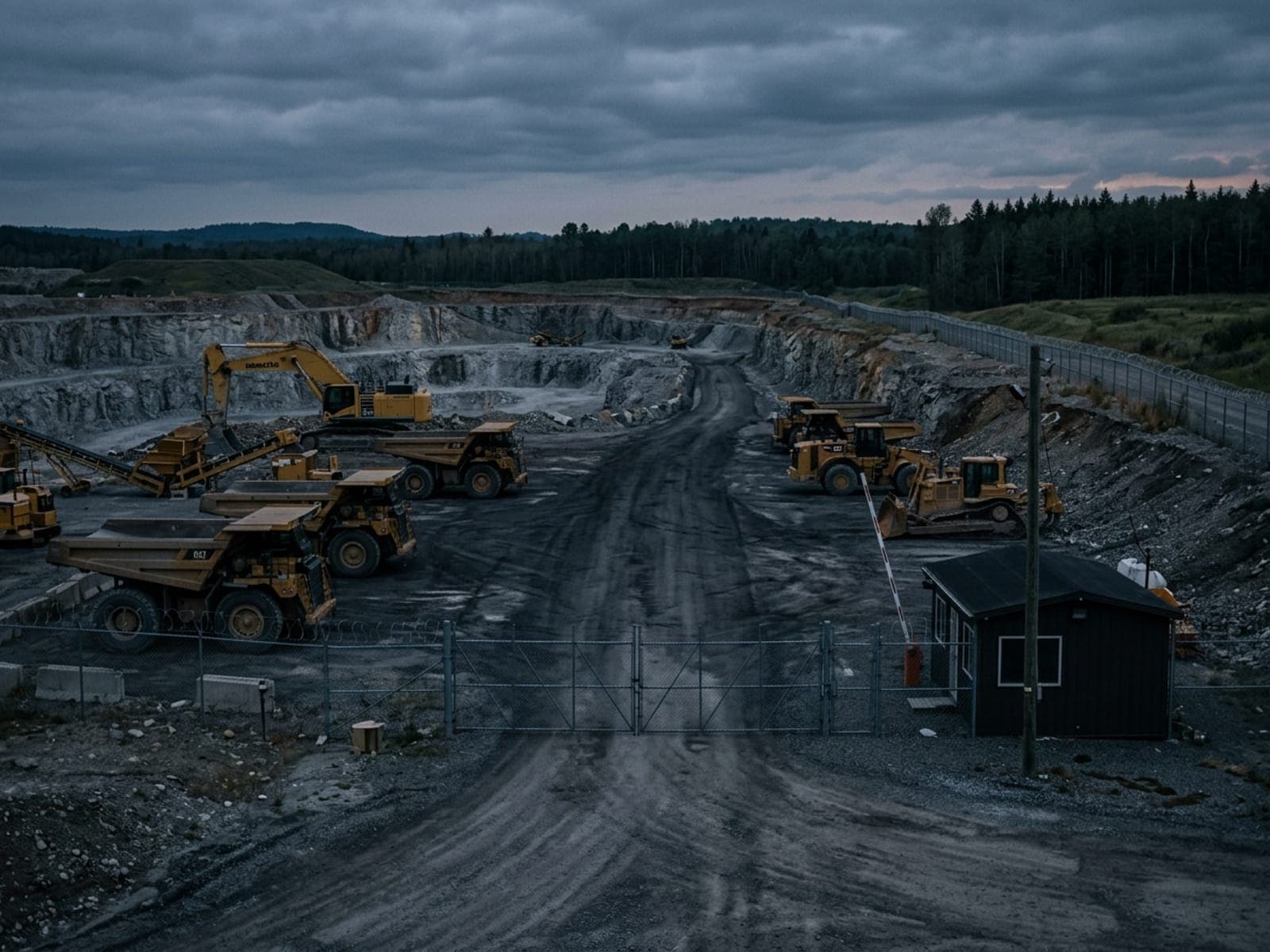
After-hours joyriding and unauthorized entry
Unsecured haul roads and open pit entrances invite trespassers who joyride heavy equipment, cut through fencing, or drive in behind the last outbound truck with no scale house open to stop them.
Trespass, deep pits, and water hazard liability
Flooded pits, sheer high-walls, and stockpiled material make an idle quarry an attractive nuisance for trespassers — and a serious liability exposure when no one is there to respond.
Drop the trailer.
The SOC takes it from here.
Solar-autonomous surveillance with AI analytics and live SOC operators. No power, no internet, no staffed post required.
Every truck.
Every load.
License plate recognition at the scale house and pit entrance logs every vehicle in and out, ties haul truck and contractor traffic to a time and a plate, and flags unauthorized or hotlisted vehicles the moment they roll in.
- Automatic plate capture at the gate, day and night
- Entry/exit log tied to time and plate
- Hotlist alerts for unauthorized vehicles
- Evidence packages for law enforcement and insurance
 STEP 01
Acres of laydown.
One virtual perimeter.
The MSU establishes camera coverage across the equipment laydown yard, fuel island, and haul road from an elevated mast. AI classifies people versus vehicles and flags movement around idle equipment long before a part goes missing.
- Elevated coverage across the laydown yard and fuel island
- AI human and vehicle classification
- After-hours movement alerts around idle equipment
- Works in zero-light across the whole pit
 STEP 02
No night watchman.
A live operator instead.
Every alert routes to a live SOC operator who verifies it, issues a real-time audio warning through the on-unit speaker, and escalates to law enforcement — deterrence that covers the whole pit without staffing a graveyard shift.
- Live operator verification on every alert
- Real-time voice-down warnings through the speaker
- Escalation to law enforcement with footage
- Monthly incident and access reporting
 STEP 03
No grid power.
No blind pit corners.
Solar power, 4G/5G cellular, and thermal-capable cameras mean coverage goes where the risk is — the far high-wall, the fuel island, the stockpile row — with no trenching and full visibility on a pitch-black pit at 2am.
- Solar-autonomous — no grid power required
- Thermal detection for zero-light conditions
- 4G/5G cellular backhaul
- Relocatable as the pit or laydown yard shifts
 STEP 04
Every asset on site.
One platform.
The MSU adapts to your pit layout. Here are the scenarios aggregate producers and quarry operators deploy for most often.
Pit entrance & scale house
The single chokepoint every haul truck and contractor vehicle passes through, where LPR ties access to a plate and a time.
Equipment & attachment laydown yards
Idle excavators, loaders, and attachments parked overnight — the highest-value, most stationary target on the property.
Diesel fuel islands & tank farms
Bulk fuel storage and fueling equipment where a single siphoning run can cost thousands of gallons in one night.
Stockpile & scrap material yards
Aggregate, scrap metal, and salvaged material stockpiles that walk off a truck scale unnoticed without a plate record.
Explosives magazine perimeter
Blast magazine storage requiring dedicated perimeter coverage and immediate alerting on any unauthorized approach.
Multi-pit & seasonal operations
Operators running several pits or ready-mix yards who need consistent, centrally monitored coverage that relocates with the work.
Real operators.
Real numbers.
Every metric below comes from a real VDS aggregates customer. Names protected per agreement.
Customer-reported outcomes from VDS deployments. Results vary by site conditions, monitoring configuration, and response protocols. How we measure →
We were losing diesel every week and couldn't prove who was coming through the gate after hours. The trailer went up at the entrance, LPR caught it on the log, and the losses stopped inside the first month.
 MSU-A · FLAGSHIPLPR + SOC · AGGREGATES
The Mobile Surveillance Unit.
Built for the whole pit.
Scale house LPR, laydown yard and fuel island coverage, thermal night detection, and 24/7 SOC monitoring — all from a single solar-autonomous trailer that goes anywhere the pit does.
From assessment
to covered.
Most aggregate producers go from initial conversation to a live trailer on the pit inside 7 business days.
Site assessment
We review your pit layout, scale house and haul road, fuel island, equipment laydown, and incident history. Fast quote turnaround.
Sensor configuration
Camera presets, LPR capture at the scale house, thermal detection zones across the yard, and alert rules configured for your specific site.
Delivery & commissioning
Trailer delivered to the pit, mast raised, cameras and LPR calibrated. SOC monitoring begins immediately. No trenching or utility work required.
Monitoring & reporting
Monthly incident reports, access and vehicle logs, and system health delivered automatically. Trailer relocated as the pit or laydown yard shifts.
Common questions.
How fast can VDS deploy at a aggregates & quarries site?
A mobile surveillance unit is live in under 20 minutes once it arrives — most aggregates & quarries sites go from first call to monitored coverage in days, not months. Most aggregate producers go from initial conversation to a live trailer on the pit inside 7 business days.
Do the units need power or internet at the site?
No. VDS units are solar-autonomous with battery storage and connect over cellular (4G/5G), so there is no trenching, no generator refueling schedule, and no dependence on site IT. That is what makes them practical for sites where fixed infrastructure is missing or still under construction.
What happens when the system detects someone after hours?
AI detection classifies the event and filters routine motion before a person ever sees it. A SOC operator verifies the live feed, challenges intruders by voice through 120 dB speakers with strobes, and — when it escalates — dispatches police with live video of the scene.
Which aggregates & quarries security problems does monitored surveillance address?
The most common incidents at aggregates & quarries sites are diesel and fuel tank theft, equipment, parts, and copper theft, after-hours joyriding and unauthorized entry, trespass, deep pits, and water hazard liability — the same exposure areas covered in the sections above. Monitored coverage addresses them by making the site actively watched instead of just recorded.
Can VDS work alongside our existing guards or security partner?
Yes — that is the standard model. Monitored surveillance carries the perimeter and after-hours watch, so people — yours or your security partner's — handle verified incidents instead of standing watch over empty hours. The SOC can route verified alerts to your team, your guard provider, or police dispatch.
Cover your whole pit this week.
Tell us how many pits, their layouts, and your biggest loss driver — we'll quote the deployment — fast.