
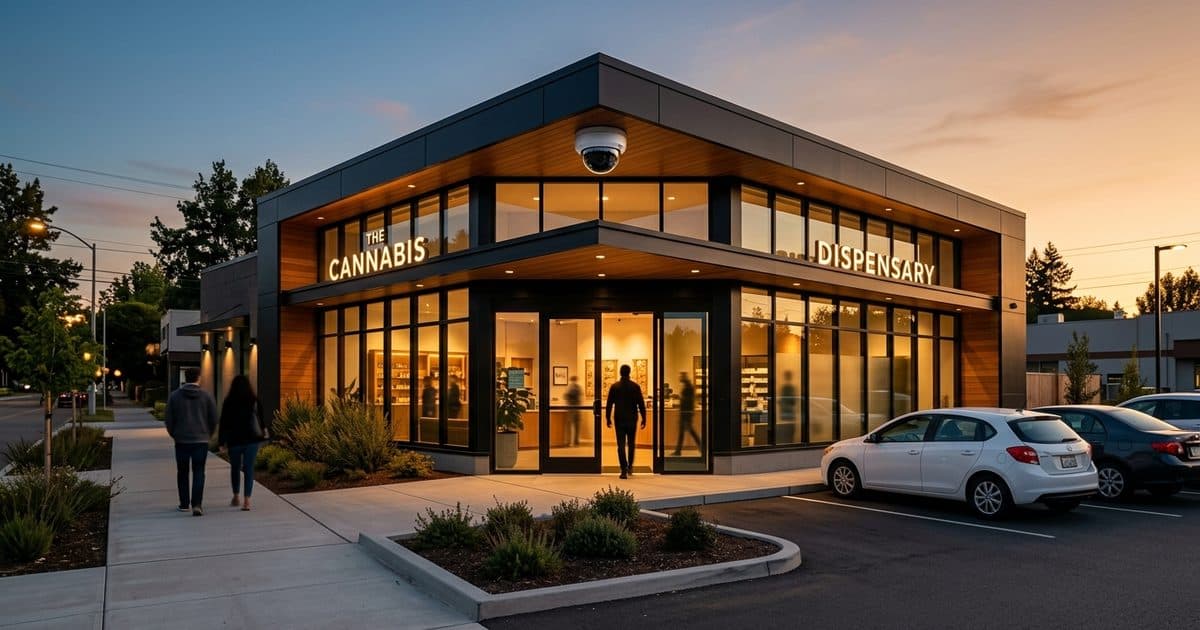
Most dispensary owners know they need cameras. Far fewer know exactly what the regulations require: which zones must be covered, what resolution is mandatory, how many days of footage must be stored, and what the inspection process looks like. A system that looks sufficient from the outside can still produce a compliance failure when an auditor pulls the footage and finds blind spots at the point of sale, a low-resolution image at the entrance, or retention gaps that overwrite footage before an investigation can begin.
This post covers what state regulations actually require, where most dispensary camera systems fall short, and why a verified response monitoring approach outperforms passive recording when your license is on the line.
Why Cannabis Dispensaries Face a Different Security Standard
Cannabis is still a Schedule I controlled substance at the federal level, which means state regulators carry the full weight of oversight. Every licensed dispensary operates under a state-issued license — and that license can be suspended or revoked for a security failure. Regulators are not just looking for cameras. They're looking for a documented, auditable security posture.
This creates a compliance burden that goes well beyond what most retail businesses face. The security camera system has to be operational at all times (not just during business hours), footage has to be stored for a defined minimum period, and specific locations must be covered whether or not the operator considers them high-risk. A dispensary that has cameras pointed at its highest-value displays but leaves a blind spot on the safe room door is already out of compliance.
Understanding the regulatory requirements for your specific state is the starting point for any dispensary coverage plan.
State-by-State Camera Requirements: What the Regulations Actually Say
State cannabis regulations vary in their specificity, but most share a common set of mandated requirements: minimum camera resolution, defined coverage zones, and a mandatory retention period. The table below summarizes requirements for four states with mature regulatory frameworks. Operators should always verify current requirements directly with their state authority, as rules are updated regularly.
| State | Minimum Coverage Zones | Minimum Resolution | Minimum Retention Period |
|---|---|---|---|
| California | All entrances/exits, sales floor, point of sale, storage areas, safes, parking lots, and any area where cannabis is weighed or handled | 1080p (HD) minimum; must produce a clear facial image | 90 days (California DCC — verify current requirements at dcc.ca.gov) |
| Colorado | All entrances/exits, sales floor, POS terminals, limited-access areas, vault/safe, and waste disposal areas | Minimum quality to clearly identify individuals — HD strongly implied by MED guidance | 40 days minimum (Colorado MED — verify current rules with the state) |
| Michigan | All interior and exterior entry/exit points, all areas where cannabis is present including storage, POS, and vault | Must produce clear identification-quality images — 1080p in practice | 30 days (Michigan CRA — verify current rules at michigan.gov/cra) |
| Illinois | Entrances and exits, all sales areas, storage and vault rooms, any area where cannabis is transferred or weighed | High-definition, capable of clear facial identification at point of capture | 30 days minimum (Illinois IDFPR — verify at idfpr.illinois.gov) |
Note: A security system that meets the minimum resolution and retention requirements on paper can still produce a compliance failure. If a camera is installed in a mandated zone but pointed at an angle that misses the safe door, or if glare from a display case washes out the POS image, you have a documented gap. State inspectors review footage quality, not just system installation records. A compliance failure during a license renewal review can result in a conditional license, a fine, or suspension — regardless of how long you've been operating.
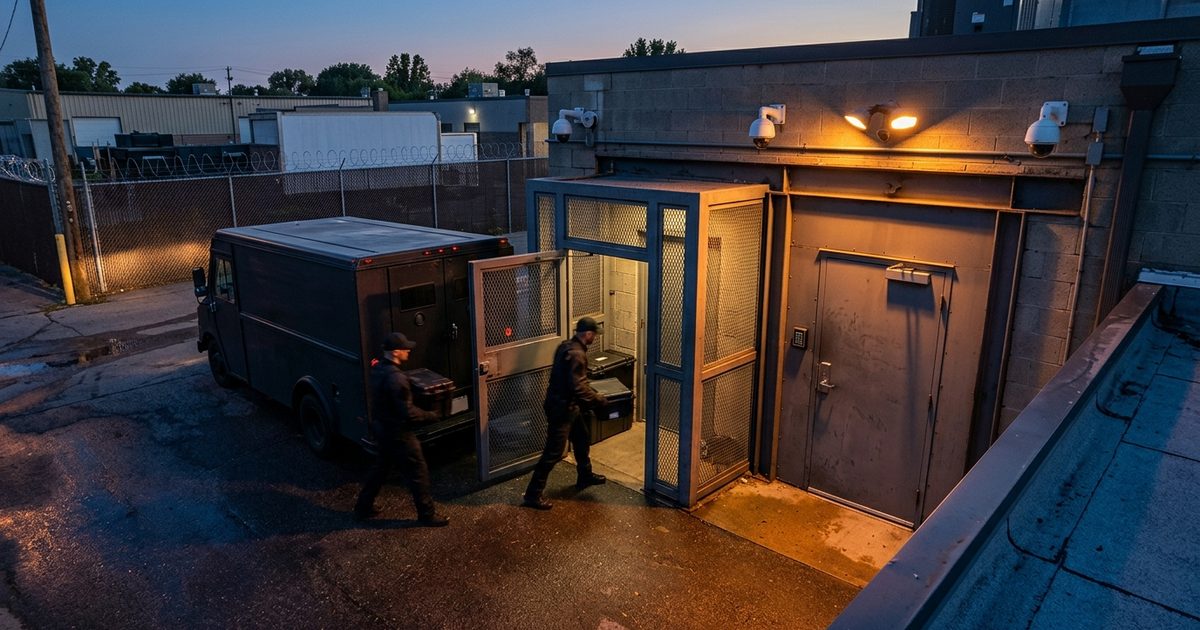
Common Compliance Gaps in Dispensary Security Camera Systems
After reviewing dispensary security setups, the same issues surface repeatedly. These are the gaps that create compliance risk and create investigation failures when footage is actually needed.
- Inadequate coverage at entry and exit points. Most operators cover the front door. State regulations typically require every entrance and exit — including employee entrances, delivery doors, and emergency exits. A single uncovered door is a compliance gap that an inspector will find immediately.
- Cameras installed in mandated zones but at the wrong angle or height. A camera above the safe room door pointed at the ceiling rather than the entry produces footage that won't support an investigation. Coverage zone compliance means the camera must produce useful, identification-quality images — not just that a device is present.
- Resolution that meets the minimum but fails in real conditions. A camera rated for 1080p can still produce unusable footage at night, under strong retail lighting, or when a subject is more than 15 feet from the lens. Compliance requires the system to produce clear images under real operating conditions, not just under ideal test conditions.
- Retention periods not verified against actual storage capacity. A 30-day retention requirement means 30 days of continuous recording for every camera on the system. Operators frequently underestimate storage capacity requirements or configure systems that overwrite footage on a 7- or 14-day cycle. When an incident is reported late — which is common when inventory discrepancies surface at month-end — the footage is already gone.
- No documented incident response or escalation workflow. State regulators don't just want footage — they want evidence that the security system is actively managed. A passive recording system with no escalation protocol and no documented incident reporting history is a compliance risk at license renewal, even if the cameras are technically spec-compliant.
Active Monitoring vs. Passive Recording: Why It Matters for Dispensaries
The single most common assumption in dispensary security is that cameras and recording are sufficient. They're not — and state regulators increasingly expect more than a DVR.
Passive recording captures what happened. It produces footage that's useful after an incident has been discovered. But in a cash-heavy, high-value environment, discovery often comes hours or days after the event. By then, the evidence exists, but the opportunity to intervene is gone and the investigation is harder.
Remote video monitoring changes the operational posture. Instead of footage that's reviewed after the fact, operators get verified responses to real-time alerts. When motion is detected in a closed storage area at 2am, a monitoring operator verifies the alert, determines whether it's a genuine threat, and escalates through a defined protocol — police dispatch, on-site personnel, or a recorded audio challenge through the unit's speaker system.
For multi-location dispensary operators, this also solves the standardization problem. A consistent coverage plan across all locations, with standardized escalation rules and incident reporting, produces the kind of documented security posture that regulators want to see at renewal.
License plate recognition adds another layer at dispensary entry and exit points — especially for drive-through windows or parking areas where vehicle-based incidents are common. LPR creates an evidence-ready log of every vehicle that entered the property during a given time window, which significantly accelerates police investigations when a vehicle description is available but an individual can't be identified.
When Temporary or Elevated Coverage Is Needed
Cannabis dispensaries aren't static environments. Grand openings, high-volume sale periods, license audits, and incidents at neighboring properties all represent periods of elevated risk that a fixed camera system wasn't designed to address.
A Mobile Surveillance Unit can be deployed to a dispensary parking lot, delivery zone, or exterior perimeter during these periods without any infrastructure modification. Mobile units operate on cellular connectivity with onboard power, so deployment doesn't depend on running conduit or waiting on an electrician. The coverage plan expands to cover a temporary risk period, then retracts when the period is over.
This is also the right approach for dispensaries in the process of building out a permanent fixed system — temporary coverage during the construction phase ensures there's no gap in the security record.
For operators exploring dispensary security solutions for a new location or an existing site under a compliance review, the starting point is a coverage zone audit: map every mandated zone against your current camera positions and verify that each one produces identification-quality footage under normal operating conditions.
Building an Evidence-Ready Dispensary Security System
State regulators, law enforcement investigators, and insurance carriers all need the same thing: usable footage from a documented, managed security system. Building that requires more than buying the right cameras.
An evidence-ready dispensary security system includes:
- A complete coverage plan that maps every mandated zone with actual camera positions and verified sightlines
- Resolution and lighting verified under real operating conditions, not just hardware specs
- Storage configured to exceed the minimum retention period — buffer beyond the minimum because incidents are often reported late
- A defined escalation workflow: who gets called, in what order, with what documentation required at each step
- Incident reporting that creates a dated, documented record — not just footage sitting on a DVR
To reduce false alarms without reducing coverage, configure detection zones tightly around mandated areas and set appropriate sensitivity levels for each zone based on expected traffic patterns. After-hours zones require different sensitivity settings than zones that see continuous foot traffic during business hours.
The goal isn't to pass the next inspection. It's to have a security posture that holds up when an incident actually happens — because in a cannabis dispensary, when an incident does happen, the consequences of a footage failure run straight to your license.