
Construction site camera rental options: equipment types and deployment
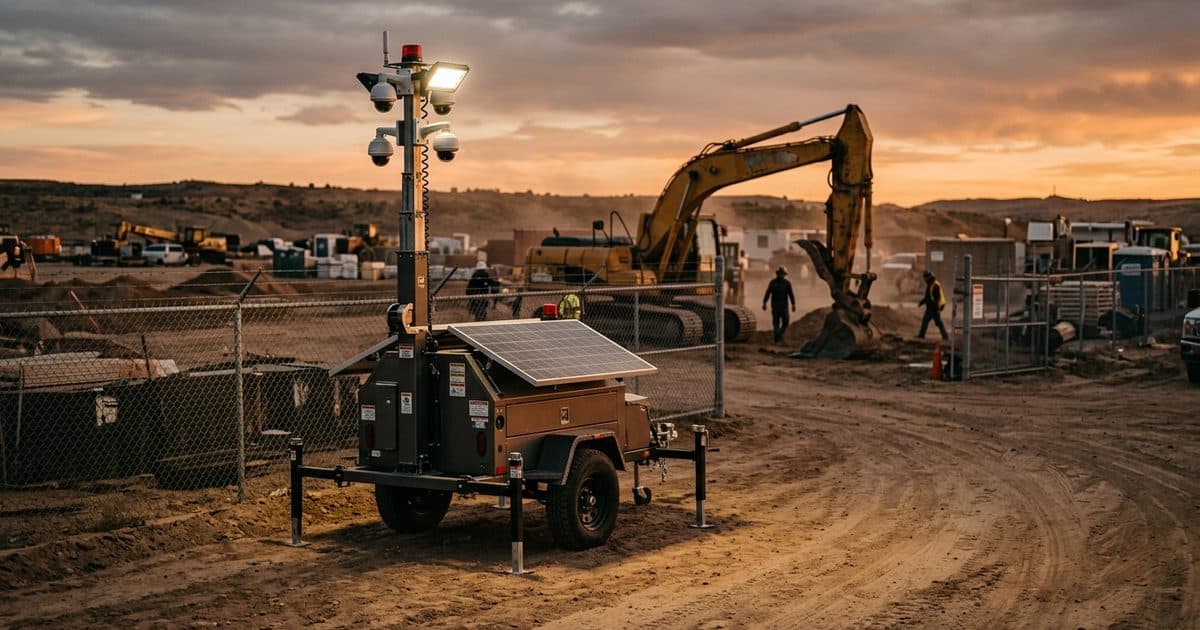
Mobile surveillance trailers represent the most popular rental option for active construction sites because they deploy within hours without existing infrastructure. These solar-powered units include multiple cameras, night vision capabilities, cellular connectivity, and on-board storage that continues recording even during network interruptions.
Fixed temporary camera systems work better for sites with existing power and internet infrastructure, offering lower monthly costs but requiring installation time and coordination with other trades. Pole-mounted cameras provide excellent coverage for perimeter monitoring but lack the flexibility to relocate as site conditions change.
Hybrid coverage plans combine mobile trailers for high-activity areas with fixed cameras for perimeter monitoring, giving project managers flexibility to address both theft prevention and safety compliance requirements. The rental provider handles equipment coordination, connectivity management, and footage retrieval across all camera types from a single point of contact.
Construction site security camera rental cost breakdown
Rental costs vary significantly based on equipment type, monitoring services, and contract length. The table below reflects typical industry ranges across providers, so you can benchmark quotes:
| Service Level | Monthly Cost | What's Included |
|---|---|---|
| Equipment-Only Rental | $500–$800 | Camera hardware, basic setup, cellular connectivity |
| Managed Rental | $1,200–$1,800 | Equipment + remote monitoring + incident alerts |
| Full-Service | $2,000–$2,500 | Equipment + monitoring + deployment + reporting + evidence retrieval |
How VDS prices it: rather than tiering monitoring as an add-on, VDS bundles equipment, solar power, cellular connectivity, and 24/7 SOC monitoring into a single per-site rate quoted to your site — with no per-camera or per-alert charges. See the pricing overview for what each plan includes and to get a quote scoped to your site.
Equipment-only rentals provide camera hardware and connectivity but require your team to monitor alerts and manage footage retrieval. This option works for contractors with dedicated security personnel but often creates gaps in after-hours coverage when most theft occurs.
Managed rental agreements include remote video monitoring where trained operators watch your cameras and verify threats before escalating to appropriate contacts. This service level bridges the gap between passive recording and active security response, providing real deterrence value rather than just incident documentation.
Additional cost factors in construction camera rentals
Site accessibility affects deployment costs, with remote locations or difficult terrain requiring additional equipment and setup time. Urban jobsites with reliable cellular coverage typically cost less than rural sites requiring signal boosters or satellite connectivity.
Camera count and coverage area directly impact monthly costs, though providers often offer volume discounts for multi-camera deployments. A 50,000 square foot site typically requires 3-4 strategically placed mobile trailers for complete coverage, while smaller sites may need only perimeter monitoring.
Contract length influences pricing, with 6+ month agreements typically reducing monthly costs by 15-25% compared to month-to-month arrangements. Most providers require 30-day minimum rentals to cover deployment and retrieval logistics.
When to rent vs buy construction site cameras
Project duration under 18 months almost always favors rental over purchase, particularly when factoring in equipment depreciation, maintenance costs, and technology updates. Construction cameras face harsh weather conditions, dust, vibration, and potential theft that reduce equipment lifespan significantly.
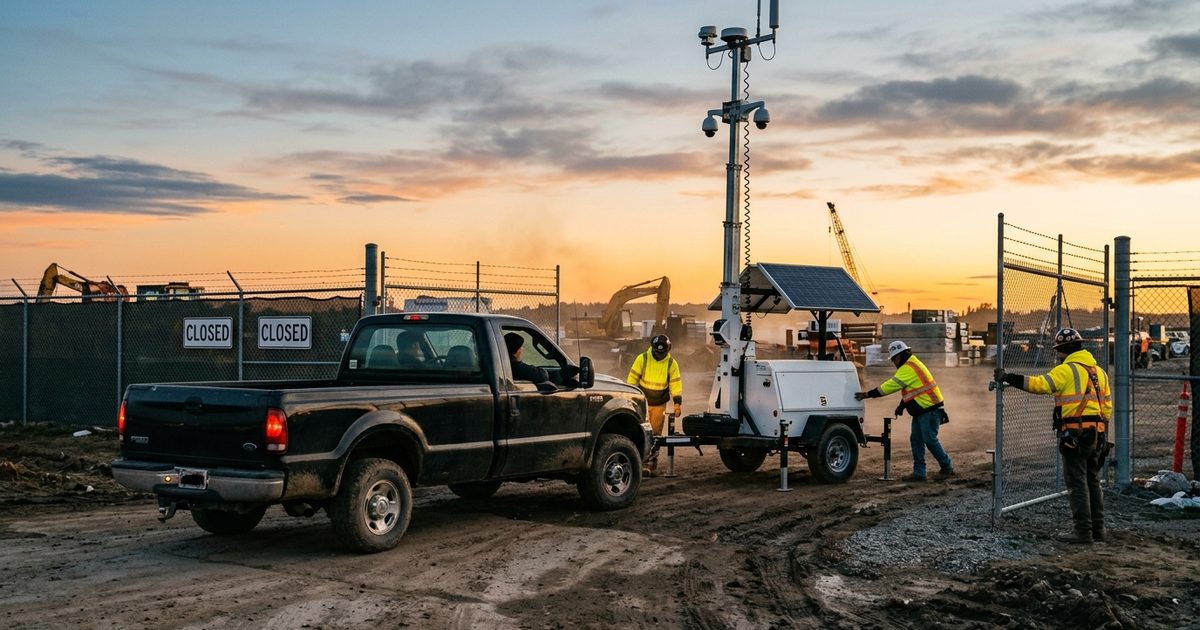
Changing site conditions throughout construction phases make rental arrangements more practical than fixed installations. Foundation work requires different camera angles than framing, and mobile trailers can relocate to address emerging security hotspots without additional infrastructure investment.
Capital allocation priorities often favor rental arrangements that preserve cash flow for core construction activities rather than tying up capital in security equipment. Rental costs qualify as operational expenses rather than capital expenditures, simplifying budget approval and accounting processes.
Multi-site operations benefit from standardized rental agreements that provide consistent security coverage and reporting across all projects. Purchasing equipment for multiple simultaneous projects requires significant capital investment plus internal resources for deployment, maintenance, and storage between projects.
What to look for in construction site camera rental contracts
Uptime guarantees protect against extended equipment downtime that leaves your site vulnerable during critical project phases. Look for providers offering 95%+ uptime commitments with service credits for failures exceeding acceptable thresholds.
Connectivity failover options prevent recording gaps during network outages that commonly occur on construction sites. Quality providers include multiple cellular carriers plus on-board storage that continues recording during connectivity interruptions.
Evidence retrieval SLAs specify response times for footage requests needed for insurance claims, law enforcement investigations, or dispute resolution. Same-day retrieval capabilities become critical when dealing with theft incidents or safety violations requiring immediate documentation.
Equipment damage policies clarify liability when cameras are damaged by weather, accidents, or vandalism. Some providers include damage coverage in rental fees, while others require separate insurance or charge replacement costs for damaged equipment.
Response escalation procedures define how verified incidents get escalated to appropriate contacts, including site supervisors, security companies, or law enforcement. Clear escalation workflows prevent confusion during actual security incidents when rapid response matters most.
Common mistakes when renting construction site cameras
- Waiting until theft occurs to install cameras — Deploy security during site mobilization rather than after discovering vulnerability. Thieves often scout sites during early construction phases to identify valuable materials and equipment storage patterns.
- Choosing equipment-only rental without monitoring services — Unmonitored cameras provide incident documentation but offer limited deterrence value. Remote monitoring with human verification creates active deterrence through real-time response capabilities.
- Ignoring cellular connectivity requirements — Many sites lack reliable cellular coverage for camera connectivity, requiring signal boosters or alternative solutions. Test connectivity before equipment deployment to avoid service interruptions.
- No documented escalation workflow — Security incidents require clear escalation procedures specifying who gets contacted when alerts trigger. Undefined response procedures often result in delayed or inappropriate responses during actual emergencies.
- Failing to plan evidence retrieval workflows — Insurance claims and law enforcement investigations require specific footage formats and documentation. Establish evidence retrieval procedures before incidents occur rather than during crisis situations.
Not sure which camera type to rent? Our guide to the best construction site security cameras compares jobsite cams, solar cellular cams, trailers, and monitored systems by project phase.
Technology integration and monitoring services
Remote video monitoring transforms passive recording into active security response through trained operators who verify threats and escalate appropriate responses. This service eliminates false alarms while providing documented verification for law enforcement or insurance purposes.
Mobile alerts and reporting keep project managers informed of security events through automated notifications and daily activity summaries. Integration with project management systems allows security reporting alongside other construction metrics and compliance requirements.
Construction live monitoring capabilities enable real-time viewing of jobsite activities for safety compliance, progress documentation, and coordination with subcontractors. Many contractors use live monitoring for multiple purposes beyond security, including time-lapse documentation and remote project oversight.