
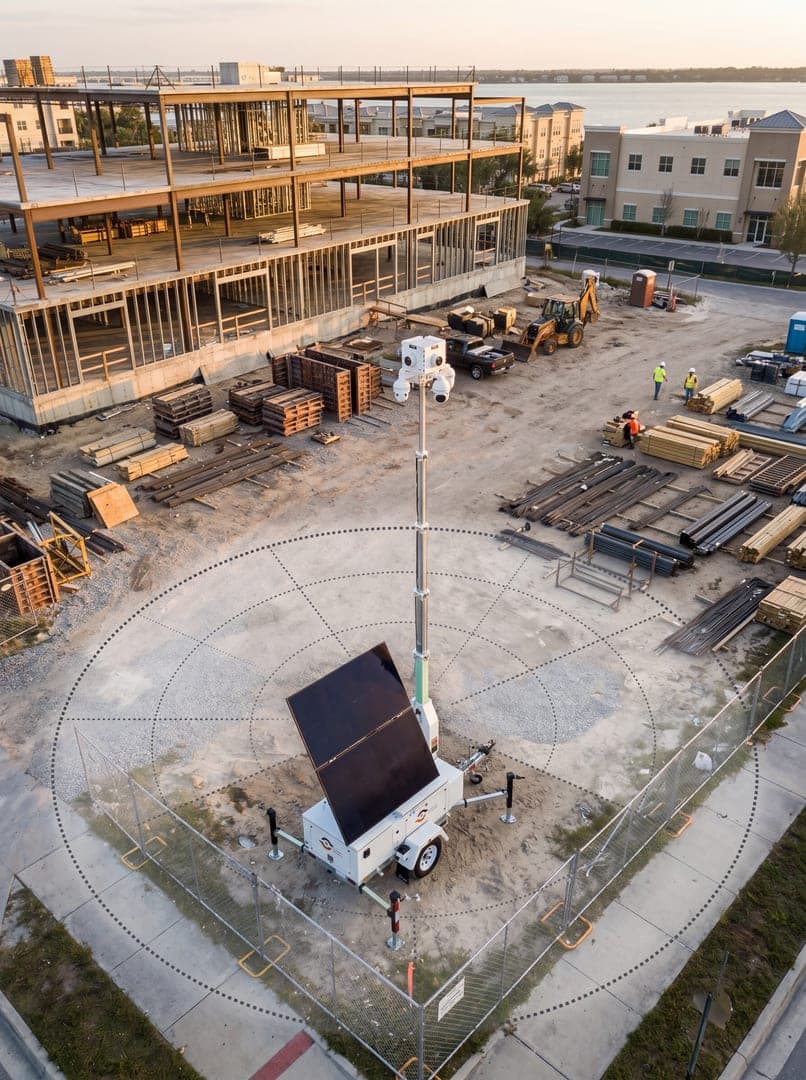
Construction site security fails when coverage is treated like a fixed camera install. Sites change weekly, access points move, and risk spikes early before permanent infrastructure is in place. Mobile surveillance trailers solve this by delivering rapid, relocatable coverage that can follow the project as it evolves—without delaying work or waiting on permanent installation.
This guide walks through a practical deployment approach for mobile surveillance trailers on construction sites, including what to cover first, where to place units for evidence-ready footage, how to validate night performance, and when to add remote monitoring for faster response.
Quick Construction Site Coverage Checklist
Identify the top 3 theft targets (equipment, materials, fuel, copper, tools)
Map entrances/exits, perimeter edges, laydown yards, and high-value storage zones
Choose trailer placement that captures approach + action + exit for priority zones
Verify night footage is usable for identification, not just “motion visible”
Define response workflow for alerts, escalation, and incident documentation
Re-check coverage after each phase change or access-point move
Run a monthly retrieval test to confirm exports and timestamps are evidence-ready
Why Construction Sites Need Mobile Surveillance Trailers
Construction sites are high-risk environments because:
Layout changes by phase, so fixed coverage becomes outdated fast
After-hours incidents are common when staffing is minimal
Temporary fencing and lighting create predictable blind spots
High-value assets sit in open-air zones (laydown yards, containers, staging areas)
Access points shift, creating new entry routes and escape routes
Mobile surveillance trailers are designed for rapid deployment and relocation so coverage stays aligned to the jobsite as it evolves. For the core solution overview, use /products/products/mobile-surveillance-unit.
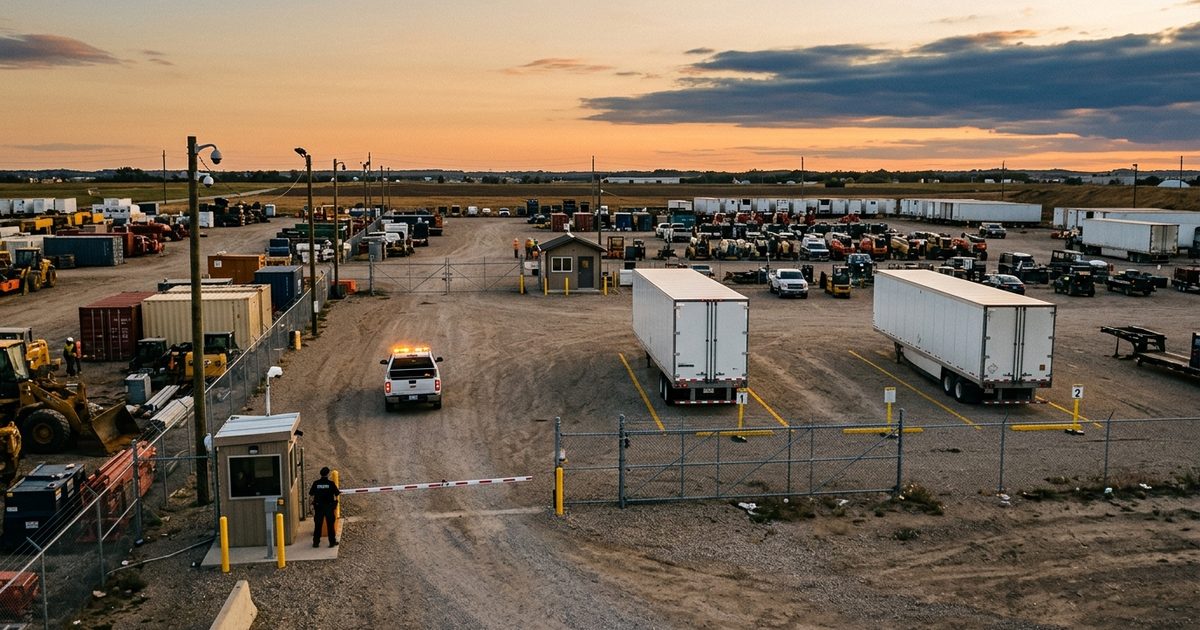
Step 1: Map the Jobsite by Risk Zones
Before placement, map the site into zones based on how theft and intrusion actually happen:
Entrances/exits and vehicle gates
Perimeter edges and fence lines
Laydown yards and material staging
Equipment parking zones
Fuel storage and high-theft materials
Office trailers and tool containers
Loading areas and delivery zones
The goal is not “cover everything.” It’s to cover what’s most likely to be targeted, in a way that produces usable evidence and supports response.
Step 2: What to Cover First on a Construction Site
Priority 1: Entrances, Exits, and Vehicle Gates
Why this comes first:
Most intrusions involve a vehicle entry/exit route
It’s a repeat chokepoint where you can capture consistent movement
It helps connect incidents to direction of travel and time
Coverage goals:
Capture vehicle approach, entry, and departure paths
Avoid a single wide shot that can’t identify details
Use overlapping views when possible to reduce obstruction risk (trucks, glare, weather)
If vehicle identification is a major requirement, evaluate targeted license plate recognition at controlled capture points using our guide on How to Set Up License Plate Recognition Cameras.
Priority 2: Laydown Yards and Material Staging
Why this comes second:
Laydown yards concentrate high-value materials
Theft can happen quickly and repeatedly
These zones often have poor lighting and easy perimeter access
Coverage goals:
Capture the approach route into the yard
Capture activity at the target zone (materials, pallets, containers)
Capture the exit route out of the yard
Priority 3: Equipment Parking and Fuel Storage
Why this comes third:
Equipment is expensive, and theft often targets accessories, batteries, attachments, and fuel
Fuel theft is fast and common, especially after-hours
These areas often sit near perimeter edges
Coverage goals:
Ensure clear visibility of equipment rows and fuel tanks
Avoid blind spots created by parked machinery
Validate night clarity since most incidents occur in low light
Priority 4: Perimeter Edges and Known Breach Points
Why this comes next:
Sites often have “soft edges” where fencing is easiest to breach
Intruders test perimeters, then return when patterns are clear
Coverage goals:
Cover the fence line where breaches are most likely
Cover “shadow zones” behind trailers, containers, or stacked materials
Pair with a defined escalation workflow so alerts aren’t ignored
Priority 5: Office Trailers, Tool Containers, and High-Frequency Access Areas
Why this matters:
Tools and small assets disappear without obvious intrusion
Disputes and accountability issues often involve these zones
Coverage goals:
Cover entrances and access points, not just wide area
Ensure footage supports accountability, not just presence
Step 3: Trailer Placement That Produces Usable Evidence
Placement should be designed around outcomes, not convenience.
Use these placement rules:
Place trailers to capture approach + action + exit in your highest-risk zones
Avoid pointing into strong lights or direct headlight lines at night
Assume obstructions will happen (trucks, equipment shifts, staged materials)
Use overlapping views where possible to reduce single-point blind spots
Re-check camera angles after setup and after site changes
Practical rule: if you can’t identify people or actions clearly at night in the priority zone, the placement is not finished.
Step 4: Nighttime Coverage and Evidence Readiness
Most construction site surveillance fails at night. Don’t assume night performance works—validate it.
Night validation checklist:
Pull 30–60 seconds of night footage from each priority zone
Confirm people are identifiable, not silhouettes
Check for:
Glare and washout from fixtures
Overexposure from vehicle headlights
Motion blur removing detail
Dark corners and uneven lighting
Operational best practice:
Run a monthly night review on critical views
Re-run validation after lighting changes, phase changes, or trailer relocation
For ongoing validation and maintenance cadence, discover 10 tips to maintain your video surveillance system.
Step 5: Monitoring and Response Workflow
Trailers provide visibility. Monitoring creates outcomes.
A functional response workflow answers:
What triggers an alert (zones, after-hours rules, intrusion patterns)?
Who is notified (site super, security, property team, law enforcement liaison)?
What is the escalation path (verify, warn, dispatch, document)?
How is the incident recorded (clip export, timestamps, report)?
If your incidents happen after-hours or you manage multiple sites, remote monitoring typically improves time-to-awareness and creates consistent reporting. Learn more about remote video surveillance monitoring.
Step 6: Coverage by Construction Phase
Early Phase (Highest Risk)
Focus on entrances/exits, perimeter edges, laydown yards
This is where rapid deployment wins because infrastructure is limited
Mid-Phase (Shifting Footprint)
Re-map risk zones as storage and access routes shift
Move trailers as new high-value areas emerge
Late Phase (Stabilizing Site)
Focus on finishing materials, equipment, and controlled access points
Consider transitioning some coverage to fixed installs if the perimeter stabilizes
If you’re deciding between mobile and permanent installs, use /trailer-based-vs-installed-video-surveillance-systems/.
Common Construction Site Coverage Mistakes
Placing trailers for convenience rather than risk zones
Trying to cover the entire site with one wide view
Not validating night performance with real clips
Ignoring approach/exit capture, which breaks investigations
No escalation workflow, so footage is reviewed too late
Not updating coverage after phase changes
Construction Site Mobile Surveillance Trailer FAQs
How many mobile surveillance trailers does a construction site need?
It depends on site size, entrances, and where high-value assets are staged. Start by covering entrances/exits and the primary laydown yard, then expand based on real incident patterns.
Where should a mobile surveillance trailer be placed first?
Start near the primary entrance/exit or the highest-risk asset zone, but only if the placement captures approach, action, and exit with usable night footage.
Do mobile surveillance trailers work without permanent power or internet?
Many deployments are designed to operate with independent power and cellular connectivity depending on configuration and site constraints.
Is monitoring necessary or is recording enough?
If incidents happen after-hours or you need faster response, monitoring is often the difference between “footage later” and “action now.”
Construction Site Security with Mobile Surveillance Trailers: Get a Coverage Plan and Quote
If you want construction site coverage that holds up in real incidents, start