
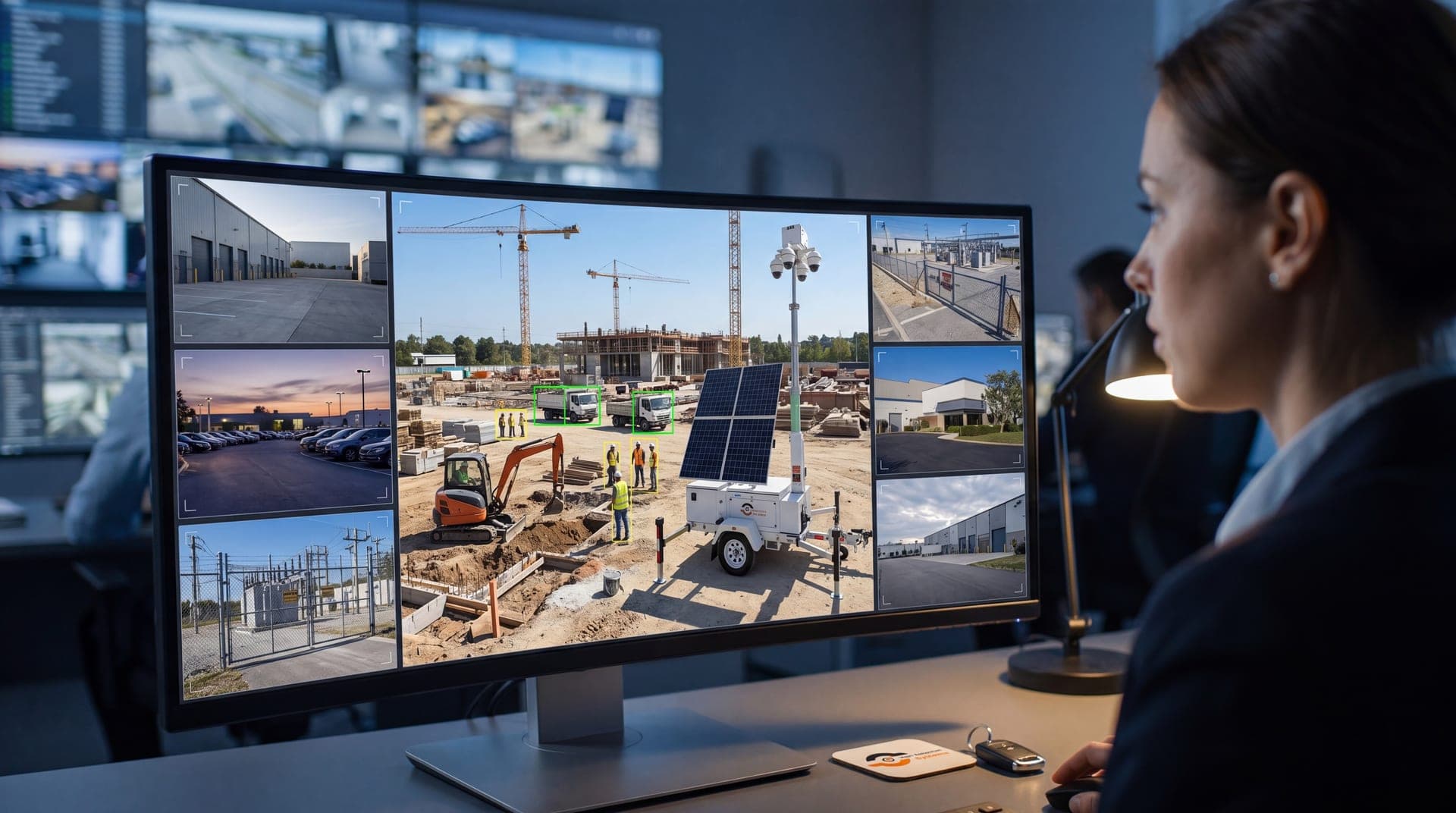
Modern construction site monitoring combines hardware deployment with human verification services to catch incidents as they happen, not days later when reviewing footage. The difference between reactive security and proactive monitoring often determines whether your project stays on schedule and within budget.
What Construction Site Monitoring Actually Means in 2026
Construction site security monitoring is a security approach that combines surveillance equipment with real-time human verification and defined response protocols. Unlike traditional security cameras that simply record, monitoring systems actively watch for incidents and trigger immediate escalation based on pre-set rules.
The core components include:
- Hardware deployment (cameras, lighting, communication equipment)
- Remote human monitoring during specified hours
- Incident verification and escalation workflows
- Evidence collection and retention protocols
- Integration with existing security and project management systems
This approach addresses the fundamental problem with camera-only systems: discovering theft or vandalism after it happens, when footage may be overwritten or unusable for insurance claims.
Note: Effective monitoring requires clear escalation rules. Define who gets called first, what constitutes an immediate vs delayed response, and how incidents get documented for insurance purposes.
Three Approaches to Construction Site Security
General contractors have three main options for protecting jobsites, each with distinct advantages and limitations based on project scope, location, and risk factors.
Security Guard Patrols
Physical security guards provide the most direct response capability but cover limited ground during each patrol cycle. Guards excel at access control and immediate incident response but struggle with comprehensive site coverage, especially on large or multi-building projects.
Typical coverage: 2-4 site visits per shift, 15-30 minutes per visit. Cost ranges from $25-45 per hour depending on location and security company.
Fixed CCTV Systems
Permanently installed cameras offer consistent coverage of specific zones but require existing electrical infrastructure and internet connectivity. These systems work well for established sites with utilities but struggle during early construction phases or remote locations.
Installation timeline: 3-7 days for basic systems. Monthly costs range from $200-800 per camera location including monitoring services.
Mobile Surveillance with Remote Monitoring
Self-contained units deploy rapidly without requiring site infrastructure and include cellular connectivity, solar power, and integrated lighting. Mobile surveillance trailers can be positioned and relocated as construction phases shift risk areas.
Remote monitoring adds human verification to reduce false alarms and ensure proper escalation when real incidents occur. This combination provides the widest coverage with the fastest deployment timeline.
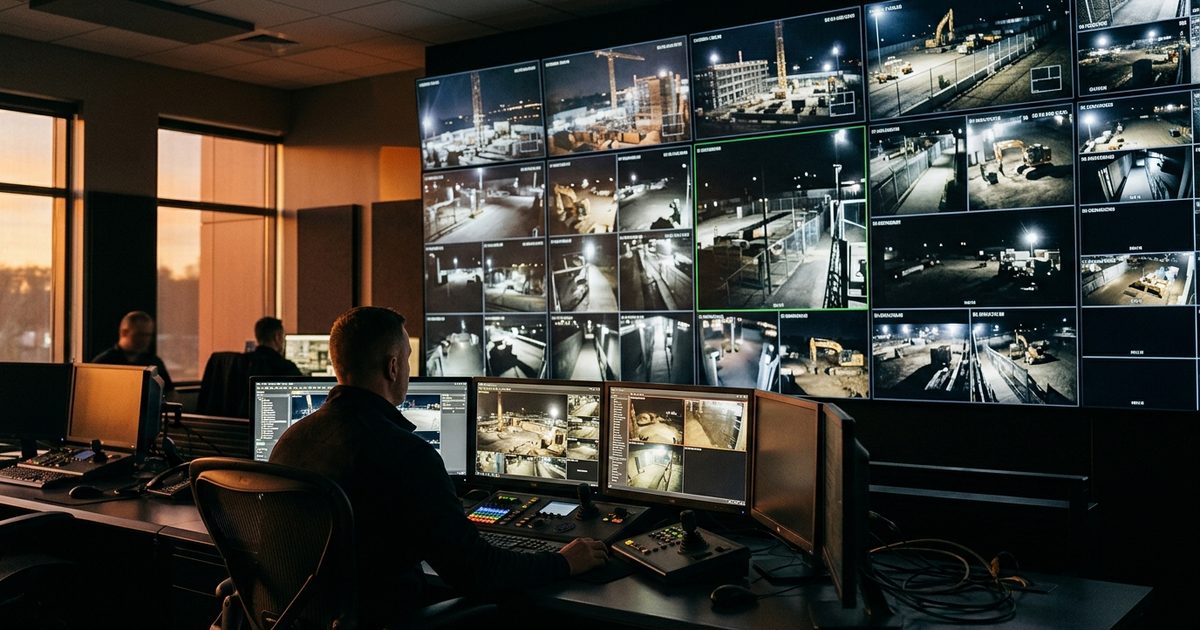
How Remote Monitoring Reduces Insurance Premiums
Insurance carriers increasingly offer premium reductions for construction sites with verified monitoring systems. The reduction typically ranges from 5-15% on general liability and builder's risk policies, depending on the carrier and coverage specifics.
The key factor is documentation quality. When incidents occur, monitored sites produce time-stamped footage, incident reports, and escalation records that speed claim processing and reduce disputes over coverage.
Tip: Contact your insurance carrier before selecting a monitoring system. Many carriers have preferred vendor lists or specific requirements for premium discounts.
Insurance Information Institute data shows that construction sites with active monitoring systems experience 60% fewer successful theft incidents compared to camera-only installations.
What Happens When an Alert Triggers
Effective construction site monitoring operates on defined escalation protocols that determine response speed and accuracy. Here's how the process typically works when motion detection or zone intrusion occurs:
Initial Detection (0-30 seconds): AI analytics identify potential incidents based on movement patterns, zone violations, or equipment tampering. The system immediately flags the event for human review rather than sending automatic alerts.
Human Verification (30-90 seconds): Remote monitoring personnel review live footage to confirm whether the alert represents a genuine security threat or environmental trigger (wildlife, weather, authorized personnel).
Escalation Response (1-3 minutes): For verified incidents, monitoring staff follow pre-defined escalation rules: notify site supervisors, contact local law enforcement, activate on-site deterrents (lighting, audio warnings), and begin incident documentation.
Follow-up Documentation (ongoing): The monitoring team creates incident reports with time stamps, video clips, and response actions taken. This documentation becomes critical for insurance claims or law enforcement investigations.
This verification step eliminates the false alarm fatigue that makes many contractors ignore automated alerts after the first few weeks of operation.
Setting Up Effective Escalation Rules
Escalation rules determine monitoring effectiveness and should reflect your project's specific risk profile and response capabilities. Construction site security requires different approaches for different project phases.
Primary Contact Rules: Identify who receives immediate notification during business hours vs after-hours incidents. Include backup contacts when primary personnel are unavailable.
Incident Severity Levels: Define what constitutes immediate law enforcement contact vs site supervisor notification. Equipment theft attempts warrant immediate police response, while perimeter violations may only require supervisor notification.
Geographic Response Times: Account for law enforcement response times in your area when setting expectations. Rural sites may need private security backup due to extended police response times.
Documentation Requirements: Specify what information gets captured for different incident types. Insurance claims require different documentation than simple trespassing events.
Effective rules balance rapid response with practical constraints like personnel availability and local law enforcement capabilities.
Choosing the Right Monitoring Partner
Not all monitoring services deliver the same level of verification quality or response consistency. Evaluate potential partners based on these operational factors rather than just equipment specifications.
Monitoring Center Capabilities: Verify the provider operates 24/7 monitoring centers with redundant staffing. Ask about average response times for incident verification and escalation procedures during high-volume periods.
Local Response Networks: Determine whether the provider has established relationships with law enforcement and private security companies in your project area. These relationships significantly impact response effectiveness.
Evidence Management: Confirm the provider maintains footage retention policies that support insurance claim timelines and can export video evidence in court-admissible formats. National Association of Insurance Commissioners guidelines recommend 90-day minimum retention for construction projects.
Integration Capabilities: Assess whether the monitoring system integrates with existing project management software or security protocols. Integration reduces administrative burden and improves incident tracking.
Remote monitoring systems (/compare/vds-vs-security-guards) should complement rather than complicate your existing security procedures.
Common Monitoring Implementation Mistakes
General contractors often undermine monitoring effectiveness through implementation decisions that seem logical but create operational gaps.
Inadequate Zone Configuration: Positioning cameras to cover maximum area rather than focusing on high-value zones and access points. This approach creates blind spots around expensive equipment and material storage areas.
Inconsistent Coverage Hours: Monitoring only during traditional business hours when most construction theft occurs during evenings and weekends. Thieves target sites when they know response will be delayed.
Poor Escalation Planning: Failing to establish clear contact hierarchies and response procedures before incidents occur. Delayed notification chains allow theft to progress unchallenged.
Ignoring Weather Factors: Not accounting for seasonal weather patterns that affect camera visibility and equipment operation. Rain, snow, and extreme temperatures impact monitoring effectiveness.
Insufficient Lighting Integration: Relying on cameras without adequate lighting renders footage unusable at night when most theft occurs. Integrated lighting and cameras should be deployed together for effective coverage.
Avoiding these mistakes during the planning phase saves significant time and cost compared to correcting them after incidents expose gaps.