
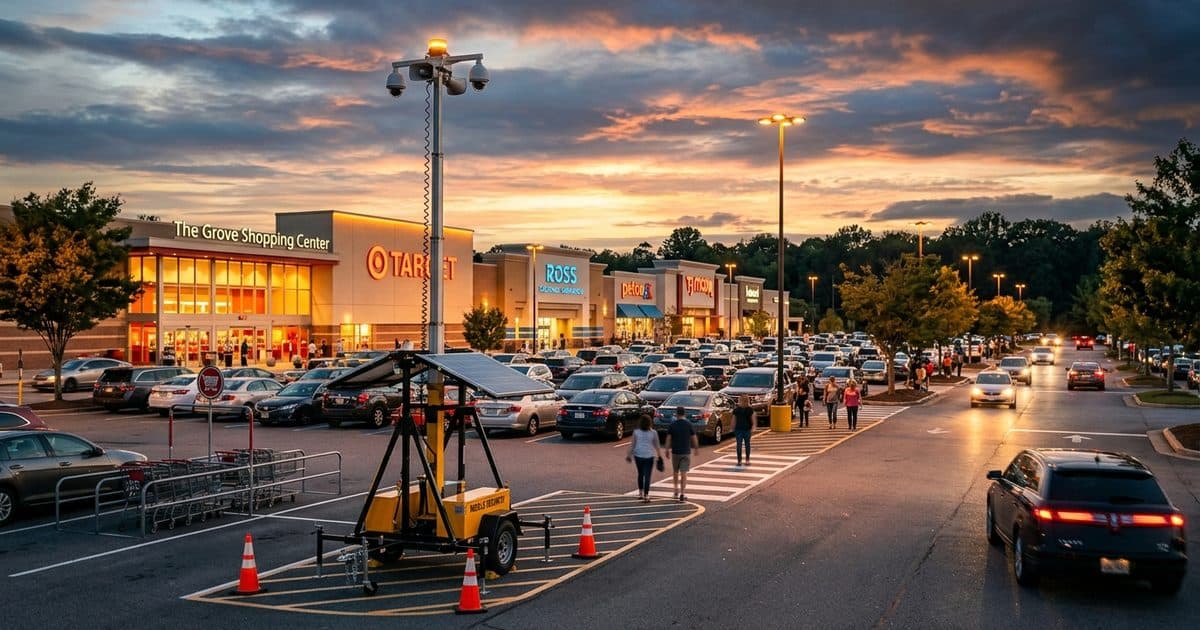
One lot. Many tenants.One watchful layer.
In a multi-tenant center, the lot belongs to everyone and to no one's cameras. VDS gives property managers one monitored trailer over shared parking, pad sites, and service lanes, so tenants see action and every lot complaint comes with video.
A strip mall or multi-tenant center has an odd security structure. Each tenant protects its own suite, but the parking field, sidewalks, pad sites, and service lanes belong to the owner, and so does the exposure. Tenants notice quickly when customers stop parking near their door, and renewal conversations often begin with the question of whether the lot feels safe. The property manager is stuck in the middle, fielding calls about loitering, abandoned vehicles, or a smashed windshield, usually after the fact and often with no footage. Running common area cameras across an older lot means trenching through pavement and long cable runs.
The threats are different from a single store. A vacant pad site draws squatting and dumping. A bench or overhang draws loitering that unsettles nearby tenants. Cars left in a far corner may be abandoned or part of something worse. Vehicle break-ins cluster where lighting is poor, and late-night gatherings and stunt driving use big empty lots after the last tenant closes. Service corridors behind the buildings see dumping and quiet entry attempts. Because tenants keep different hours, there is rarely a time when someone is responsible for the whole property, and that gap is what a manager is asked to close.
A trailer is positioned at the spot with the best sight lines across the common area, often near the middle of the lot or at a corner where the pad site meets the main drive. It runs on solar power and a cellular link, so there is no trenching through pavement and no tie-in to a tenant's electrical panel. The mast goes up in under twenty minutes, and detection zones are drawn around the shared lot, the pad, and the rear lane. If the property changes, such as a lease-up or a new pad build, the trailer can be repositioned instead of redesigned.
Operators monitor around the clock. When the AI flags a person or vehicle in a zone, an operator checks the live view, can speak over the speakers to say the property is monitored, and sends video to police on verified events. They cannot remove anyone, issue a trespass notice, or enter a tenant space. Trespass authorization, signage, and any recording rules depend on your jurisdiction and your leases, so confirm with counsel or the local authority. Managers receive an incident record they can share with ownership, tenants, and insurers.
Exposed sites.
High-value targets with no one watching.
Shared space means shared exposure. Tenants watch their own doors, which leaves the common lot, the pad sites, and the rear corridor with nobody accountable in the moment.
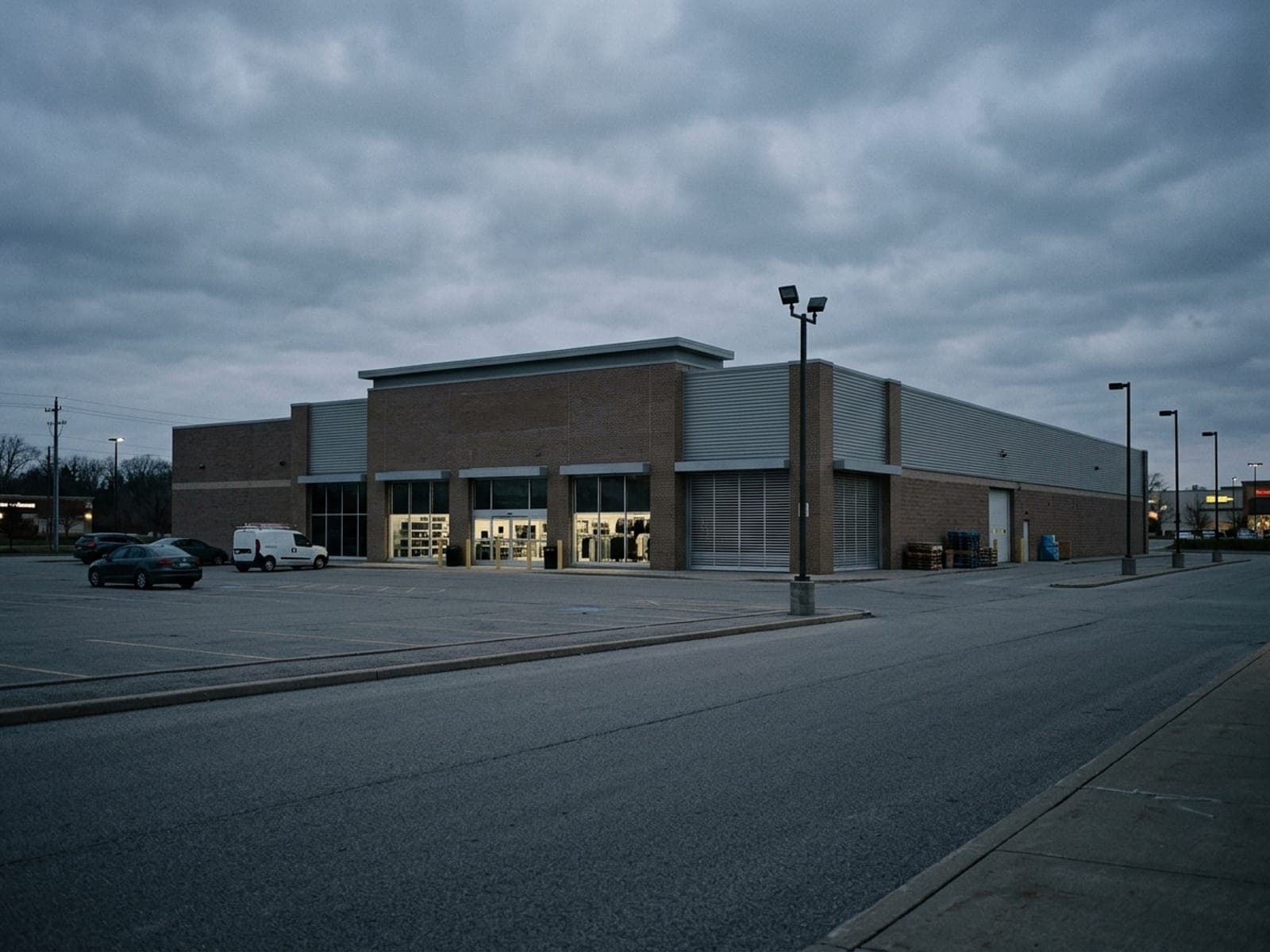
Loitering in common areas
Groups lingering by entrances, benches, and storefront overhangs make customers uneasy and give tenants a reason to complain. Nobody owns the problem because the space belongs to everyone.
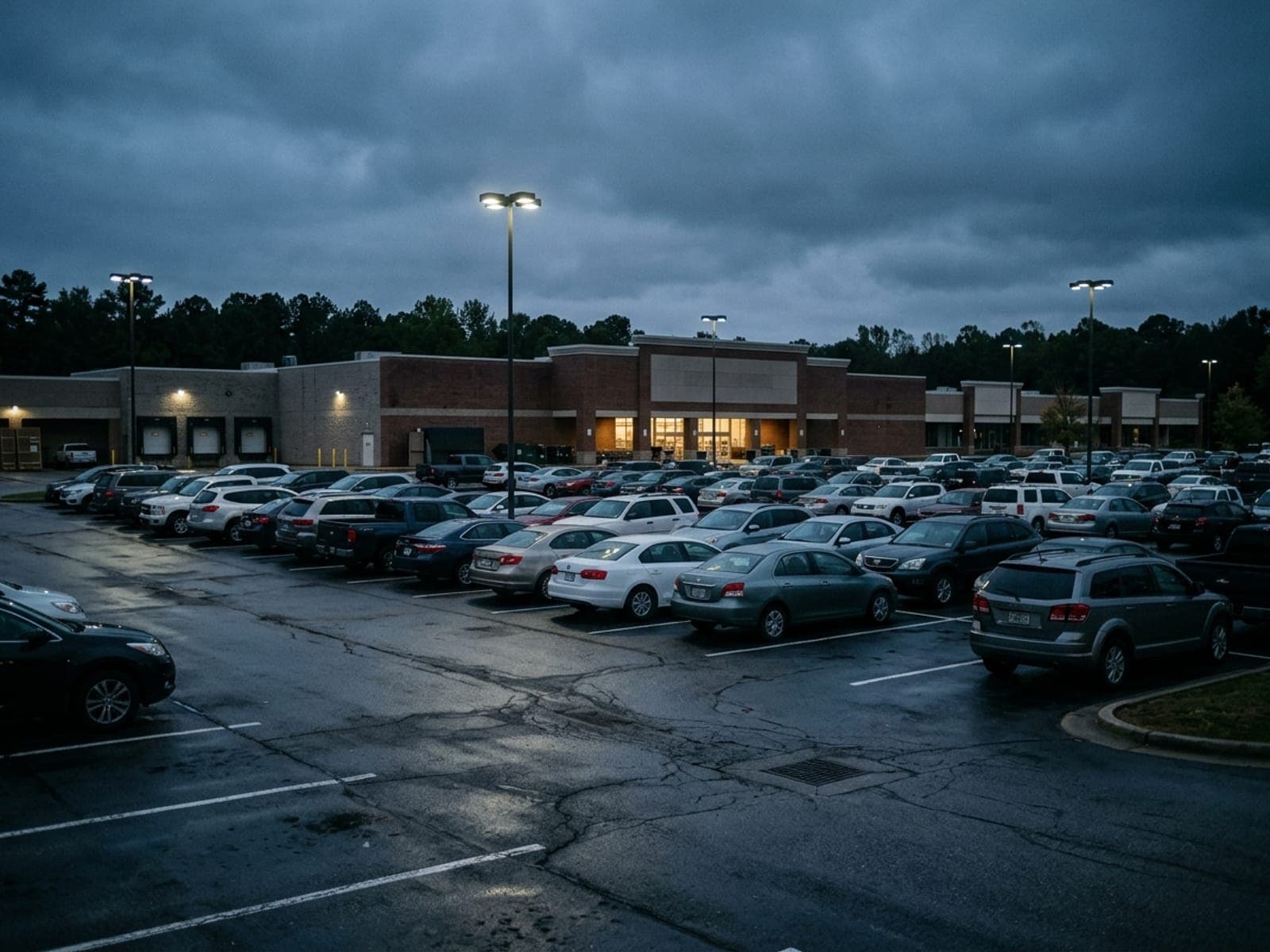
Vacant pads and parcels
Empty pads and unfinished parcels attract dumping, squatting, and stripping of materials. They sit at the edge of the property, away from tenant cameras and often out of the manager's sight.
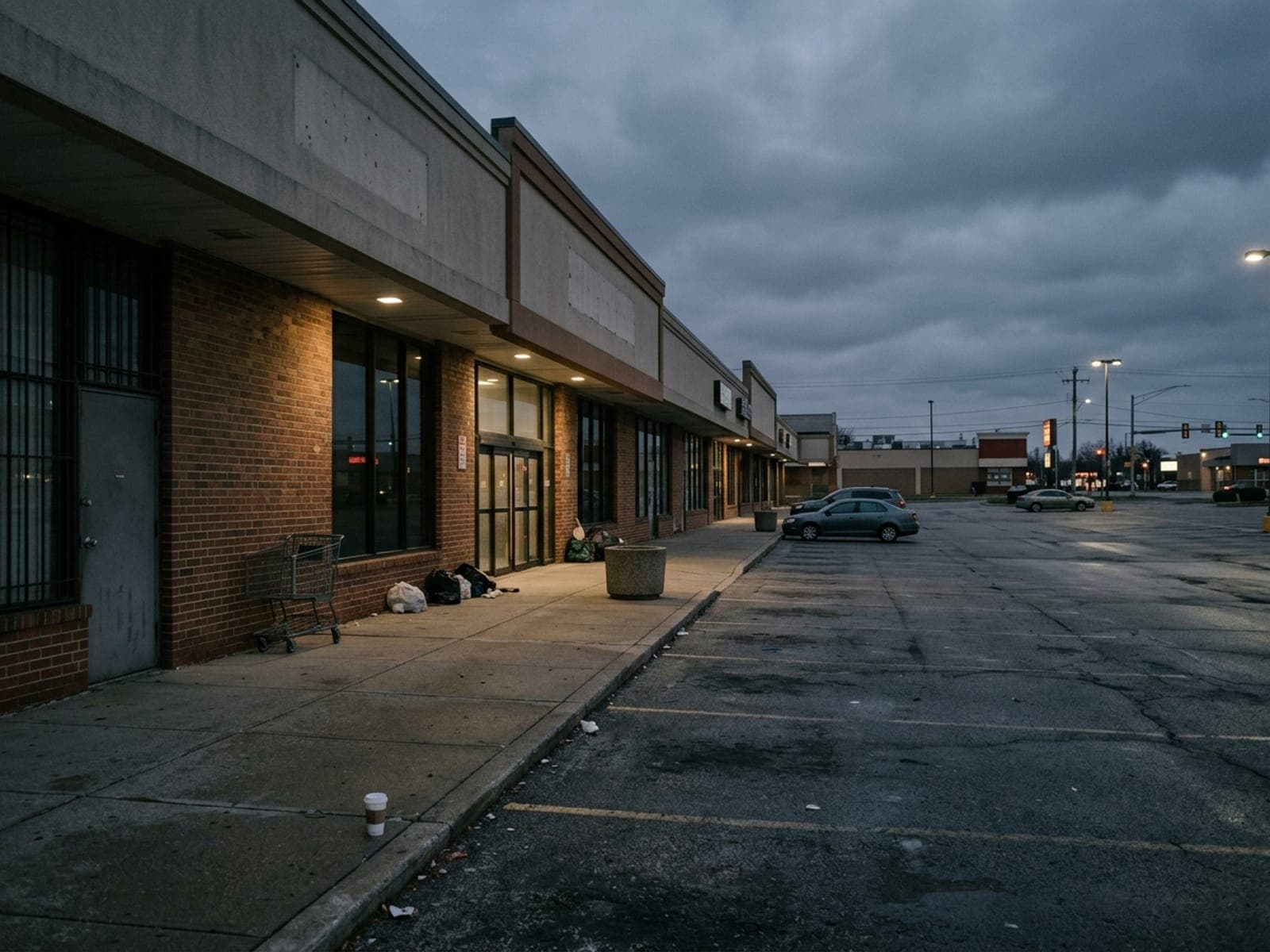
Incidents with no footage
Vehicle break-ins, hit-and-runs, and disputes in the shared lot turn into calls to management with nothing to show. Tenants and shoppers want answers the owner cannot give.
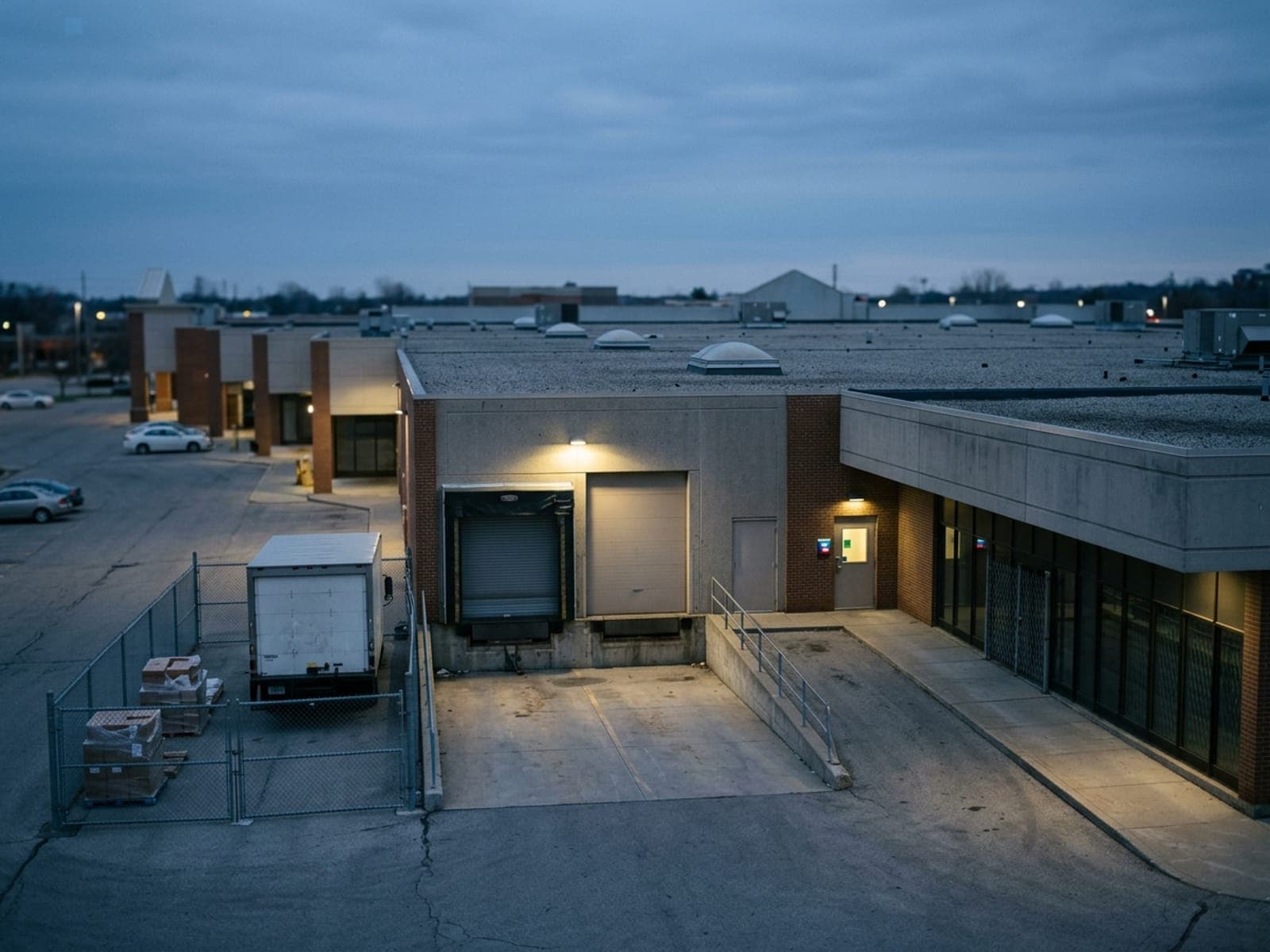
The empty property
When the last tenant closes, the whole center is empty. Gatherings, stunt driving, and attempts on rear doors and service corridors play out under whatever lighting remains.
Drop the trailer.
The SOC takes it from here.
One trailer gives the property a single watched layer over its common areas. The operator sees what each tenant's camera misses, and the manager gets the record.
One position over
the whole lot.
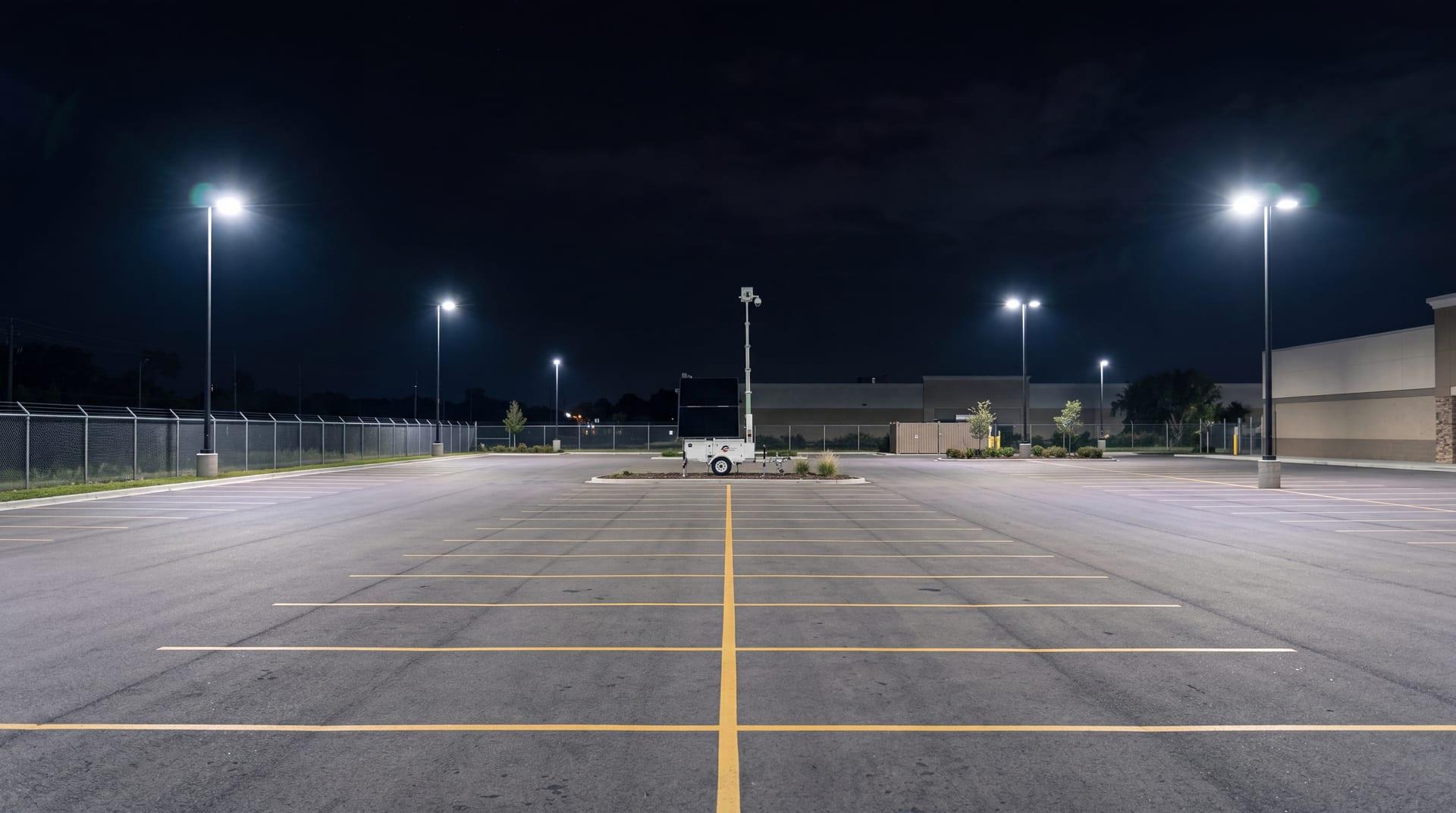
A raised mast puts the camera above vehicles and rooflines, framing the shared parking field, the walkways, and the pad site from a single spot. Operators can zoom and pan to read a situation instead of forwarding a vague alert to a busy manager.
- Shared parking field view
- Pad site and parcel edge
- Service lane and rear corridor
- Repositions as the property changes
 STEP 01
Show tenants the
lot is watched.
A visible, monitored trailer tells shoppers and tenants that someone is paying attention. Verified alerts and incident records give you something concrete to bring to a tenant who is worried about the lot, instead of reassurance alone.
- Visible deterrence in the lot
- Incident record for tenant calls
- Incident log to share with ownership
- Documentation for insurers
 STEP 02
An operator checks first,
then acts.
The AI flags people and vehicles. A live operator confirms what is happening, speaks through the speakers if needed, and sends video to police when an event is verified. Your on-site team or security partner gets verified information instead of a guess.
- Live operator verification
- Talk-down over speakers
- Video to police on verified events
- Optional plate capture at entrances
 STEP 03
Every asset on site.
One platform.
Property teams place a trailer wherever the common area has a gap that tenant cameras do not cover.
Vacant pad site
Keep watch on an empty parcel or unfinished pad, where dumping, squatting, and material theft tend to show up first.
Anchor and inline lot
Cover the shared parking field between an anchor and the inline tenants, so complaints about the lot come with video attached.
Rear service corridor
Watch the lane behind the building, where deliveries, dumpsters, and rear doors sit far from any tenant's front-of-house cameras.
Lease-up and renewal periods
Show prospective and renewing tenants a lot that is actively monitored while the property is being marketed or renegotiated.
Late-night gathering spots
Detect groups and vehicles using the empty lot after the last tenant closes, and speak to them before it becomes a nuisance call.
Construction and redevelopment
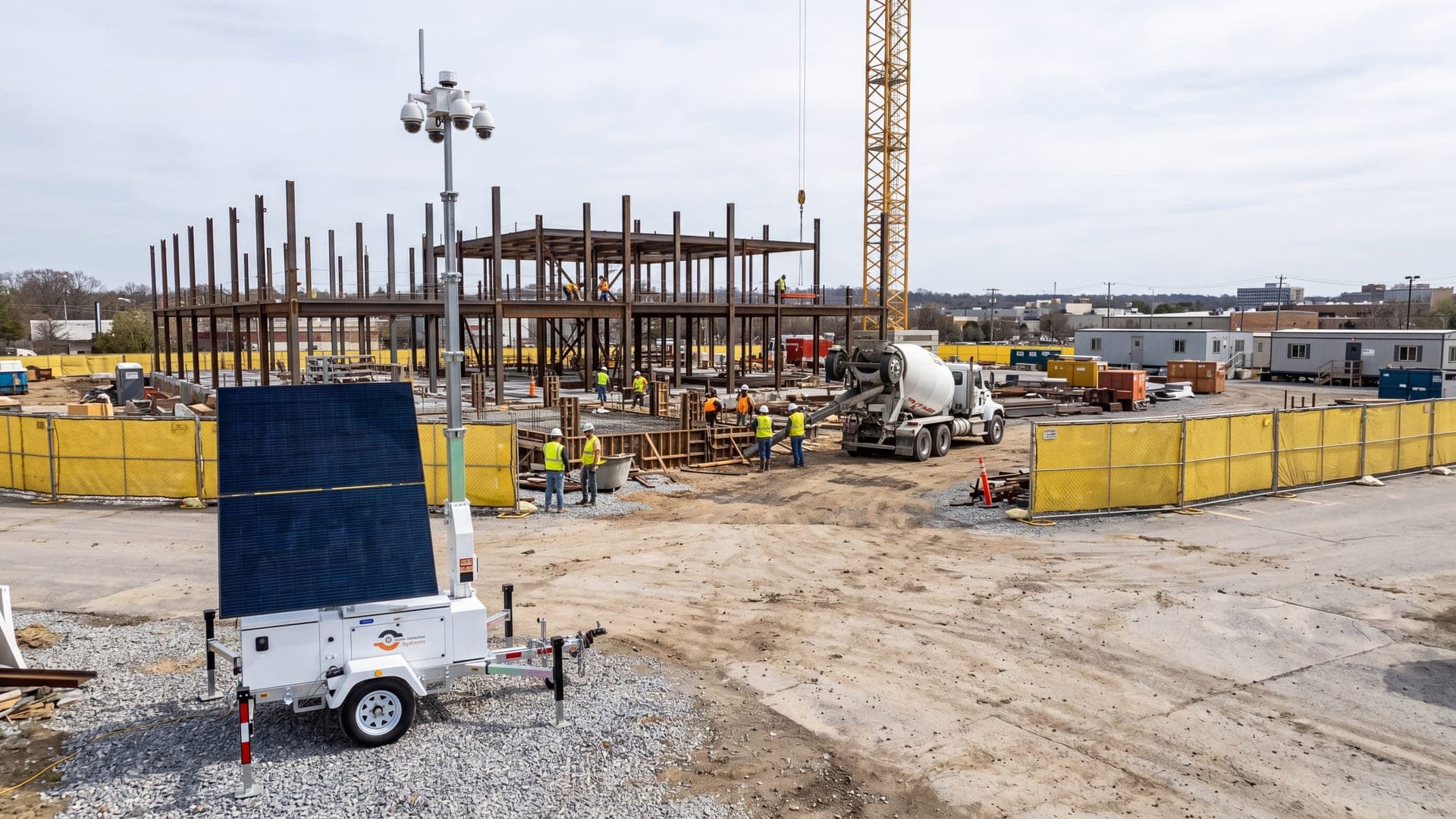
Protect a center under renovation or a new pad build, when equipment and materials are staged on open ground.
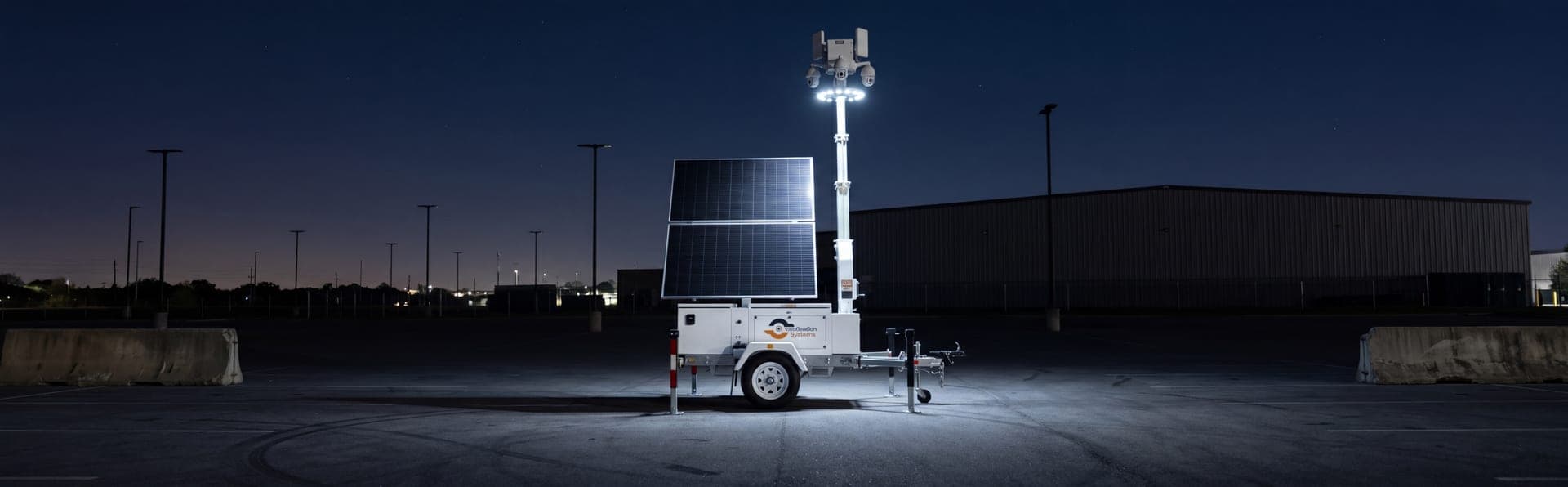
 MSU-A · FLAGSHIPAI DETECTION · LIVE TALK-DOWN · 4G LTE
The Mobile Surveillance Unit.
Built for this site.
A solar-powered trailer with a cellular link and a mast that raises in under 20 minutes. It stands in the middle of a lot with no trenching and no tenant power, and repositions as the property or its risks change.
From assessment
to covered.
No power hookup, trenching or internet is needed on site, so deployment is quick once the plan is agreed.
Site review
Share the address, layout and what you need covered. A specialist returns a coverage plan and quote.
Configuration
Camera views, detection zones, arming schedules and alert routing are set for your property.
Delivery and activation
The trailer is positioned and the mast raised. Monitoring starts with no trenching or electrical work.
Account support
Incident reports and periodic reviews, with the trailer moved or adjusted as your needs change.
Common questions.
Who pays for security in a multi-tenant center?
That depends on your leases and common area arrangements, so confirm with counsel. Some owners treat monitored coverage as a common area expense, others as a targeted measure for one problem area. We provide the equipment and monitoring; how the cost is allocated is a decision for you and your tenants.
Do we need tenant permission or power to place a trailer?
The trailer is self-powered and uses cellular, so it does not need a tenant's electrical service or internet. Placement still needs the owner's approval, and your lease terms, site plan, and local rules may add requirements, so confirm with counsel or the local authority before positioning.
Can the operator remove loiterers or issue trespass notices?
No. Operators can verify activity, speak through the speakers to say the property is monitored, and send video to police on verified events. Trespass authorization and enforcement belong to the owner, your on-site team or security partner, and law enforcement, and the rules vary by area, so confirm locally.
Can the trailer move as the property changes?
Yes. A trailer can be repositioned when a pad is leased, a new building goes up, or the trouble spot shifts to another corner. That flexibility is one advantage of mobile coverage over permanent poles and trenching, especially on a property in transition.
How does monitoring help with tenant complaints?
When a tenant reports an incident, you can point to a log of what the system flagged and what the operator verified, with video where available. That turns a vague complaint into a record you can share with the tenant, ownership, and your insurer. It does not guarantee any particular outcome.
Get a deployment plan for your shopping centers & strip malls site
Three fields. A deployment specialist replies with a coverage plan and timeline. Prefer to talk? Call (410) 401-1986
Secure your property this week.
Send us a site plan or an address and tell us where tenants say the lot feels weakest. We will recommend a placement and a monitoring schedule.