
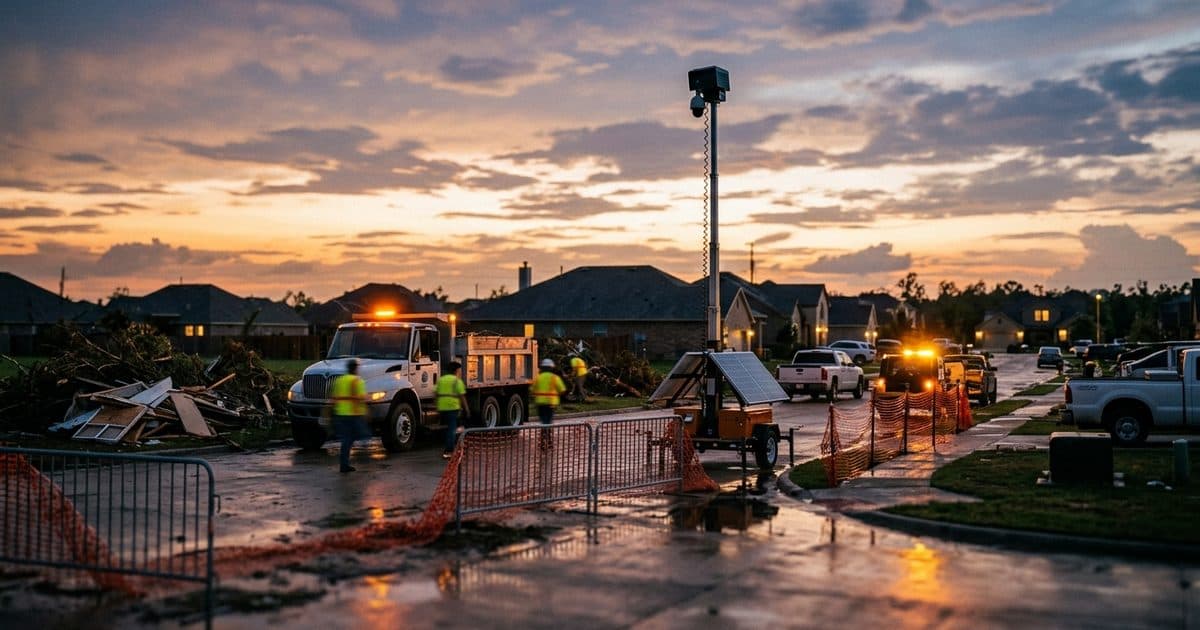
The grid is down.That's exactly when you need us.
Disaster staging areas, base camps, and points of distribution stand up overnight in places with no power and no working internet — the exact conditions that make theft of fuel, generators, and relief supplies easy. VDS deploys on solar and cellular or satellite backhaul, goes live in hours, and puts a live SOC operator on every alert — no local infrastructure required, no guard force to stand up.
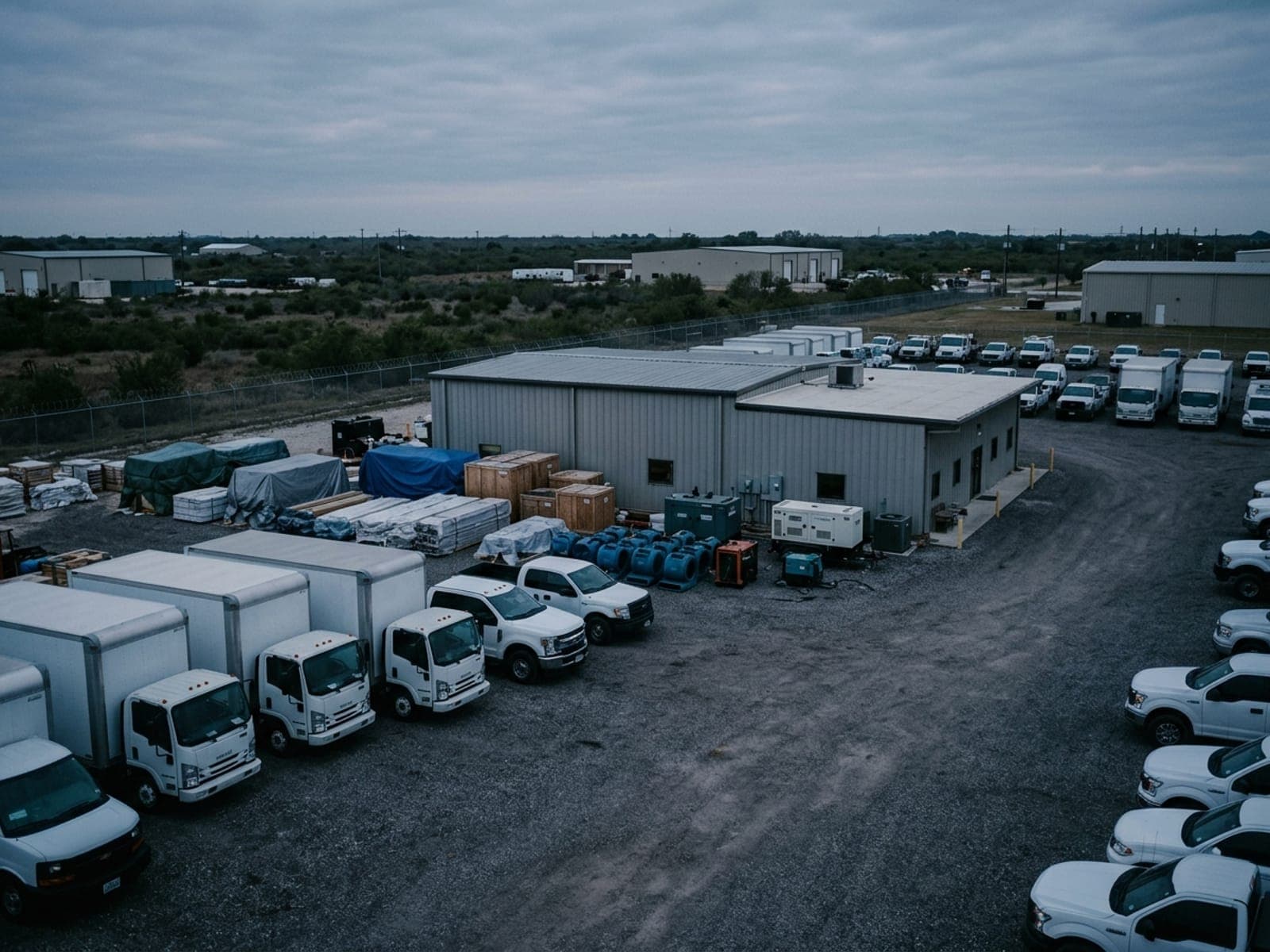
Disaster response concentrates exactly what a disrupted region is short of — fuel, generators, water, food, working equipment — into open lots that did not exist a week earlier. Staging areas and points of distribution stand up on fairgrounds and parking lots with no fencing, no lighting, and no institutional memory of securing anything, while the surrounding area's normal policing capacity is absorbed by the emergency itself. The assets are portable by design, the sites are unfamiliar to everyone working them, and after dark the ground between the response and a loss is often completely unwatched.
Conventional security assumes infrastructure the disaster has removed. Fixed cameras need power and connectivity that are down, and every person assigned to watch a dark lot overnight is a person subtracted from the response itself. What changes outcomes at a staging site is remote verification that depends on nothing local: detection the moment someone crosses into the lot, a live operator judging whether it is a returning crew or a theft, an amplified voice challenge delivered on the spot, and escalation with video when the warning is not enough. The timestamped record that process produces is the same documentation FEMA reimbursement and insurance claims turn on.
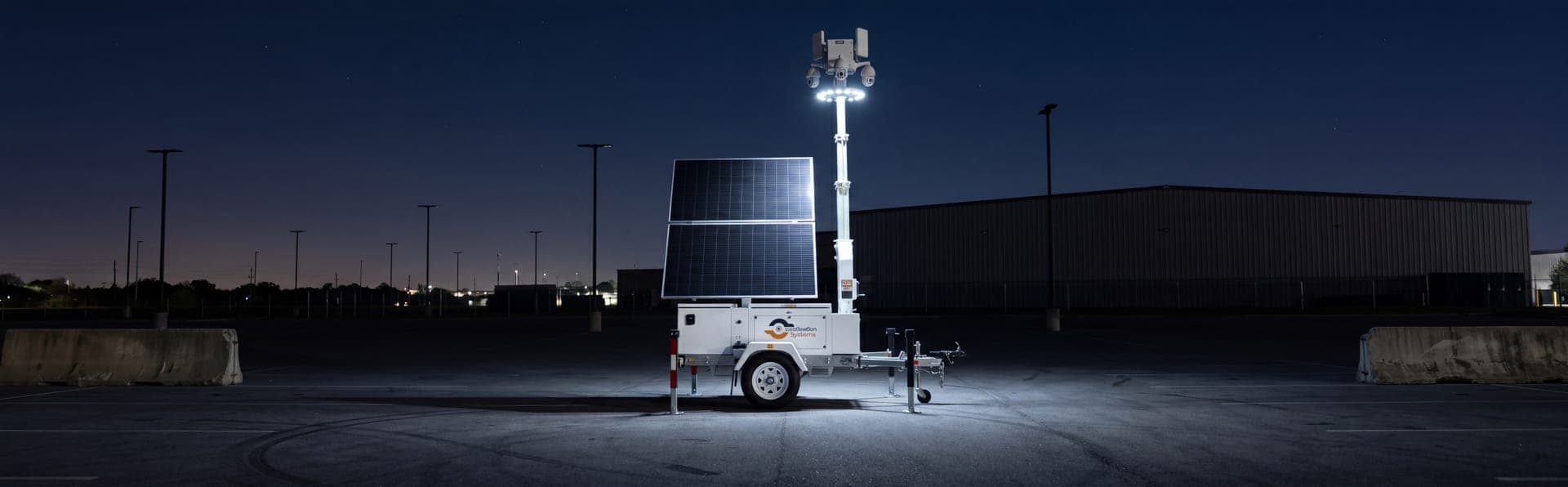
This is the deployment problem solar-powered mobile surveillance was built for. A unit tows in behind the first convoy, raises its mast over the staging rows, and runs on sunlight and battery with cellular backhaul — satellite options exist where towers are down — bringing everything it needs to a place that can supply none of it. Disaster recovery site security also has to move at the operation's tempo: when a POD closes and a base camp opens across the county, the same unit strikes, relocates, and stands watch over the new ground with no pause in SOC coverage.
What follows walks through the theft and looting patterns that hit staging areas, PODs, and base camps; the grid-independent setup VDS brings to each; typical deployment outcomes reported by response customers; and the questions emergency managers ask most about power, connectivity, and standing coverage up mid-incident.
Exposed sites.
High-value targets with no one watching.
Minimal staffing, sprawling ground, and valuable assets in the open — the conditions that turn a site into a soft target the moment everyone goes home.
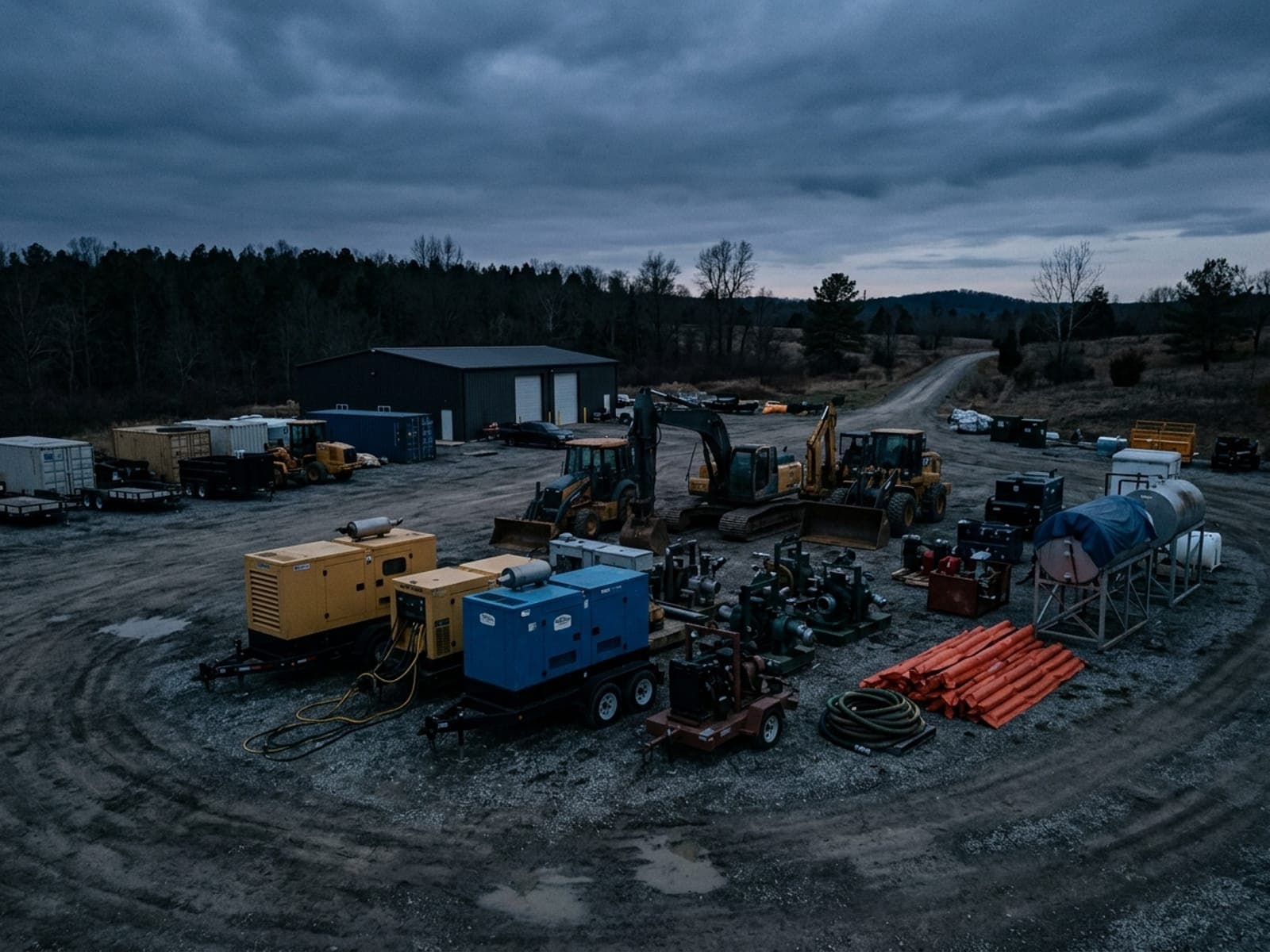
Theft from staging areas
Generators, fuel, pumps, and heavy equipment staged for a response sit exposed overnight in a lot with no fence, no lighting, and no one watching.
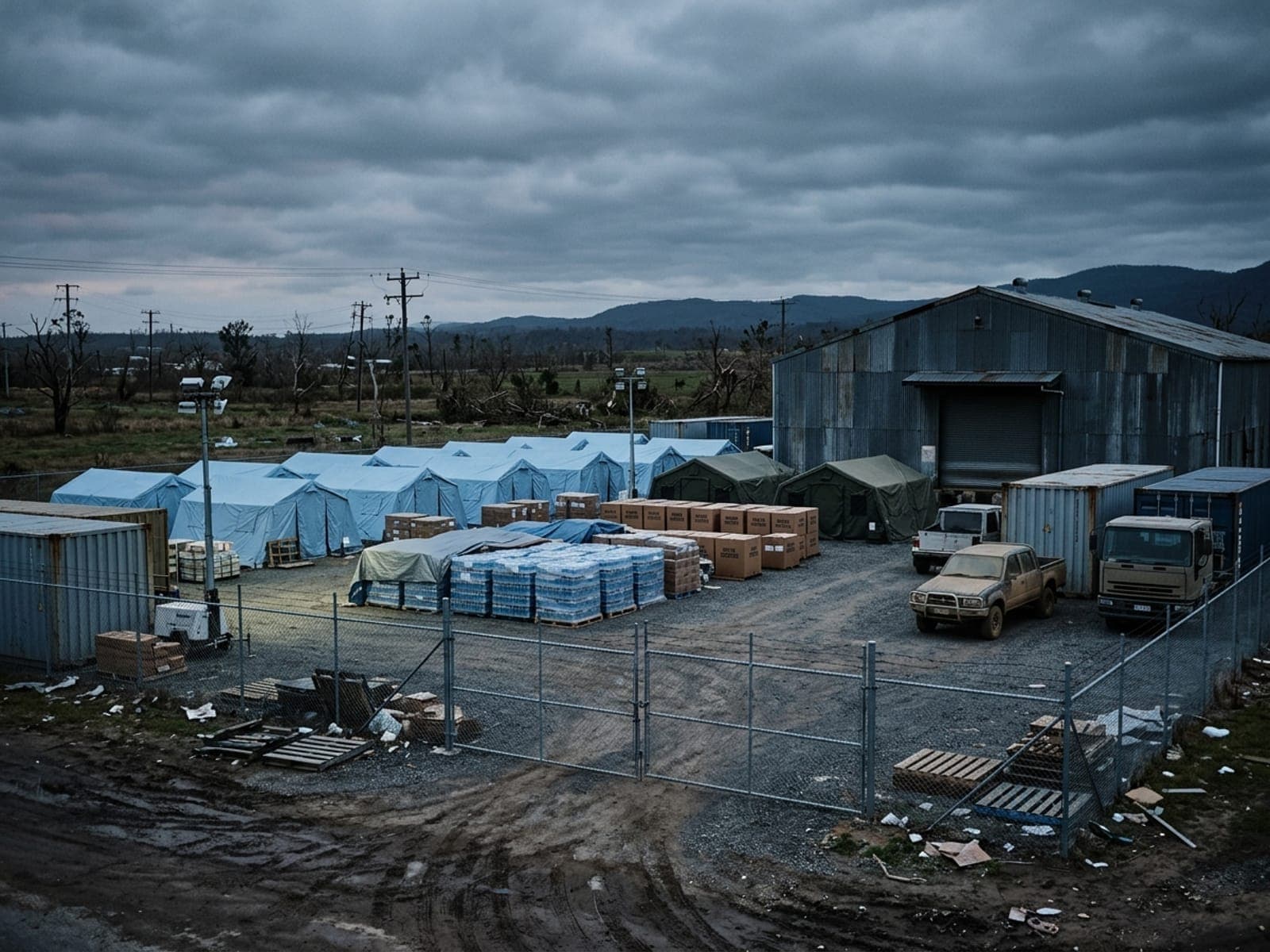
Looting at PODs and base camps
Points of distribution hold water, food, and relief supplies in an area where normal policing and infrastructure are disrupted or absent.
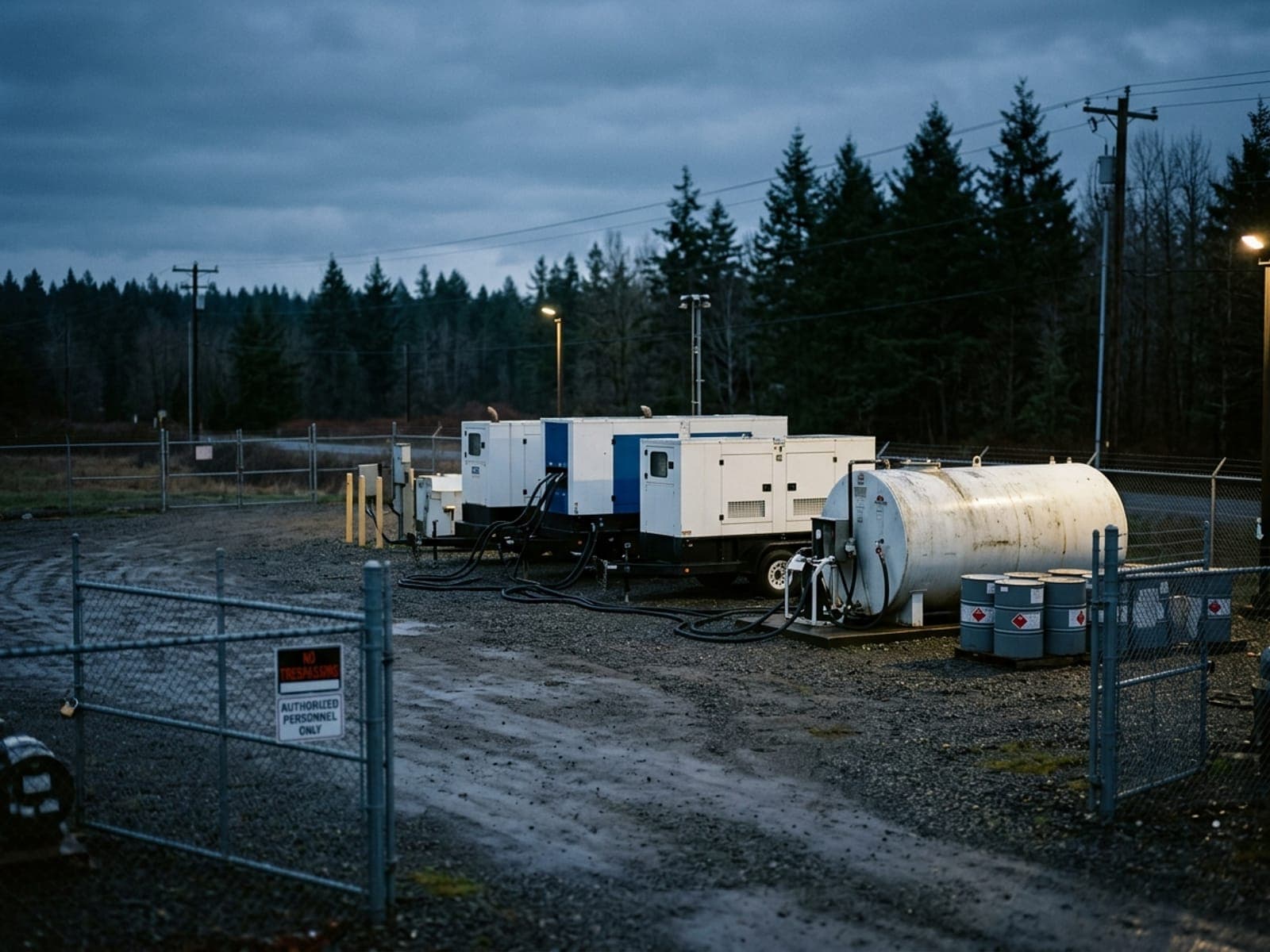
Fuel theft and generator tampering
Portable generators and fuel stores keep the response running — and are also the first things taken when a site sits unguarded after dark.
Documentation for reimbursement
FEMA and insurance CAT claims depend on a defensible record of who was on site and when — without it, reimbursement and chain-of-custody questions stall recovery funding.
Drop the trailer.
The SOC takes it from here.
Solar-autonomous surveillance with AI analytics and live SOC operators. No power, no internet, no staffed post required.
No power.
No problem.
The MSU runs entirely on solar with cellular backhaul, so it goes live at a staging area or base camp before utility power is restored — often before anything else on site is operational.
- Fully solar-autonomous — no generator or shore power needed
- 4G/5G cellular backhaul, no hardwired internet
- Operational in disrupted-infrastructure conditions
- Runs unattended for extended deployments
 STEP 01
Sites appear overnight.
Coverage should too.
Staging areas and PODs stand up in hours, not weeks. The MSU deploys in under 20 minutes — no site survey, no trenching, no waiting on a contractor — matching the pace of the response itself.
- Live coverage in under 20 minutes on arrival
- No trenching, conduit, or fixed install required
- Relocatable as the operation moves or scales
- Deploys ahead of or alongside first responders
 STEP 02
No guard force to staff.
A live operator instead.
Every alert routes to a live SOC operator who verifies it, issues a real-time audio warning through the on-unit speaker, and escalates to on-site security or law enforcement — deterrence without pulling personnel from the response.
- Live operator verification on every alert
- Real-time voice-down warnings through the speaker
- Escalation to on-site security or law enforcement
- Timestamped incident log for every event
 STEP 03
Every event.
On the record.
Object detection, loitering alerts, and LPR entries build a timestamped record of activity on site — supporting FEMA reimbursement, insurance CAT claims, and chain-of-custody questions after the fact.
- Timestamped video and alert record for every incident
- Gate LPR log of vehicle entry and exit
- Exportable evidence packages for claims and audits
- Supports FEMA and insurance documentation requirements
 STEP 04
Every asset on site.
One platform.
Disaster response sites change by the week. Here are the scenarios emergency-management agencies and response contractors deploy for most often.
Debris and equipment staging areas
Lots holding generators, pumps, chainsaws, and heavy equipment staged for a response, exposed overnight with no fence or lighting.
Points of distribution (PODs)
Water, food, and relief supply distribution sites in affected areas where normal policing and infrastructure are disrupted.
Base camps
Temporary lodging and operations camps for mutual-aid crews and contractors, standing up and breaking down on short notice.
Fuel and generator storage
Portable fuel stores and generators powering the response — high-value, high-theft-risk assets sitting unguarded after dark.
Utility mutual-aid staging
Line crews and utility contractors staging trucks, poles, and materials in unfamiliar territory with no existing security infrastructure.
Evacuated and affected neighborhoods
Visible deterrence and documented coverage in areas where residents have evacuated and normal patrol presence has thinned.
Real operators.
Real numbers.
Metrics below reflect typical VDS disaster-response deployments. Customer and site details protected per agreement.
Customer-reported outcomes from VDS deployments. Results vary by site conditions, monitoring configuration, and response protocols. How we measure →
We had a staging lot full of generators and fuel with nothing around it — no power, no cell towers up, nothing. The trailer went up before the sun did, and it stayed up until we struck the site.
 MSU-A · FLAGSHIPSOLAR + SOC · DISASTER RECOVERY
The Mobile Surveillance Unit.
Built for when the grid is down.
Solar power, cellular or satellite backhaul, and 24/7 SOC monitoring — all from a trailer that deploys in under 20 minutes and asks nothing of a site that has nothing left to give.
From assessment
to covered.
Disaster response doesn't wait for a install schedule. Most units are on site and monitoring within a day of the request.
Dispatch request
We confirm site location, access, and the current state of power and connectivity on the ground. Quote and dispatch move in parallel with the response.
Trailer en route
Unit staged and transported to the site, configured for expected conditions — staging lot, POD, or base camp perimeter.
Deployment & commissioning
Mast raised, cameras and detection zones calibrated, SOC monitoring active — typically under 20 minutes with no local power or internet required.
Monitoring, reporting & relocation
Live SOC coverage, incident logs for reimbursement documentation, and rapid relocation as the site closes or the operation shifts.
Common questions.
How fast can VDS deploy at a disaster recovery site?
A mobile surveillance unit is live in under 20 minutes once it arrives — most disaster recovery sites go from first call to monitored coverage in days, not months. Disaster response doesn't wait for a install schedule. Most units are on site and monitoring within a day of the request.
Do the units need power or internet at the site?
No. VDS units are solar-autonomous with battery storage and connect over cellular (4G/5G), so there is no trenching, no generator refueling schedule, and no dependence on site IT. That is what makes them practical for sites where fixed infrastructure is missing or still under construction.
What happens when the system detects someone after hours?
AI detection classifies the event and filters routine motion before a person ever sees it. A SOC operator verifies the live feed, challenges intruders by voice through 120 dB speakers with strobes, and — when it escalates — dispatches police with live video of the scene.
Which disaster recovery security problems does monitored surveillance address?
The most common incidents at disaster recovery sites are theft from staging areas, looting at pods and base camps, fuel theft and generator tampering, documentation for reimbursement — the same exposure areas covered in the sections above. Monitored coverage addresses them by making the site actively watched instead of just recorded.
Can VDS work alongside our existing guards or security partner?
Yes — that is the standard model. Monitored surveillance carries the perimeter and after-hours watch, so people — yours or your security partner's — handle verified incidents instead of standing watch over empty hours. The SOC can route verified alerts to your team, your guard provider, or police dispatch.
Get coverage on site before the grid comes back.
Tell us the site, the situation, and what's exposed — we'll get a unit moving.