

Construction Site Security Cameras: Rapid Deployment, 24/7 Monitoring, and Active Deterrence
The site is empty at 6 PM.The trailer isn't.
Active construction sites lose $1B+ annually to equipment theft, copper theft, and vandalism. VDS drops a solar-autonomous trailer at your gate, monitors the perimeter 24/7, and gets PD on scene with live video — without trenching, permits, or staffing a post.
What makes construction sites a high-risk target.
Construction site security cameras are not optional — they are the difference between recovering from a theft incident and absorbing it. According to the National Insurance Crime Bureau, equipment theft costs the construction industry over $1 billion annually, with a recovery rate under 25%. Most incidents happen between Friday evening and Monday morning, when sites are empty and response times are slowest.
The threat profile on an active site is unlike any other environment. Open perimeters with no fixed access control. Expensive, movable equipment staged in the open. Irregular shift schedules that leave sites unattended for 60+ hours at a stretch. And critically: no existing infrastructure — no power, no fiber, no conduit — to support a conventional camera system.
That combination is why standard fixed CCTV fails on construction sites. Installing wired cameras requires trenching, permits, and power hookups that add weeks to deployment and thousands to cost. By the time the system is live, the risk period has already passed — or the theft has already happened.
What to look for in a construction site security system
Not all construction site cameras are built for the same threat. Before selecting a system, a project manager or GC needs to answer four questions: How quickly does it need to deploy? Does the site have power? What response capability does it need — recording only, or active deterrence with human monitoring? And does the system need to move as phases shift?
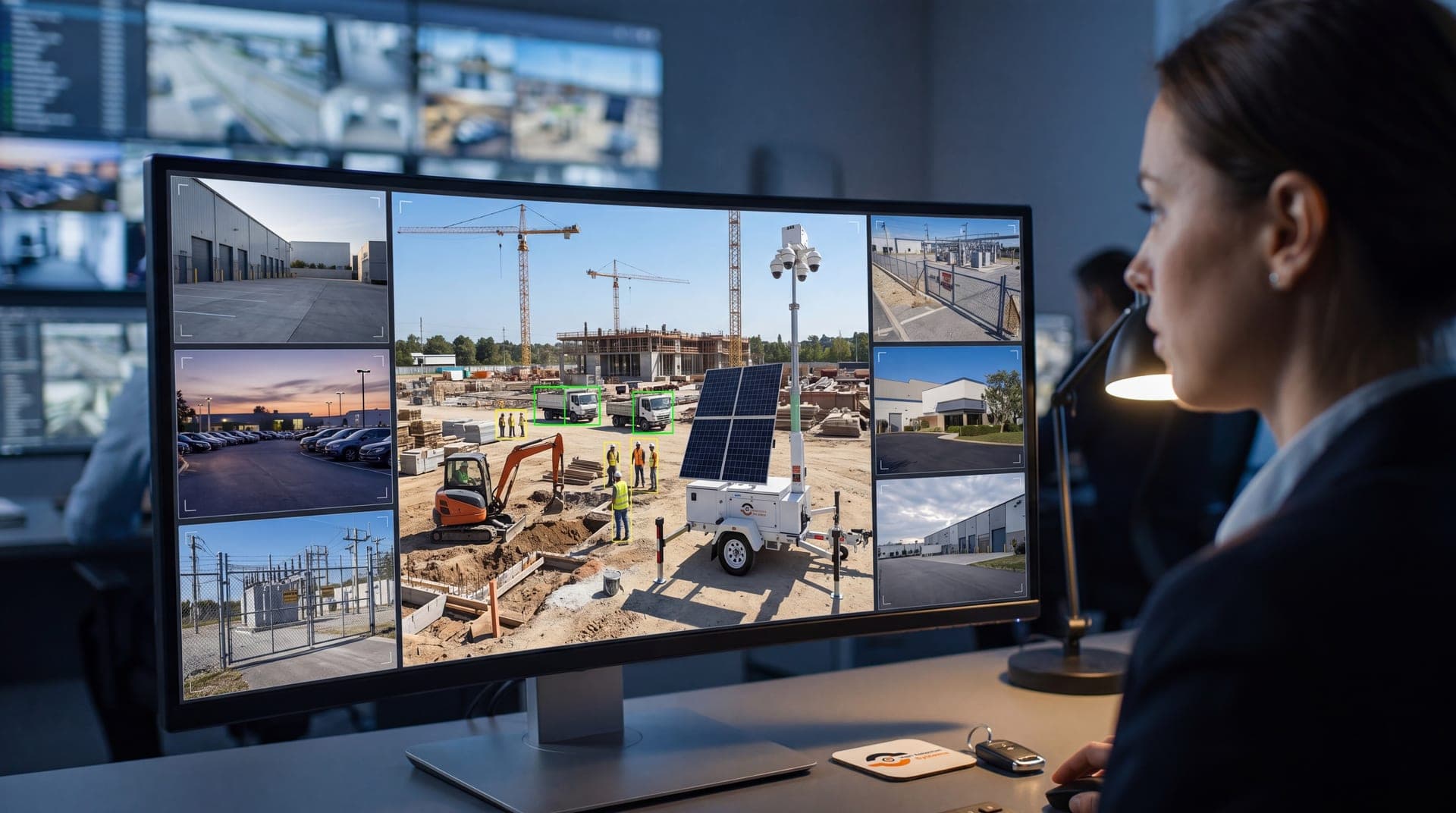
For most commercial construction sites, a solar-autonomous mobile trailer with 24/7 human monitoring solves all four. It deploys in under 20 minutes without power or infrastructure, covers up to 5 acres per unit, and has a live SOC operator who can verify and escalate incidents in real time — not just record them.
For permanent or long-term installations where infrastructure exists, fixed mounted cameras provide a lower ongoing cost. The right answer depends on the project timeline and whether the primary risk is during construction or after handover. A thorough construction site security plan should account for both phases.
Camera placement: where construction sites get it wrong
Camera placement is where most construction security setups fail in practice. Cameras pointed at gates miss the perimeter. Cameras at fixed heights get defeated by staging materials blocking lines of sight. Single-angle coverage creates blind spots that experienced thieves exploit within days of observing a pattern.
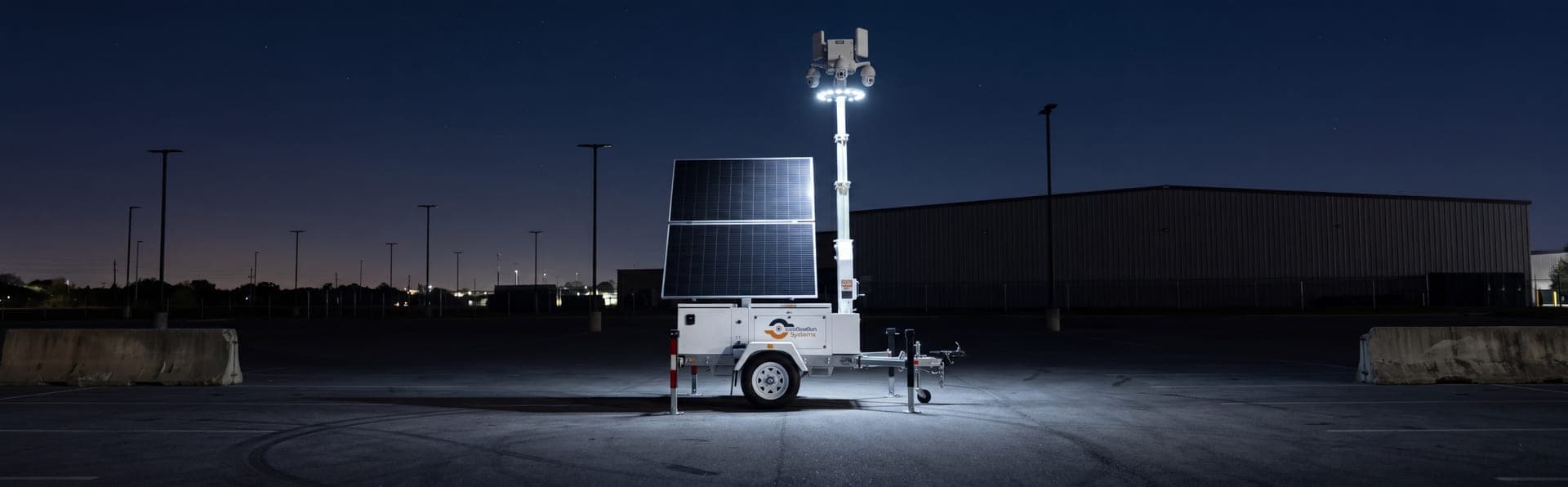
Effective coverage on an active site requires elevated, 360-degree views from perimeter anchor points, with overlapping fields of view between units. The VDS Mobile Surveillance Unit deploys on a 22 ft telescopic mast, providing line-of-sight coverage across the full site perimeter rather than point-to-point angles.
For sites over 5 acres, multiple units with overlapping coverage zones eliminate the blind spots that single-camera setups cannot address. See how construction site monitoring works in practice for sites at different scales. Audit coverage against the construction site security measures checklist and compare hardware types in our buyer's guide to construction site security cameras.
Active deterrence vs. passive recording: why it matters
A camera that records a theft is evidence. A camera that prevents a theft is security. The distinction matters because construction site theft is rarely opportunistic. Most incidents involve repeat offenders who surveil a site before acting. If the only consequence of being observed is recorded footage, the deterrent value is low. Experienced thieves know that recovery rates are under 25% and that insurance claims rarely result in prosecution.
Active deterrence — visible hardware, real-time SOC monitoring, two-way audio, and direct PD dispatch with live video — changes the risk calculus. The VDS SOC resolves most intrusions before police arrival through audio intervention alone. That outcome is not achievable with passive recording.
For a breakdown of what construction site security costs per month across different system types, including the comparison against manned guards, see the full cost guide.
$1B+
walks off construction sites every year.
The threat profile on an active site is uniquely difficult — open perimeters, expensive movable equipment, irregular hours, and zero infrastructure for cameras to plug into.
Heavy equipment theft
Excavators, skid-steers, generators. Recovery rate under 25%.
Copper & wire theft
$1.5B annual loss. Site shutdowns of 5–10 days per incident.
Lumber, fuel, fixtures
Inflation has put just-delivered materials at peak risk.
Vandalism & trespass
Liability exposure, OSHA-recordable, and schedule slippage.
The trailer arrives Monday.
You're covered Tuesday.
One trailer covers up to 5 acres. Site setup takes 20 minutes. No power, no permits, no fiber. The SOC starts watching the moment the mast goes up.
From flat-bed to
monitoring in under an hour.
We deliver the MSU trailer to your gate. One person — usually your foreman — levels it, raises the mast, and we're online. Solar handles power. Cellular handles the cloud. Your IT team is uninvolved.
- Tow-behind delivery on a flat-bed
- Foreman-deployable in under 20 minutes
- No trenching, no conduit, no permits
- Auto-registers to your VDS portal
STEP 01Workers leave.
The trailer takes over.
VDS auto-activates after-hours rules at lockdown time. Any human or vehicle on-site triggers an alert. Daytime workflows continue uninterrupted — AI suppresses alerts during active hours.
- Schedule-based arming (geofenced)
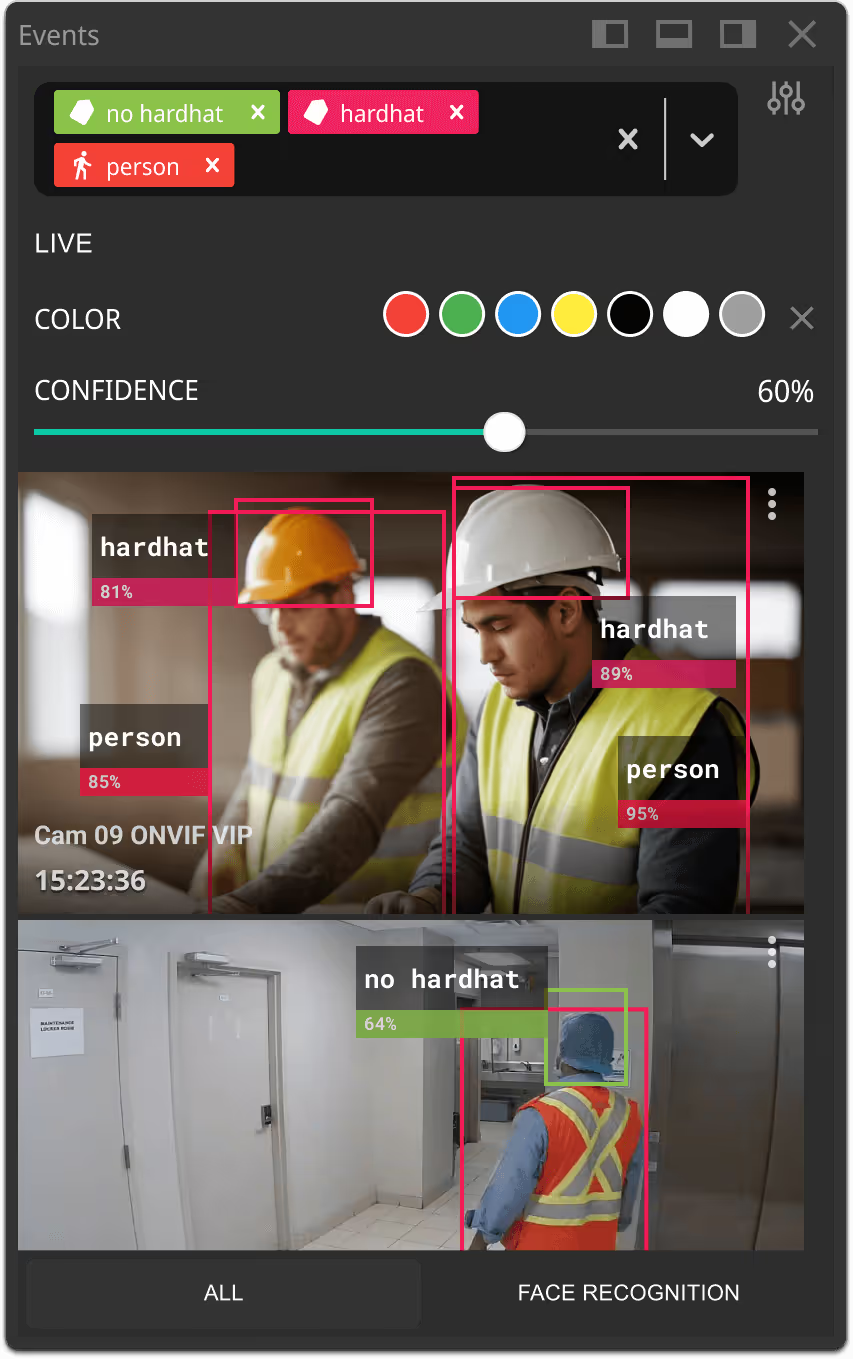
- PPE detection during work hours (optional)
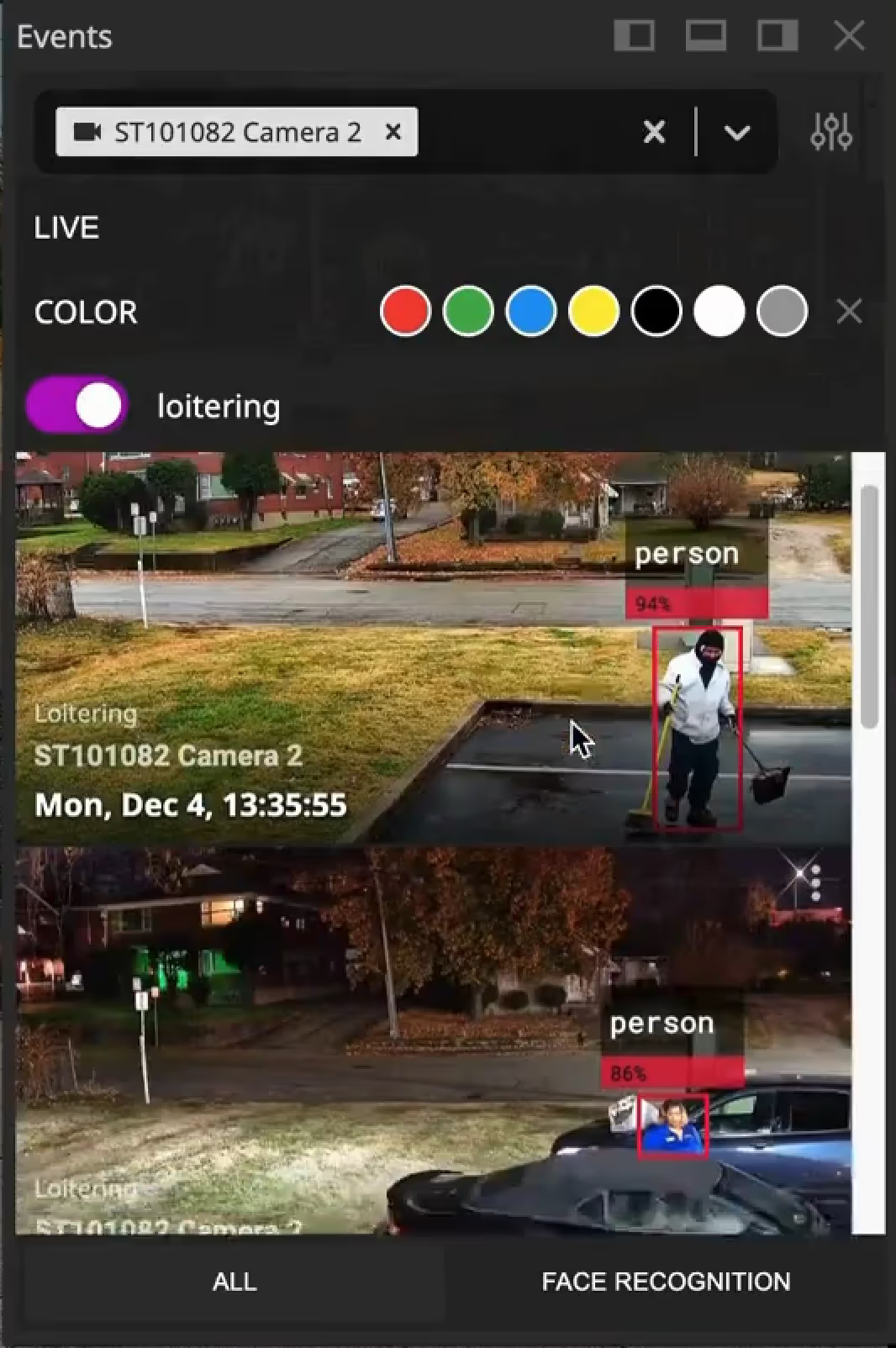
- After-hours person/vehicle/loiter triggers
- Crew check-in via mobile app
 STEP 02
The intruder hears
a human voice.
Most thieves leave the moment they realize they're being watched and recorded. VDS SOC operators talk down through the trailer's amplified speakers — by name if necessary — before police are dispatched.
- 120 dB amplified two-way audio
- SOC operator goes live in real time
- Strobing 1,200-lumen white-light deterrent
- Most intrusions resolved before PD arrival
 STEP 03
Police get the video.
Then they get on scene.
When dispatch is needed, VDS calls 911 with live video streaming directly to the responding unit. Officers know what they're walking into. Recovery and arrest rates climb.
- Direct PD dispatch with live video
- Immutable cloud audit log (court-ready)
- Incident report delivered to your portal per SLA
- Insurance-compliant evidence retention
 STEP 04
Every corner of the site.
One platform.
The MSU adapts to your specific threat surface. Here are the scenarios construction PMs deploy for most often.
Equipment yards
24/7 coverage for heavy machinery, generators, and high-value mobile plant stored at the perimeter.
Material laydown areas
Detect and deter theft of lumber, pipe, fixtures, and just-delivered materials staged for next-day install.
Active build sites
After-hours lockdown with schedule-based arming. AI suppresses alerts during active work hours.
Highway & DOT projects
Rapid-deploy coverage for linear projects, barrier yards, and temporary lane closures without infrastructure.
Fuel storage
Perimeter and approach monitoring for fuel tanks, diesel bowsers, and generator fuel depots on remote sites.
Temporary & phased sites
The trailer moves with the project. As phases shift, reposition in under 20 minutes with zero reconfiguration.
Real GCs.
Real numbers.
Every metric below comes from a real VDS construction customer. Names protected per agreement.
The most vulnerable time for our job sites is right after breaking ground before the utilities are hooked up. VDS solved that headache completely. No city power, no wires, just reliable perimeter security from day one.
 MSU-A · FLAGSHIP900W SOLAR · 4G LTE
The Mobile Surveillance Unit.
Built for sites with no power.
Solar-autonomous, rapid-deploy, foreman-operable. The MSU was engineered for construction from the ground up — no power hookup, no IT involvement, no permits.
From call
to covered.
Most construction customers go from initial conversation to a live trailer on their site inside 7 business days.
Quote in 1 hour
Tell us the site count, acreage, and shift schedule. We return a quote with trailer count, monitoring plan, and timeline — fast.
Configuration
We configure the trailer to your threat profile — sensor stack, deterrence package, after-hours schedule, alert routing, PD notification rules.
Delivery & setup
Trailer arrives on a flat-bed. Foreman-deployable in under 20 minutes. SOC monitoring begins the moment the mast is up.
Account management
Dedicated account manager. Monthly performance reports, incident summaries, and quarterly site reviews.
Common questions.
The number depends on site acreage and perimeter complexity. A single VDS Mobile Surveillance Unit covers roughly 5 acres in a standard configuration — up to 30 acres with long-range sensor options — from a 22 ft telescopic mast with multi-sensor 360-degree coverage. Sites between 5–15 acres typically require two units positioned at opposing corners. For larger sites or linear projects (highway, pipeline), units are staggered along the perimeter at 5-acre intervals. We provide a site coverage plan as part of every quote.
No. Solar-autonomous mobile surveillance trailers operate entirely off-grid — 900W bifacial solar array, onboard battery bank, and dual-SIM 4G/5G cellular connectivity. No trenching, no power hookup, no permits required. Wired systems make sense for permanent post-construction installations where infrastructure is in place, but for active construction sites with shifting risk zones, wireless solar-autonomous units are faster to deploy and easier to reposition as phases change.
From flat-bed delivery to active SOC monitoring: under 20 minutes. The unit arrives on a flat-bed trailer. One person — typically the site foreman — levels it, raises the telescopic mast, and the system auto-registers to the VDS portal. SOC monitoring begins the moment the mast is up. Most construction customers go from initial quote to a live trailer on site within 7 business days.
Surveillance systems can directly reduce insurance premiums and are often required by carriers for sites above certain contract values. VDS generates incident reports per SLA with immutable cloud audit logs — court-ready documentation that satisfies insurance claim requirements. Several customers have eliminated insurance claims entirely after deployment. Check your policy terms; most commercial construction policies have a security equipment clause.
The SOC operator verifies the alert against the site's defined rules (after-hours schedule, geofenced zones, approved personnel list). Verified intrusions trigger a live audio intervention through the trailer's 120 dB amplified speakers. If the intrusion continues, the operator dispatches police with live video streaming directly to the responding unit. The full incident is logged, clipped, and delivered to the site's VDS portal with a written report. Most intrusions are resolved by talk-down before police arrive.
Yes. Relocation takes under 20 minutes with no reconfiguration required. The trailer tows behind a standard pickup. VDS handles redeployment logistics as part of ongoing service — the system auto-reconfigures to the new position when the mast goes back up. For phased projects, most customers reposition one to three times over the course of a build.
Secure your jobsite this week.
Tell us where, what, and when — we'll quote the trailer, monitoring plan, and deployment timeline — fast.